




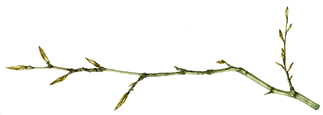
Olive Olea europea
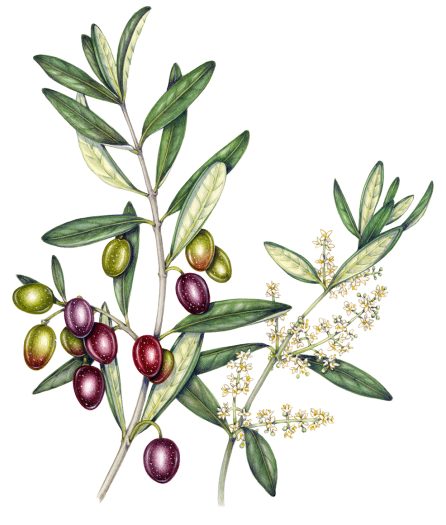
The Olive one of a series of blogs I’m writing on trees. You can also see blogs on the Elder, the Yew, the Ash, the Oak, the Holly, the Sycamore, the Rowan, the Hawthorn, the Birch, the Lime, the Scots pine, and the Beech.
The Olive is native to the Mediterranean, growing across Europe, Asia and Africa. It was first cultivated over 7000 years ago, both for its fruit and for its oil. It remains an important crop, and is a familiar and beautiful sight on the hillsides of Greece, Italy, and across the Middle East.
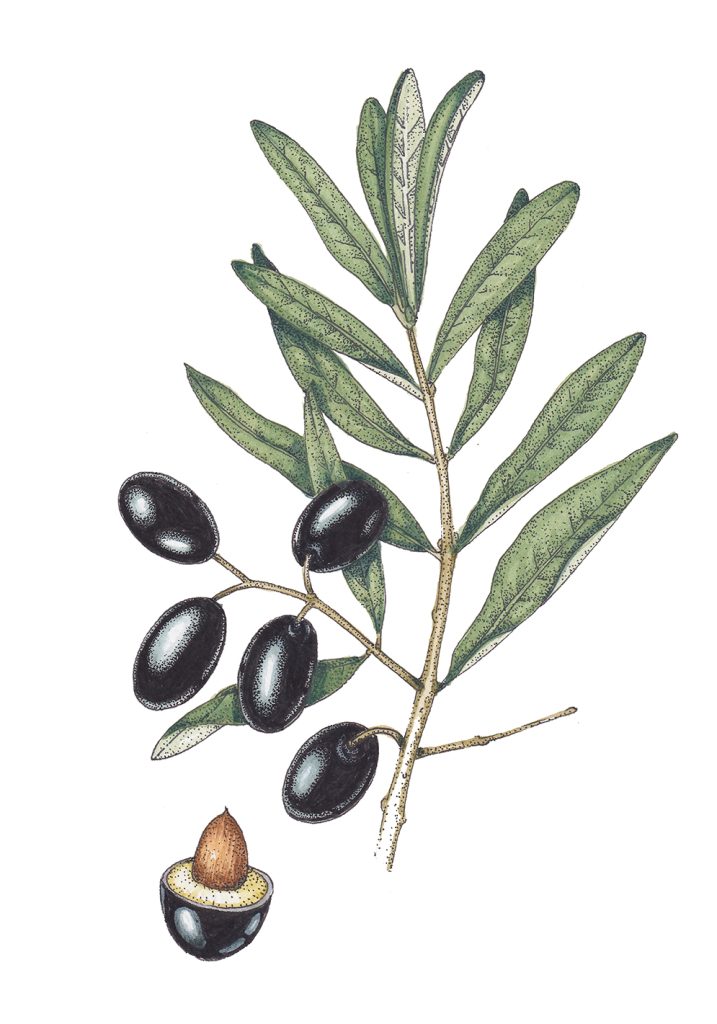
Olive Olea europaea
As a result of the changing climate, the first Olive groves were planted in Britain in 2024, by the Hoyles family in Lincolnshire (read more here.)
Olive trees, fruit, and oil have been important for so long that it’s no surprise that the olive is rich with symbolism.
Identification: Tree shape
Olives are evergreen, and if left to their own devises, will grow up to 15m tall. Their crown is dense and bushy. Most Olive trees we see are farmed and intensively pruned, mainly to access the crop.
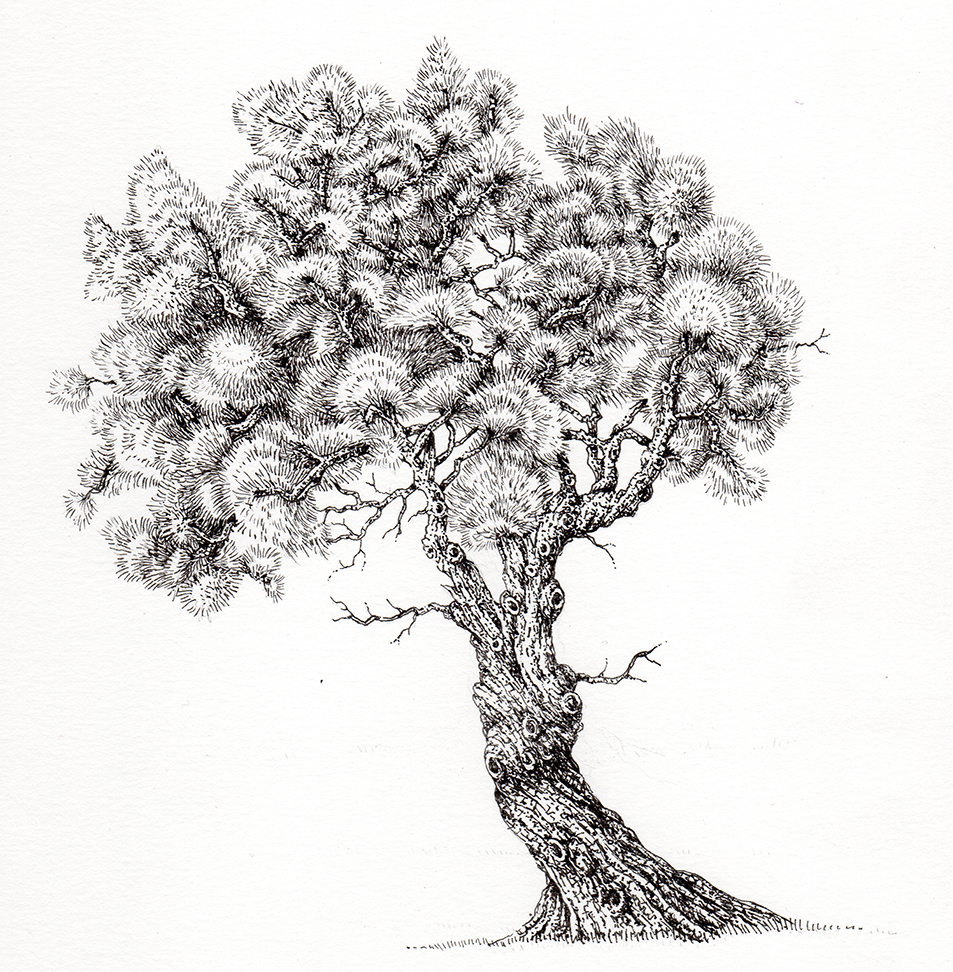
Olive Olea europaea tree
They are amazingly long lived, one in Vouves, Crete could be 4,000+ years old. The trunks become twisted and gnarled with time.
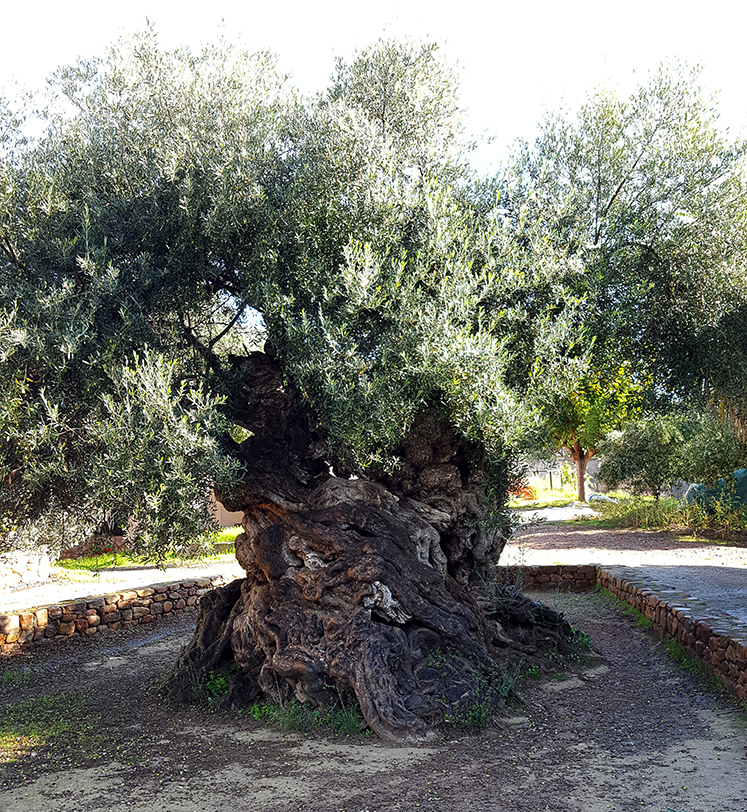
The Olive tree in Vouves (taken on my visit to Crete)
Olive groves are cited on well-drained, nutrient poor soils, often sandy or gravelly. They can tolerate hot, dry climates, and need a lot of sun; hence their success across the Mediterrranean and middle east.
There are lots of different olive cultivars, specific to different geographically regions. Experts can tell them apart, both by appearance of leaves and fruit, and by the flavour of the oil they produce.
Identification: Leaves
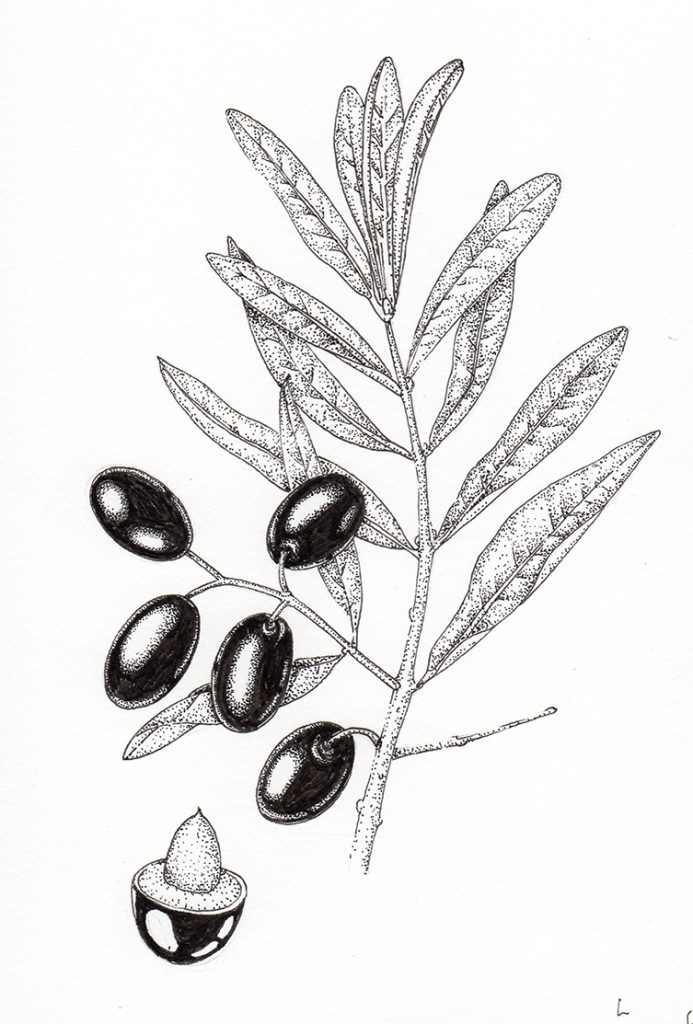
Olive leaves are long and thin, with a short stalk. They are opposite They’re a grey-green, paler and sightly scaly below. Measuring up to 8cm long and rarely more than 3cm wide, they have a leathery texture and are not shed in winter.
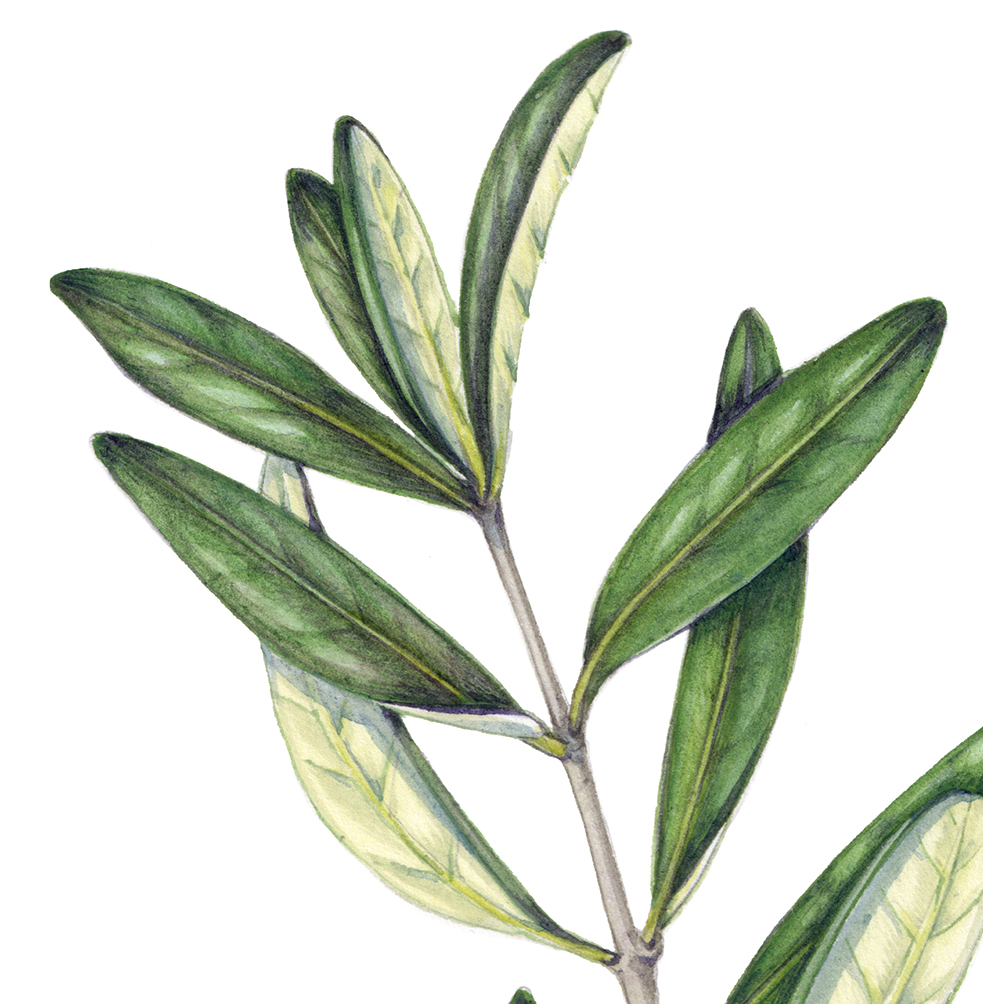
Olive leaves
The leaves contain phenols like oleuropein, anti-oxidants, and flavonoids.
Identification: Flowers
Olive flowers are little and white, with yellow stamens and four petals. They’re borne in clusters of up to 40 flowers and are fragrant. Some are hermaphrodite (male and female), others are only male, producing pollen but without ovaries. Only the hermaphrodite flowers produce olives. They flower for about a wee in May.
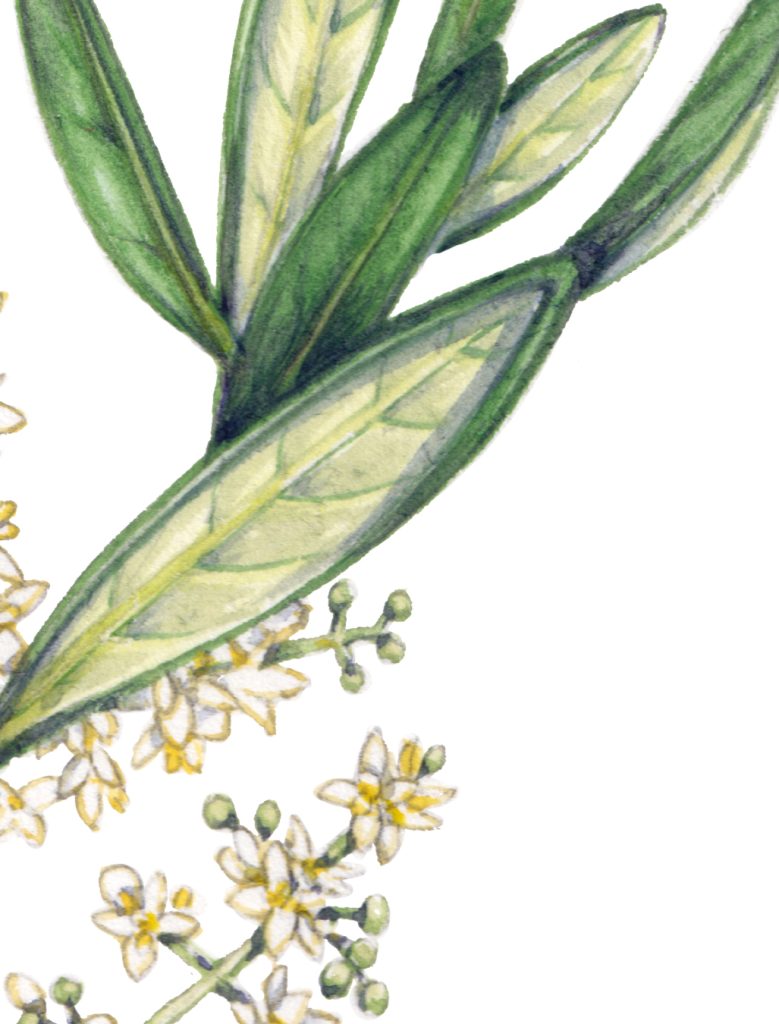
Olive flowers
Identification: Fruit
Olive trees produce their first crop a couple of years after planting, with a more substantial crop expected by their sixth year.
Olives are a type of fruit known as a drupe, like peaches and cherries. They start hard and green, becoming purple and then almost black when ripe.
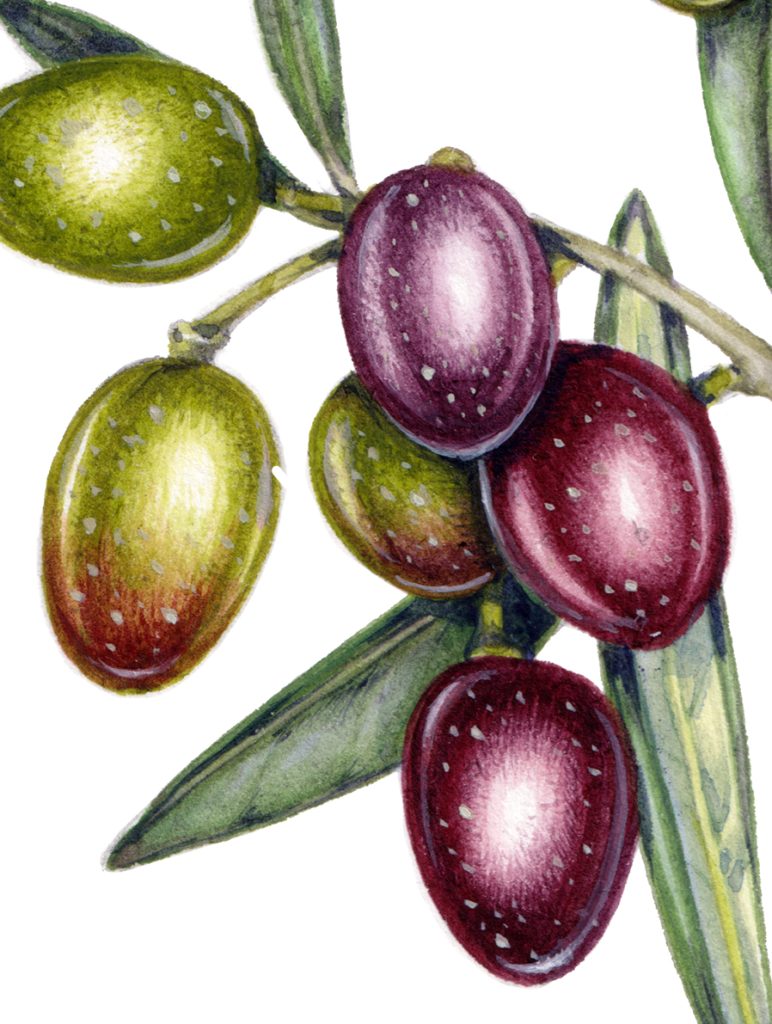
Immature and ripe olives
Each fruit contains one keeled, woody seed. The flesh around it contains the olive oil
Olives are harvested by hand, shaking the tree over nets or sheets laid on the ground. These stop the ripe fruit from splitting as they hit the hard-baked soil. Those destined for the table are gathered in the autumn, while ones that get pressed into olive oil are harvested in winter.
Identification: Bark and buds
Bark starts our greenish grey and smooth, becoming a paler shade with age. It is fissured and gnarled.
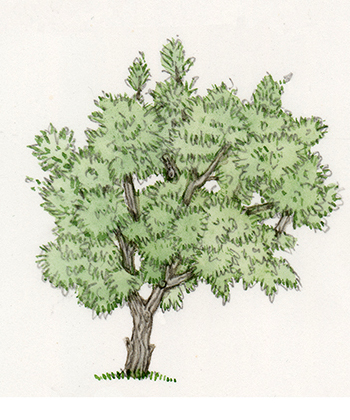
Olive tree
History: Folklore and Religion
Olives were important to the ancient Greeks, especially in Athens.
In its’ early days, Poseidon and Anthena competed to become the patron of Athens. Poseidon offered a salt water spring, but Athena planted an olive tree on the Acropolis, a far more useful gift. The tree provided wood, oil, and food; it was also a symbol of peace and victory. Athena was chosen as the patron of Athens.
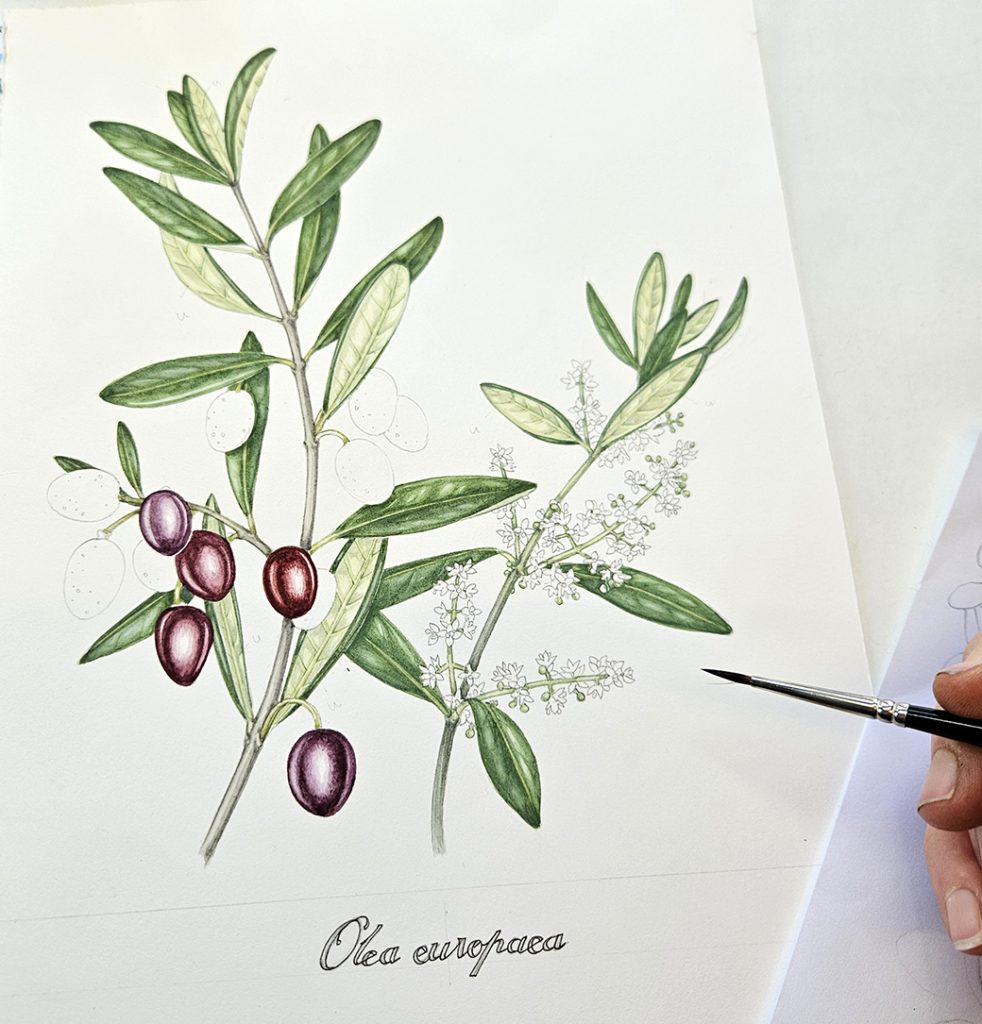
Working on Olive illustration
Perhaps because of this, harming or felling olive trees was a punishable offense.
In Islam, the name of God, or other sacred words, are believed to be written on the leaves of the Olive tree.
The temple of the covenant, in the Old Testament, had Olive wood doors. The oil used to anoint kings was made with a base of olive oil, and olive oil was used in religious temples and rites by the Greeks. It is also used to fuel the menorah, the seven-branched candlestick lit during Hanukkah and used as a symbol of Judaism.
History: Mankind and Olive wood
The wood from olive trees is hard and beautifully patterned. It is used to make pestle and mortars, spoons, chopping boards, and serving dishes.
The Erechtheum was made from Olive wood. An effigy of Athena, it was believed to have fallen to earth from heaven as a gift to Athens. Many religious statues were carved from olive.
History: Olive oil
Olive oil is just as important of a crop of the olive fruit, if not more so.
In ancient times it was used in lamps, and for fuel. It was also used in skin and hair products, as it is today.
It can be used to polish wooden surfaces and clean brass, and to soften stiff household objects.
History: Food and Medicine
Olives need to be soaked for several weeks before being eaten, and are kept in brine. They come with or without pits, and can be green, black, or purple. They are often stuffed with lemon, anchovy, garlic or pimiento.
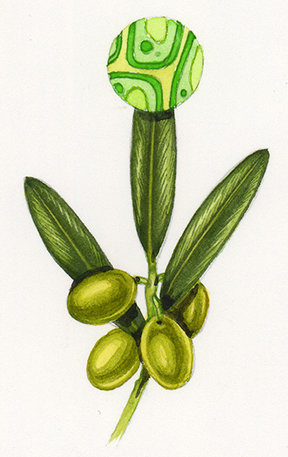
Healthy developing olives
Olive oil is delicious both to cook with and in salad dressings. High quality oil is good enough to drink from the bottle, and can be eaten as a dip with bread. Sauces made with olive oil include treats like hummus, pesto, lemony Ladolemono, Romesco and Chimichurri (recipes here).
The health benefits of olives and olive oil are numerous. They include reducing heart disease and blood pressure, warmed olive oil can help ease ear infections, their oleic acid helps reduce “bad” cholesterol, they are rich in anti-oxidants, and are good for the digestion.
Olives and wildlife
As Olive groves have been around so long, it comes as no surprise that they sustain a wide diversity of wildlife. This is also because of the hedges, stone walls, hollow tree cavities, and wild shrubs that grow alongside them.
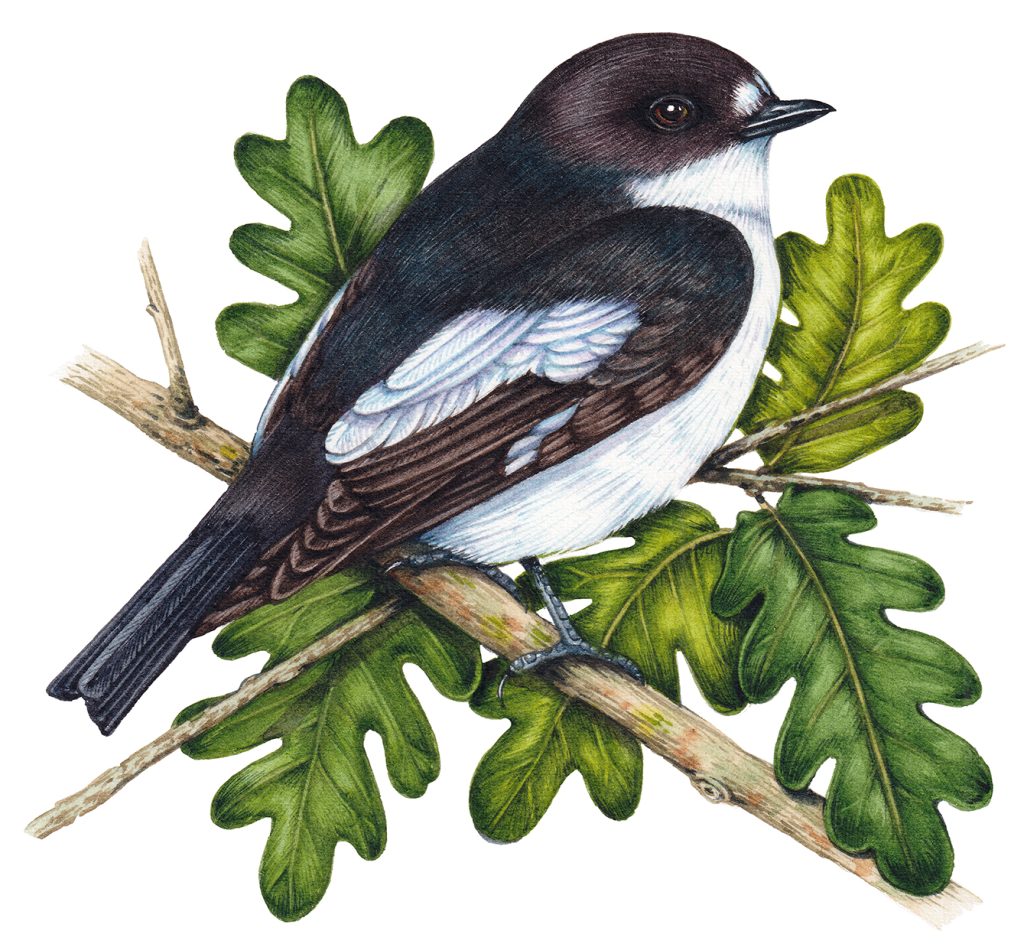
Pied flycatcher (on Oak)
You find lizards and song birds, cicadas and hoopoe, owls and rabbits, bats and pied flycatcher, butterflies and mongoose, ants and foxes. It’s been calculated that there are over 200 wildflower species, 90 vertebrates, and 160 insect species per hectare in an ancient olive grove, especially those in areas not surrounded by areas of intensive agriculture. (EU Life Database)
Threats to the Olive
Unfortunately, olive groves are in grave danger from all directions.
Climate change means the arid landscapes they thrive in are becoming deserts, impossible to survive in.
Olive trees are damaged and destroyed in conflicts across the Middle East, or grow in areas where it is no longer safe to gather harvests and care for them.
And then there are the diseases. Verticillium wilt and Olive knot disease. Peacock spot and Olive scab. Charcoal root rot and Cercospora leaf mould. These vary depending on where you are in the the world.
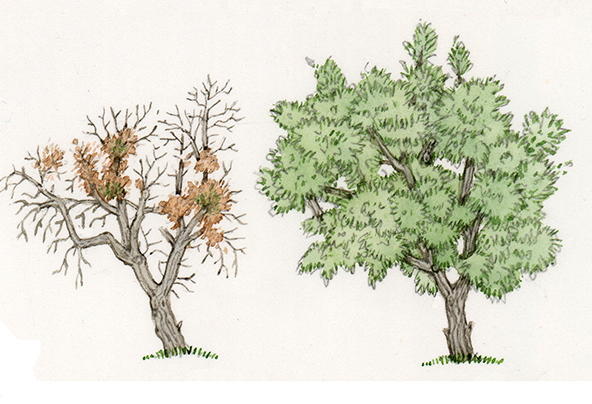
Xylella bacteria damage
One of the most deadly is the Xylella fastidiosa bacteria. Spread by leaf hoppers, it blocks the trees’ xylem transport system which causes leaf damage, die-back, and ultimately death. Olive groves in Puglia, in Italy, were first affected in 2013. A little over a decade later, more than 21 million trees are dead.
There is no known cure.
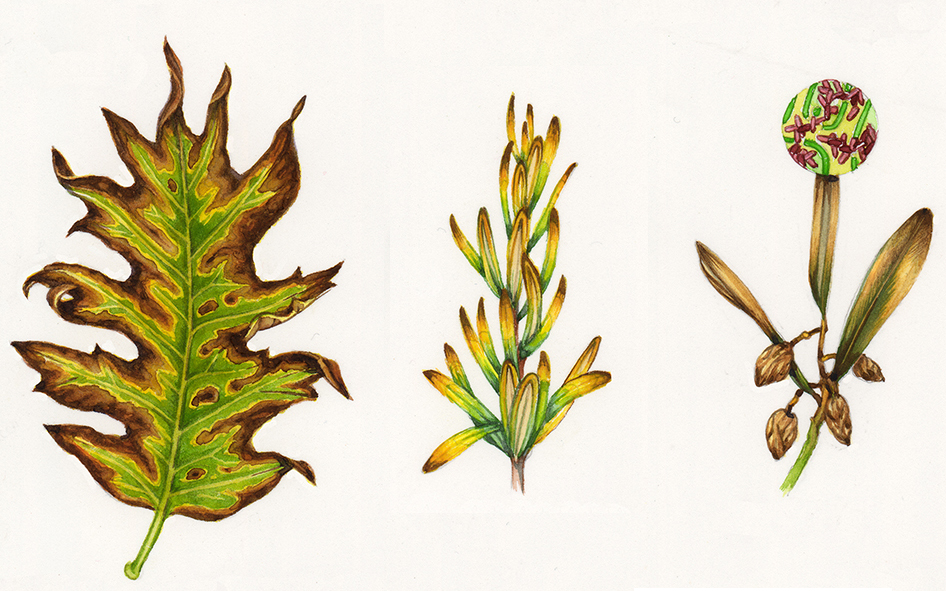
Xylella bacteria damage
Conclusion
Olives are extraordinary trees, tangled up with human civilization for millenia. They provide food, fuel, health benefits, and wood. Used for medicine and in many religions, they are also a haven for wildlife.
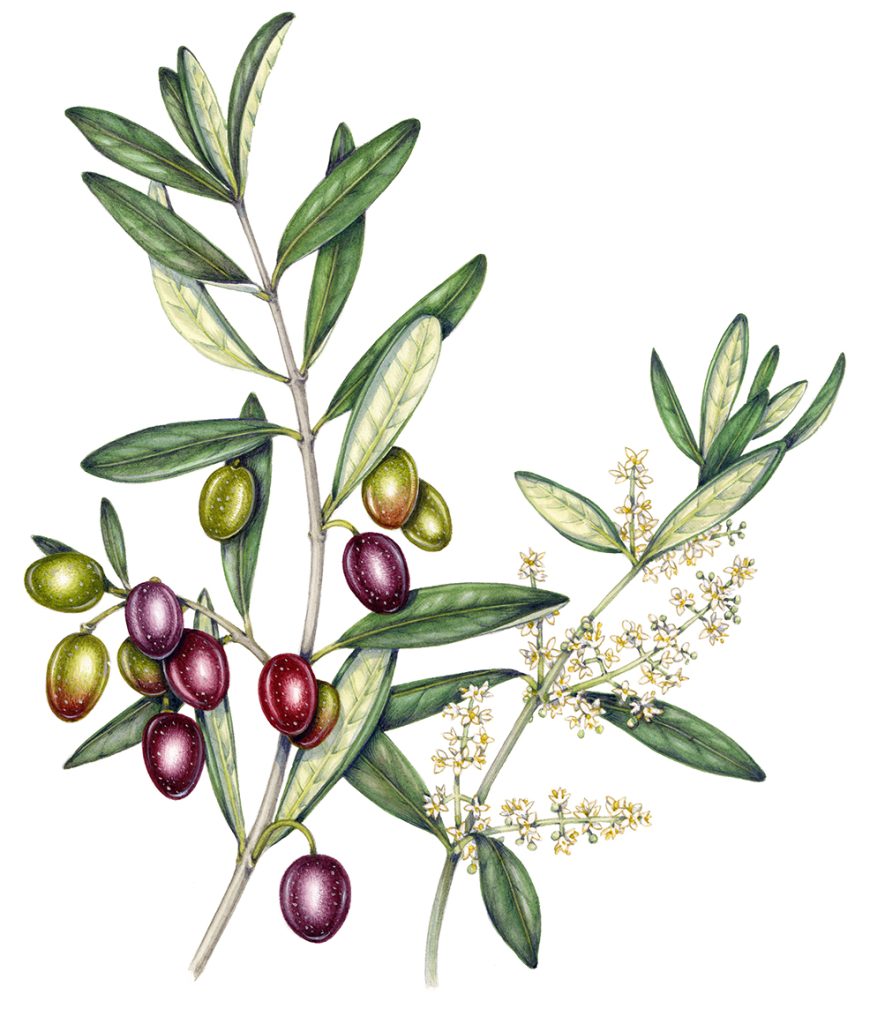
Olive Olea europea
One fervently hopes that the numerous threats Olive trees and the olive crop faces will not change the landscape of the Middle East and the Med forever; but that olives, gnarled olive trees, and delicious olive oil will continue to be a vital part of all our lives for years to come.
Sources for this blog include The Living Wisdom of Trees by Fred Hageneder and The Tree Forager by Adele Nozedar.
