




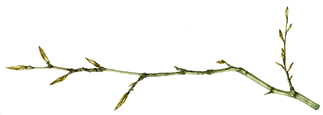
Brecknockshire Botany: Llangasty
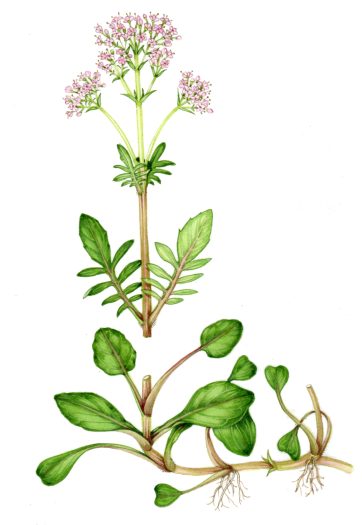
Brecknockshire, like every county in the UK, has a county recorder for botany. This is my local area, and I’m lucky to have met John Crellin while working on the Brecknockshire Flora. This is now published, and being met with widespread positive acclaim. (For more on this project, please check out my blog.)
There is a group of associated botanists and keen amateurs, and I have started to accompnay them on their trips, when work allows.
Llangorse lake and Llangasty
The first session I joined was looking at the flora in Llangasty, an area that covered lakeside to woodland and took in meadow sites.
Taking notes and doing super-quick sketches, I learned more about botany than I had done in the last 5 years. The whole day was thoroughly inspirational.
Ivy
I have illustrated Icy, Hedera helix, before. But I learned there are two common species of Ivy in the UK. H. helix and H. hibericum, sometimes called Irish ivy. This species has pointier leaves and stellate hairs groiwing on the stems of fresh growth. These are clearly visible with a hand lens.
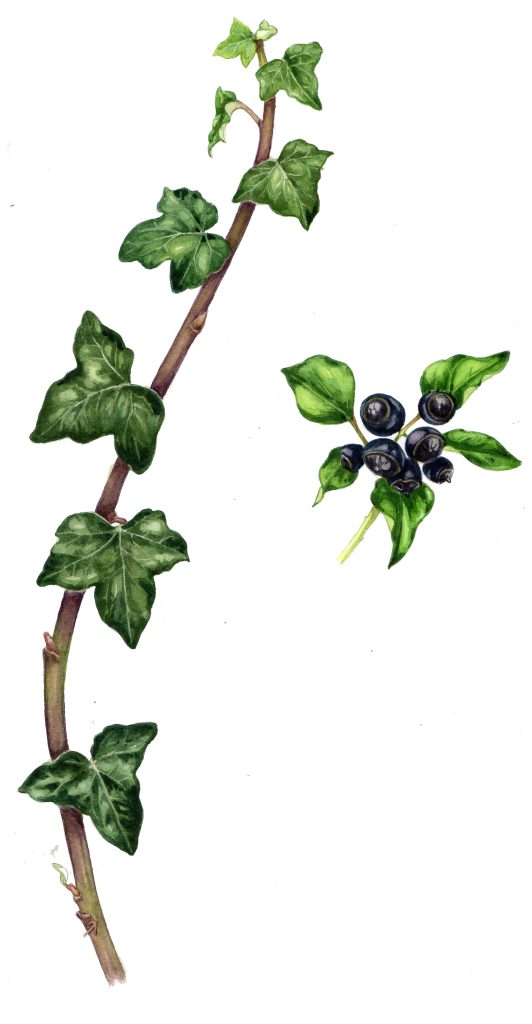
Ivy Hedera helix sprig and black berries
Speedwell species
We spotted several Speedwell, Veronica, species during the day. The first was Ivy-leaved speedwell V. hederifolia which has opposite leaves and a trailing habit.
There was Germander speedwell, V. chamaedrys in amongst grass.
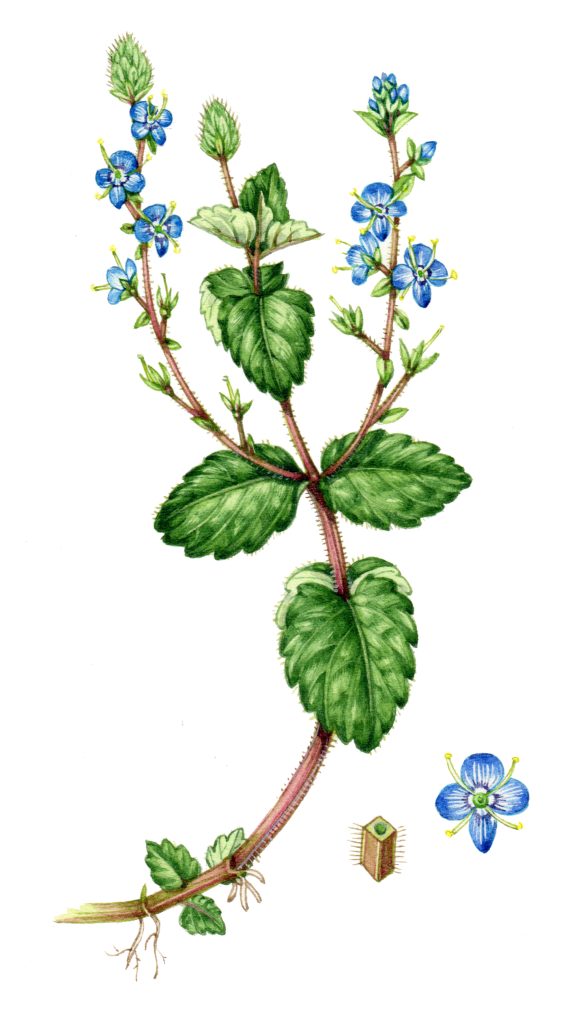
Germander speedwell Veronica chamaedrys
We also saw Thyme-leaves speedwell, V. serpyllifolia, another species I have yet to illustrate. It’s erect with small opposite leaves. As the name suggests, its’ leaves look like those of thyme.
The last Speedwell we saw was Wood speedwell, V. montana. This species has hairy stems and yellowish leaves. For more information on Speedwells, check out this excellent crib sheet from Dinky Moira.
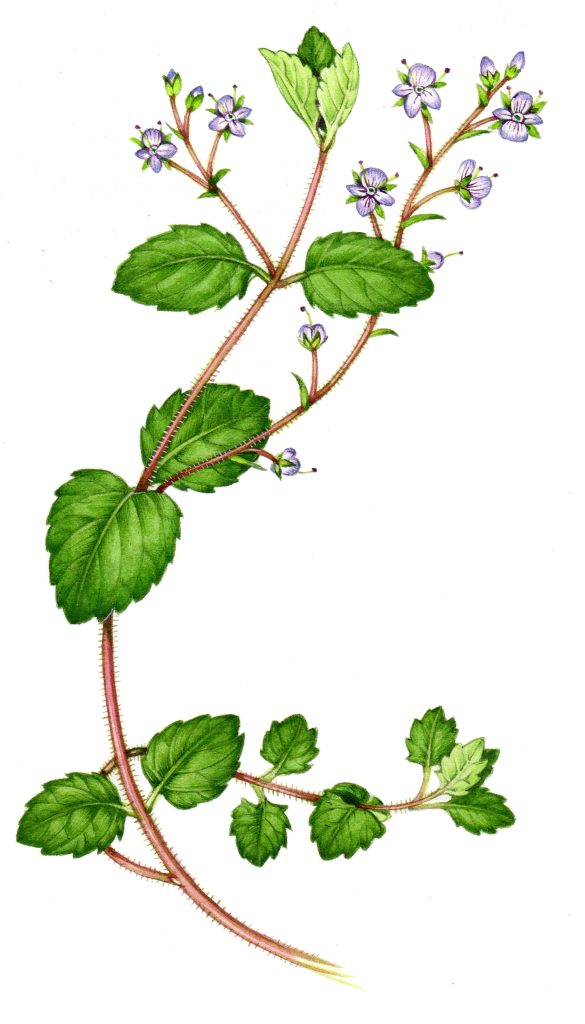
Wood speedwell Veronica montana
Saxifrage
In some boggy woodland we found both Opposite-leaved saxifrage and Alternate-leaved saxifrage. The latter has hairy leaves and a hairier stem than the other species. Oddly, telling them apart by the leaf position was not straightforward.
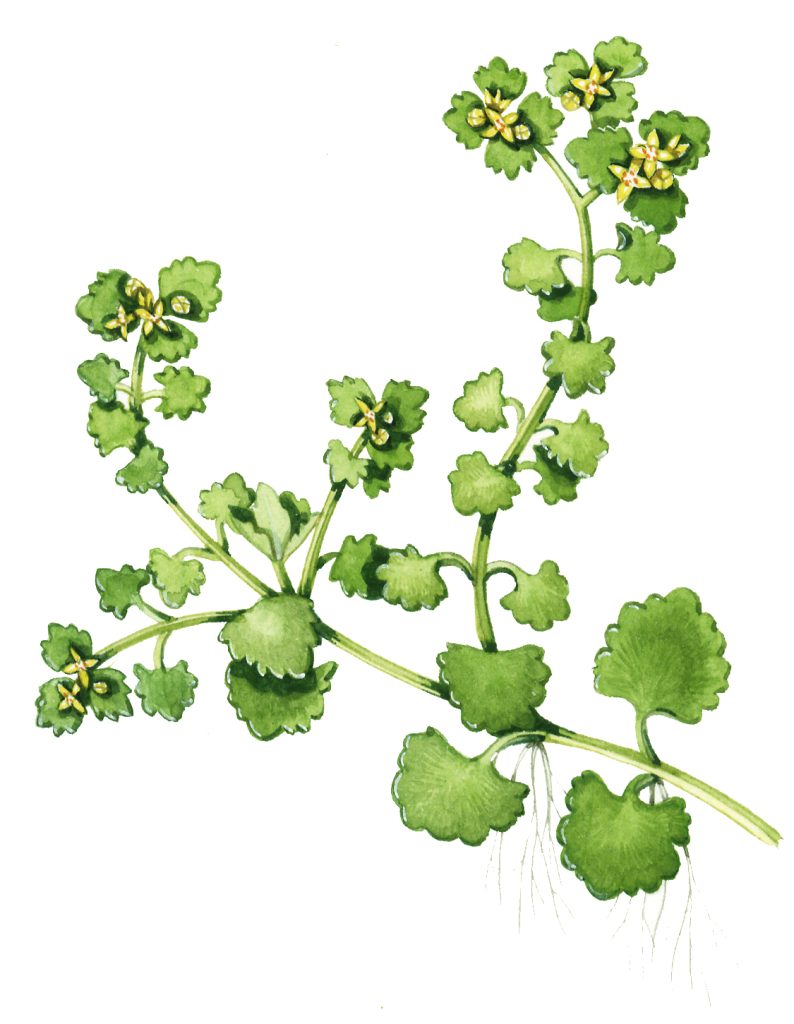
Opposite-leaved golden saxifrage Chrysosplenium oppositifolium
Lesser water-parsnip
In the same patch of woodland, we found Lesser Water Parsnip Berula erecta. This was still in early growth, only its’ shiny leaves were to be seen. Having seen it here before, it was good to confirm the species is still present.
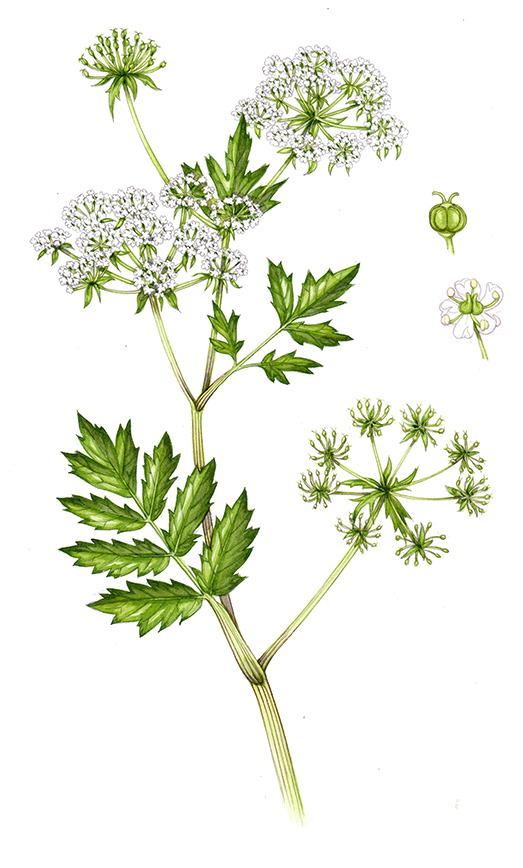
Lesser Water Parsnip Berula erecta
Violets
I have always struggled with telling violet species apart, and it seems I am not alone. There is an excellent crib sheet prepared by Dinky Moira. I plan to print it out, along with her other guides, laminate it, and bring it out on future trips. Unfortunately, I found this resource after, not before the Llangasty trip.
Some of the botanists showed me that the Early dog-violet, Viola reichenbachiana is usually darker than the Common dog-violet. The Early dog has far less pronounced branching on the bottom petal, and a dark spur.
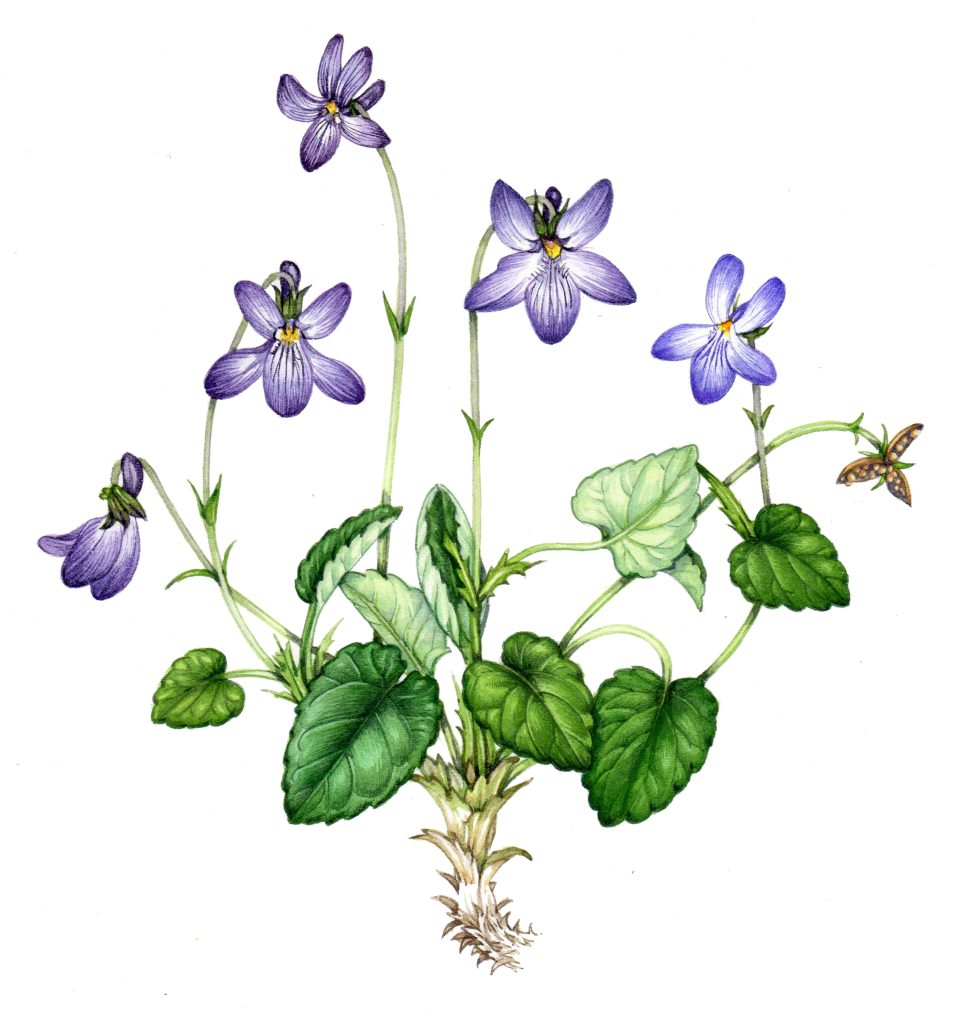
Early dog-violet, Viola reichenbachiana
Horsetails
There was plenty of Water horsetail in the lake, you can recognise it as it has few or no branches, and these do not secondly divide. It also has a hollow stem.
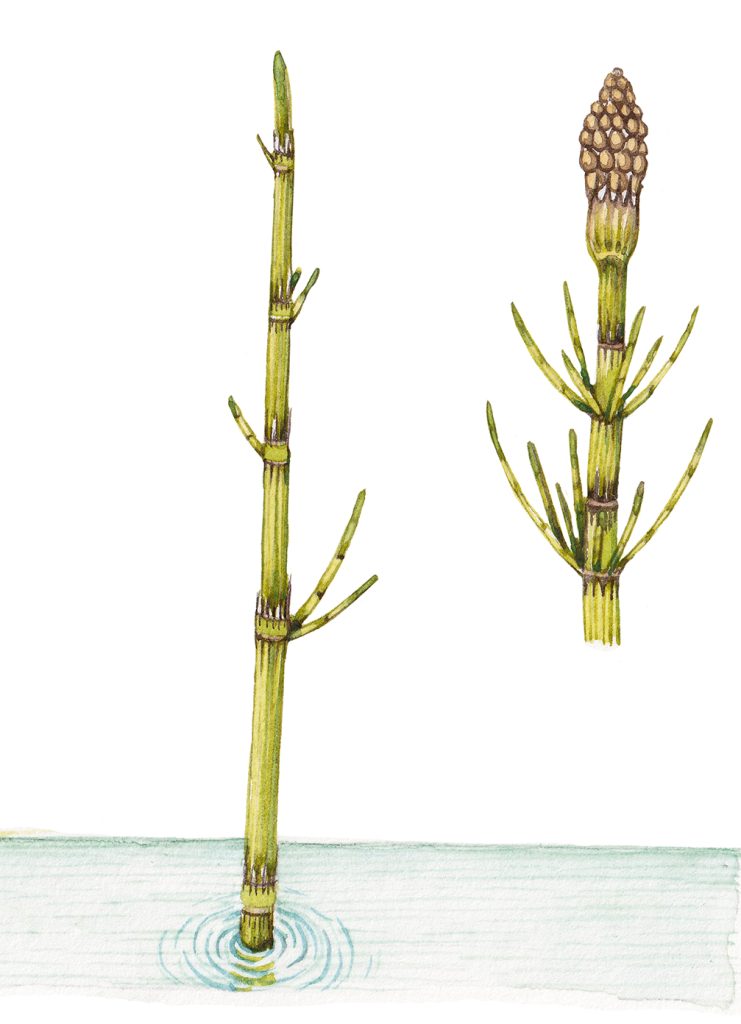
Water horsetail Equisetum fluviatile with strobili
Marsh Lousewort and Marsh Valerian
A slightly wet area of a meadow yielded Marsh valerian Valeriana dioica, with its’ froth of pale pink flowers and its’ distinctive spoon-shaped lower leaves.
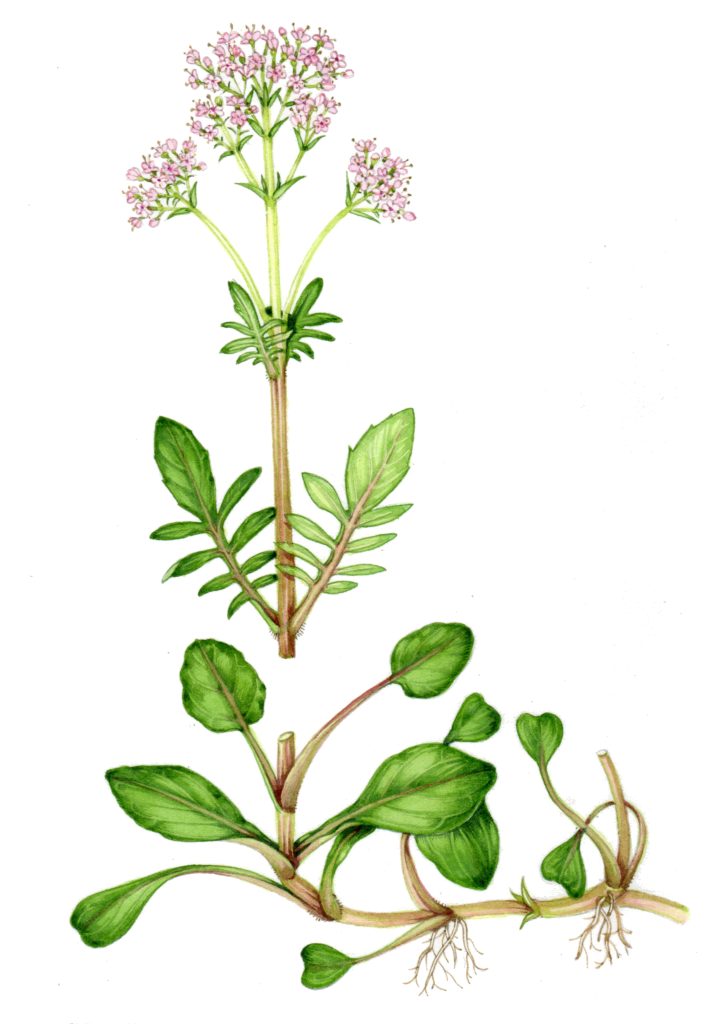
Marsh valerian Valeriana dioica
I also learned how to tell Marsh louse-wort Pedicularis palustris from Common louse-wort (also known as Red-rattle) Pedicularis sylvatica. Marsh lousewort has a more inflated calyx, and the calyx mouth which opens on two sides, not four.
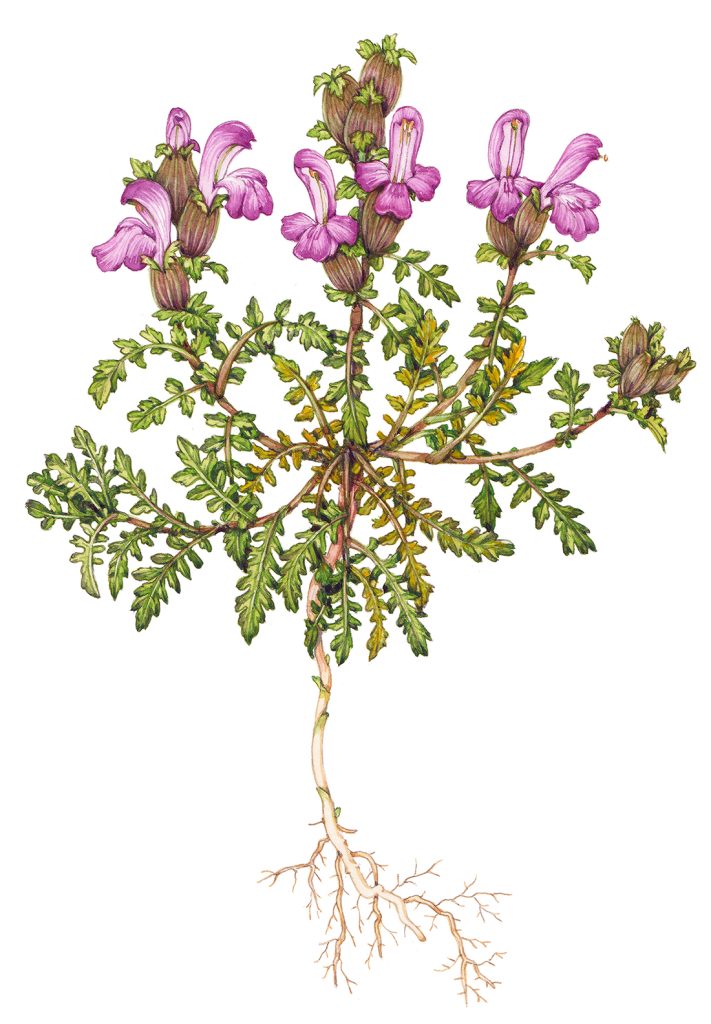
Common lousewort Pedicularis sylvatica
I haven’t illustrated this species yet, although am very found of a lousewort. Below is another illustration of Common lousewort done from a specimen growing in the Yorkshire Dales.
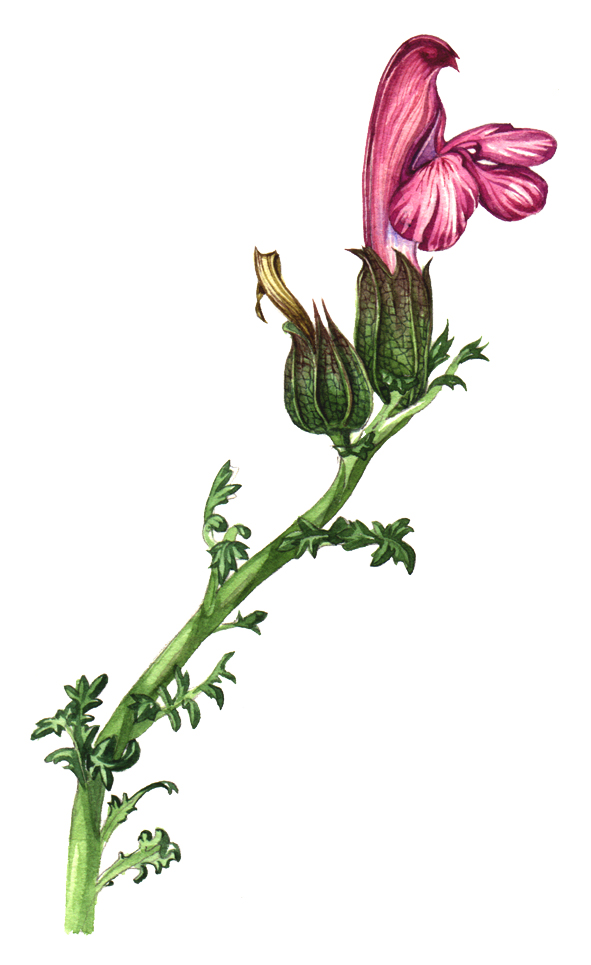
Common lousewort Pedicularis sylvatica
Dandelions: and Taraxacum luteum!
The highlight of the day was finding that a population of Taraxacum luteum (no English name) was still thriving. It had been recorded in a meadow there years before, and it took a long time of turning innumerable dandelions upside down to find it.
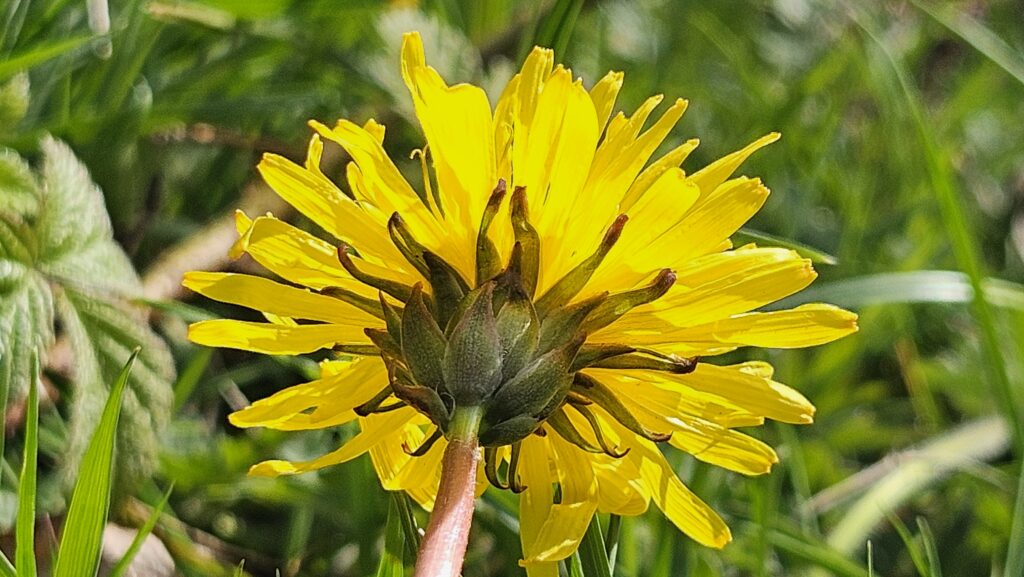
Dandelion Taraxacum luteum
Once we found one, we got our eye in and found loads, a total of 15 plants!
Unlike many dandelions, this one has no dark stripes on the underside of its’ petals. It also has a very red stalk, and bracts pressed close to the capitulum.
I have recently illustrated this beauty. For more on dandelions, please check out my blog.
Conclusion
I learnt so much and enjoyed myself enormously. I have already been on a second trip, with further ones to follow. I found inspiration and a true joy from learning from people who know so much and are so willing to show that knowledge. Here’s to many, many more botanising trips with the Brecknockshire botany group.
If you appreciate my blogs, do feel free to support me. I feel a bit odd adding this button to my feed; it’s in respnse to several requests from some of my lovely readers. Thankyou.


What makes Llangasty in Brecknockshire an interesting location for botanical exploration and the study of local plant species? Thank You, Regard asya ⋮⋮⋮⋮⋮⋮⋮⋮⋮⋮⋮⋮⋮⋮⋮⋮⋮⋮⋮⋮