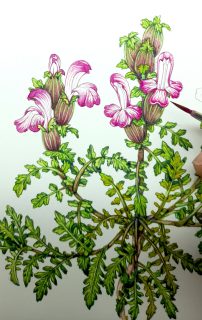
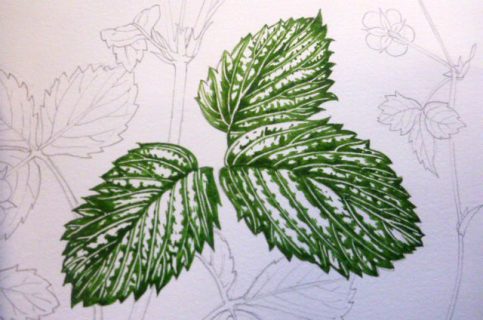
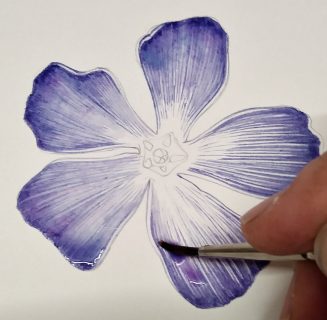
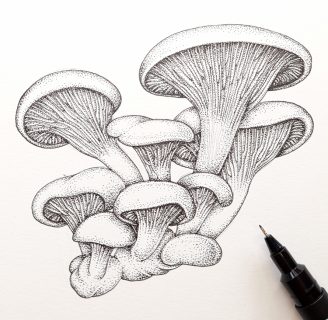
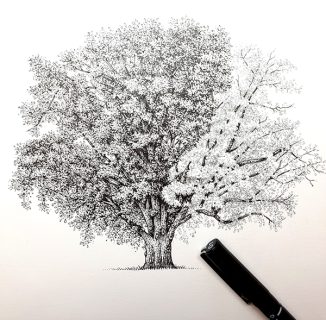
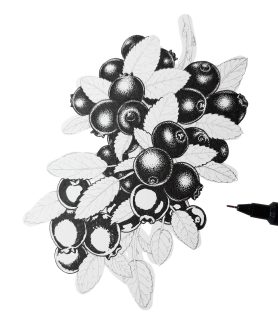
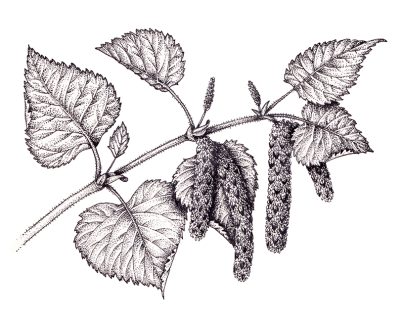
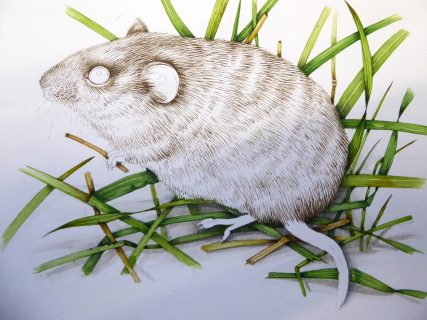
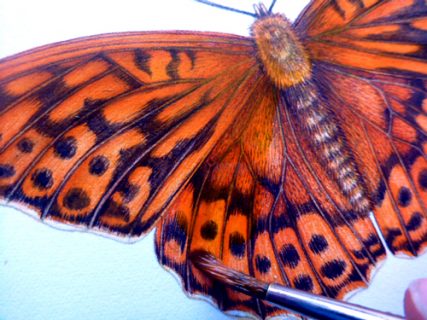
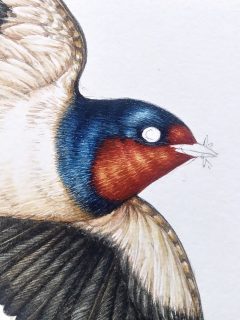
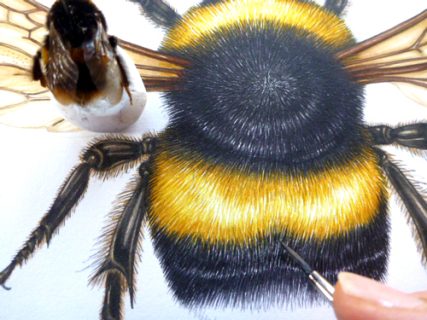
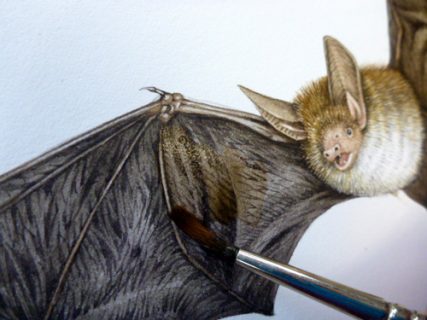
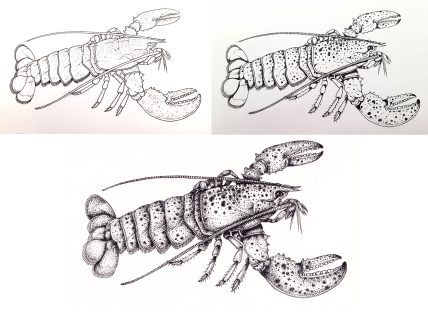
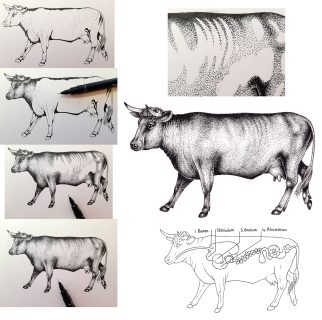
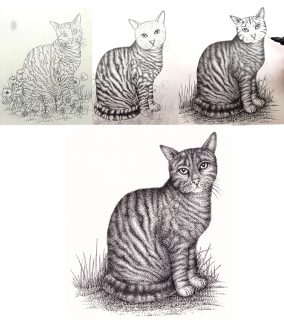
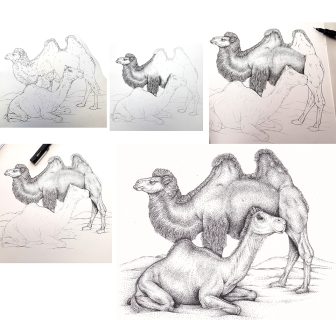
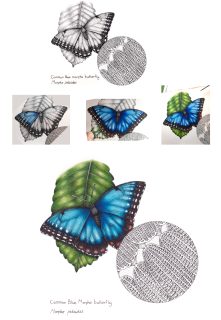
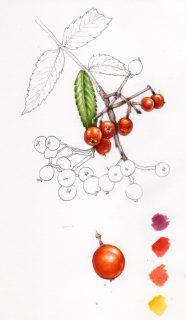
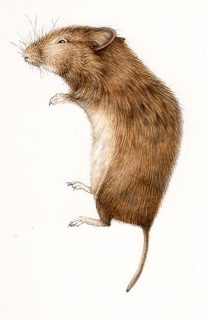
She next blocks in the darkest shadows with solid ink
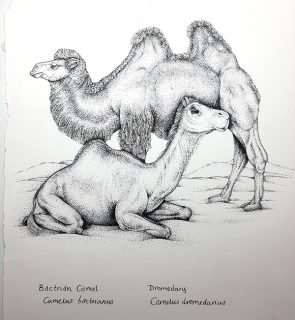
Stippling, she tries to create an easy visual transition between dark areas and the white page
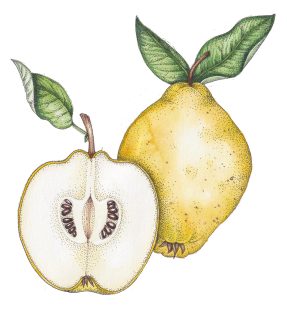
A top wash of colour can be added once the ink is dry
The process is very similar to her botanical pen and ink work
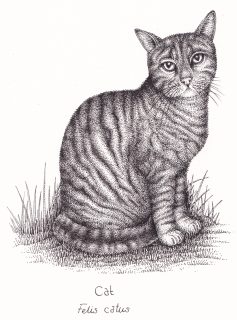
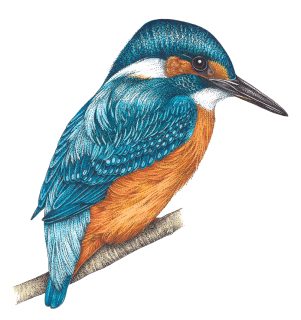
Tabby Cat Felis catus looking at the viewer and sitting on grass. Illustration from "30 Animals that made us smarter" by Patrick Ayree (BBC Books)
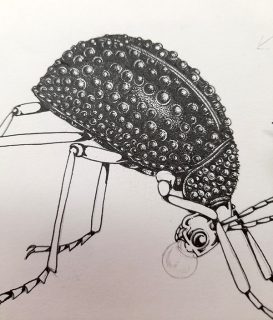
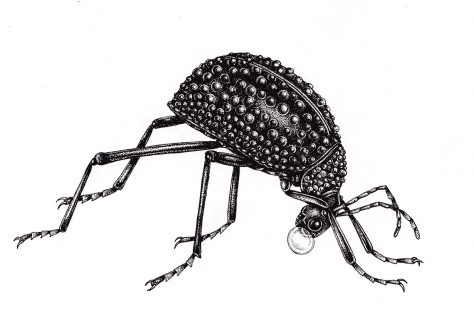
Stenocara Fog or Handstand beetle. Beetle is shown in its typical 45 degree position, facing incoming wind and fog to collect water vapour on the bumps of its elytra. Illustration from "30 Animals that made us smarter" by Patrick Ayree (BBC Books).
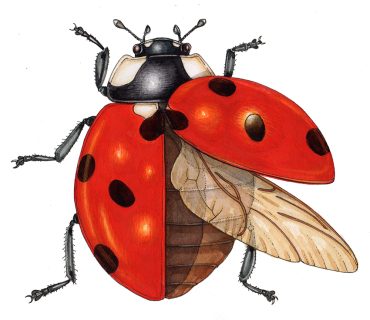
Ladybird Coccinella septempunctata diagram with outstretched wing
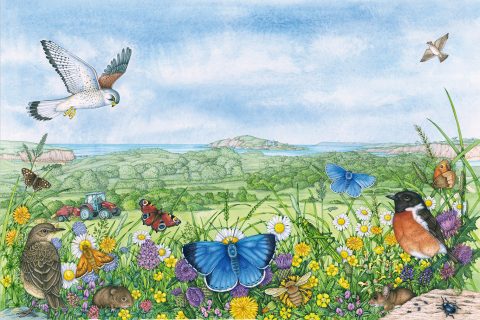
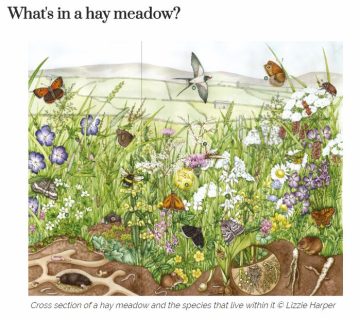
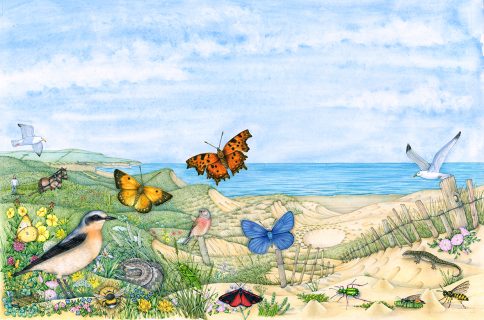
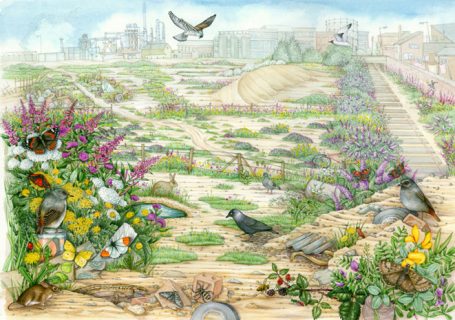
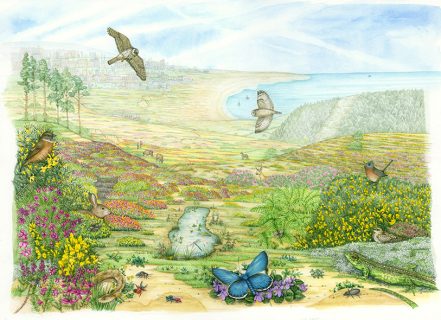
Watercolour Landscape Illustrations
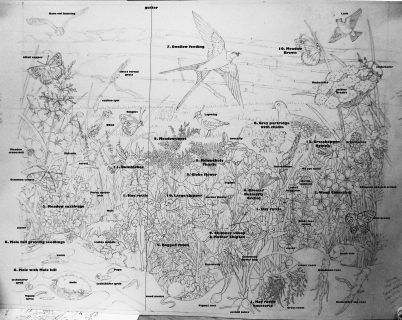
Working from a client list, Lizzie collects species info and visual reference for all the plants and animals involved
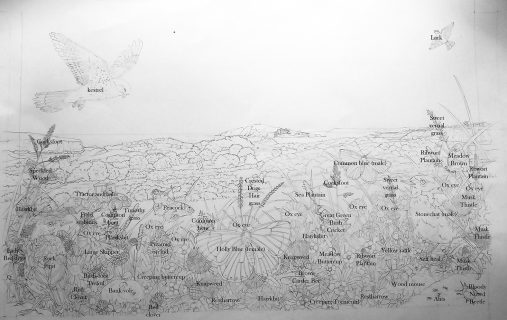
Pencil roughs help position each species in the landscape
A more detailed pencil version is sent to the client, with annotations
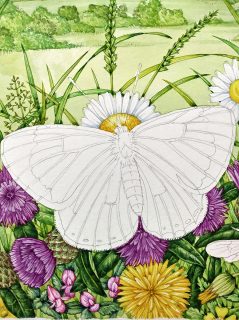
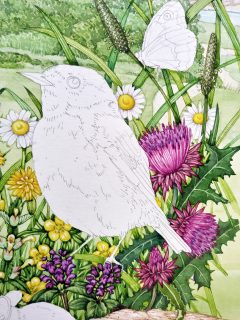
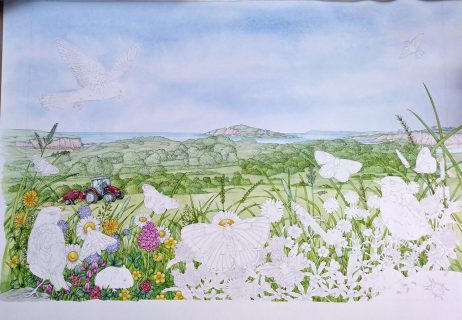
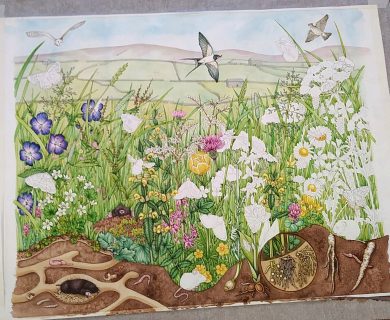
Once approved, Lizzie “colours in” from distant landscape to foreground
She completes all the plants first
Finally, she will add the “jigsaw pieces” of the animals
For more on this process, check out the following blogs:
Heath landscape based around heather and gorse with a distant sea and town; animals shown include rabbits, short eared owl, Stonechat, Sand lizard, blue butterfly, Adder, and Dartford warbler
To see Lizzie’s work as she completes it, follow her on Instagram
She often posts photos of her works in progress in her “Stories” and has links to her blogs, many of which are step by step explanations
All three of these gorgeous fungi have been found in fungal forays @fungitownhay this weekend, along with about 100 or more other species.
The first is Sulphur Tuft Hypholoma fasciculare, common on tree stumps. The second is the British Earthstar Geastrum britannicum, which is really rather rare, and found in a local churchyard, and the third is Plums and Custard Fungus tricholomopsis rutilans, also found in the same churchyard.
Checking out the table of finds in @hay_castle is a real eye opener - so much variety and so many beautiful fungi, mostly growing on our doorstep.
Come and join us, ill be painting in the gallery upstairs all day.
So excited to be a part of this brilliant festival of all things fungi, here in my home town:
www.fungitown.org.uk
So many events, shop windows to see, mushtoom things to taste, amzing stuff to discover, films to watch, fungi to forage.....
Ill be upstairs at Hay Castle, painting fungus; and selling limited edition prints, greetings cards, and original watercolours. A lot of my stuff is fungi based for the festival, but theres some botanical illustrations and even a few animal illustrations available to buy as well.
I`m getting excited about Fungitown next weekend (October 3rd and 4th), and am getting limited edition prints and greetings cards, as well as original illustrations prepared.
I`ll be in Hay Castle, illustrating some of the fungus that`ll be foraged and identified over the festival, & selling cards & botanical illustration prints & originals.
There`s so much going on over the weekend, come and visit!:
www.fungitown.org.uk/programme-1
(Illustrations show the Edible mushroom Agaricus bisporus, Scarlet Elfcup being painted, Sulphur tuft in pencil and watercolour, a monchrome study of enoki mushrooms, and a rather cool logo to promote the whole event.)
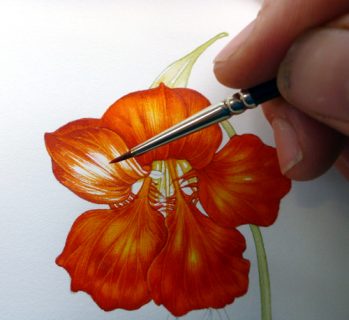
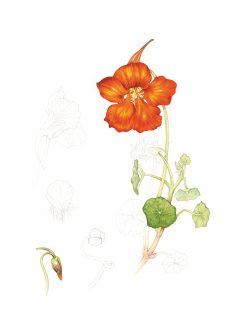
Just published a new real-time film of me doing a botanicalillustration of a nasturtium flower:
https://youtu.be/XGeSNvRmhBM
They`re great subjects to illustrate, such glowering colours, such interesting structures, edible, and flowering late into autumn (in the UK). Give it a go?
This is the Peacock butterfly, Aglais io, which I painted at Ento26.
The progress photos show the steps involved, from laying down initial washes of colour, through adding detail and building depth into the colour on the wings, and building texture and colour on the fur of the body.
The last progress photo shows everything painted but the bottom eye spots, antennae, eyes, and the wing veins. I always leave the wing veins white until the end, then put colour over them. This means they are still visible and add structure to the expanse of the butterfly wings.
Another fab day @royentsoc #Ento26 - kicking off with a jam packed workshop drawing bees, crickets hemipteran bugs, and beetles.
Then some painting of my Peacock butterfly before some really interesting talks - encouraging kids to like insects, weather radar used to record insects, ways of using genomic sequencing, and new technology supporting recording of catch during surveys.
I got the Peacock butterfly done, then enjoyed a proper look at the poster presentations
And as for the insect thened clothes on show today! A delight to behold.
Fab 1st day @royentsoc #Ento26, it was so busy, and I had such interesting chats with people about their research, & heard some fascinating presentations at the symposiums
I loved teaching my insect drawing workshop, & was lucky enough to sell some originals and prints too.
Come and say hi, Im on the 4th floor all conference.
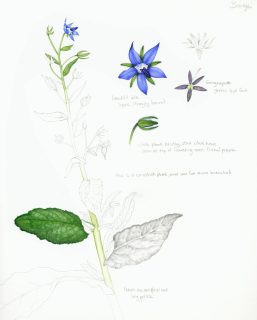
Borage borago officianalis sketchbook study with a focus on one leaf and the blue flower
Most of Lizzie’s work is done direct to order
However, when she gets the chance she loves sketching for pleasure
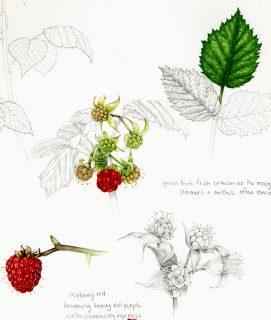
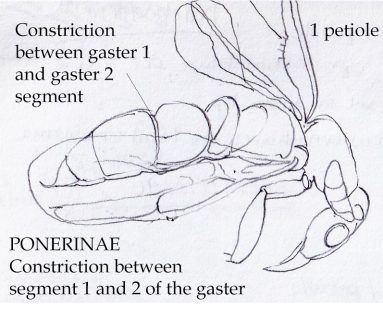
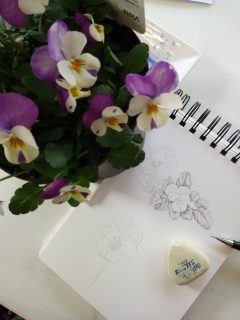
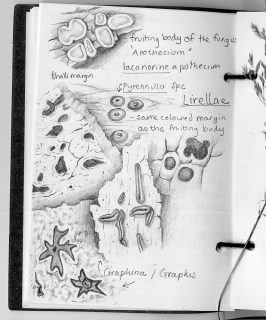
Below are some pages from her sketchbooks
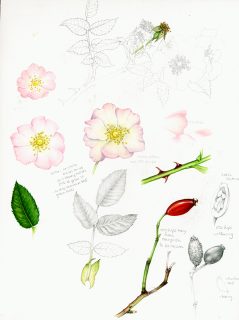
Dog Rose Rosa canina with rose hip and two flowers as well as leaflets and thorned stem
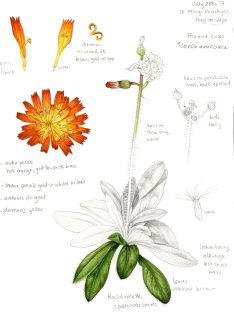
Fox and Cubs Pilosella aurantiaca sketchbook study showing individual ray florests and disc florets, detailed coloured study of leaf and hairy stem, pencil habit sketch, and other details of this compositae orange and gold flower