




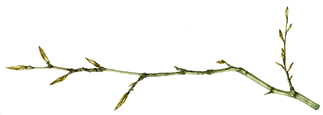
Wildflower families: Asteraceae
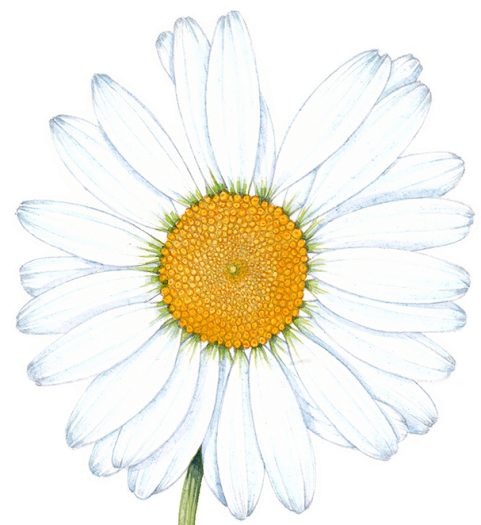
Wildflower families: Asteraceae, the Daisy family is one in a series of blogs on common flower families. My online Field Studies Council course gave me the idea for this series. I spend a lot of time drawing wildflowers, so it’s a good to learn more about their families and similarities and differences.
For descriptions of plant anatomy, look at my the basics of botany blog, and on fruit types. What’s in a name 1 and part 2 discuss how Latin names work and why they matter. I have blogged on this family before, as it intrigues me, so feel free to look at my earlier blog.
Some of the other families I’ve examined include the Ranunulaceae (Buttercups), Caryophyllaceae (Campions), Rosaceae (Roses), Fabaceae (Peas), Brassicaceae (Cabbages), and Apiaceae I hope to add a few more over the coming months.
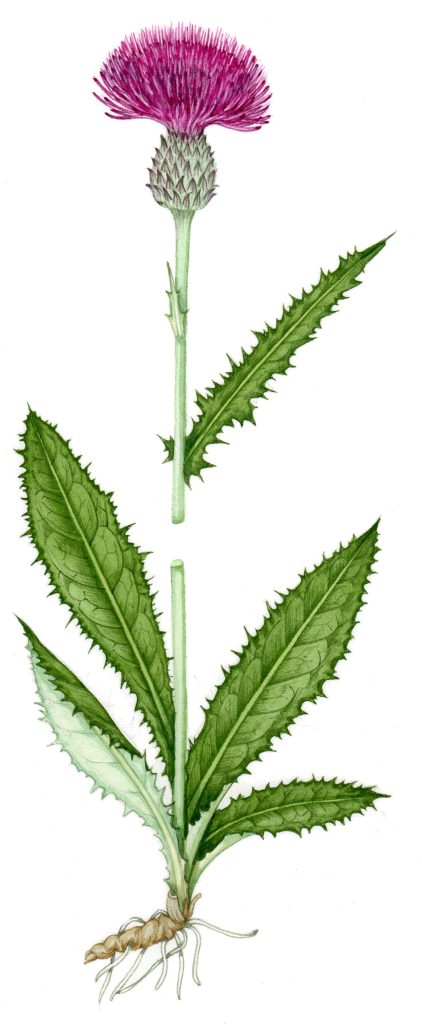
Meadow thistle Cirsium dissectum
I am a botanical illustrator, but not a trained botanist. So if you see a mistake, please let me know, thanks.
Wildflower families: Asteraceae
The daisy family has 1317 genus and over 21,000 species. This makes it one of the most prolific plant families on earth. Flowers are small and either disc or ray form. They cluster together in flowering heads called a capitulum, and have a distinctive appearance. Dandelions, daisies, and thistles are Asteraceae. Seeds are cypsela, a type of achene. As well as daisies, dandelions, and thistles, other Asteraceae include many garden flowers. Chrysanthemum, Dahlia, Rudbeckia, Cosmos, Goldenrod and Gerbera are all in this family.
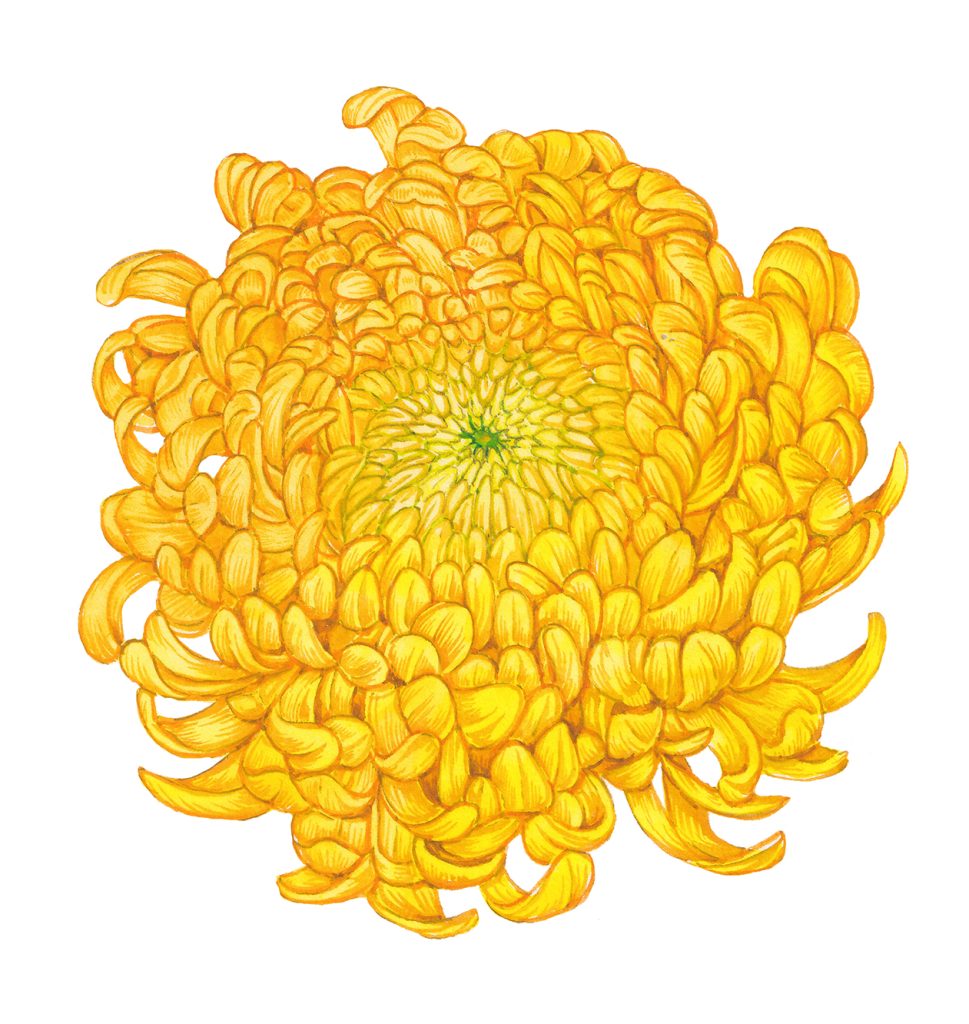
Chrysanthemum flower (Pom-pom variety)
Food crops are limited to Lettuce, Chicory, Salsify, Endive, and Globe artichoke. The oil from Sunflower seeds is economically important, and the tubers of the Jerusalem artichoke are edible. There are lots of wildflowers in the Asteraceae, some (like Dandelion and its’ allies) can be incredibly difficult to identify to species level. Knapweeds, Teasels, Chamomile, and Marigolds are Asteraceae.
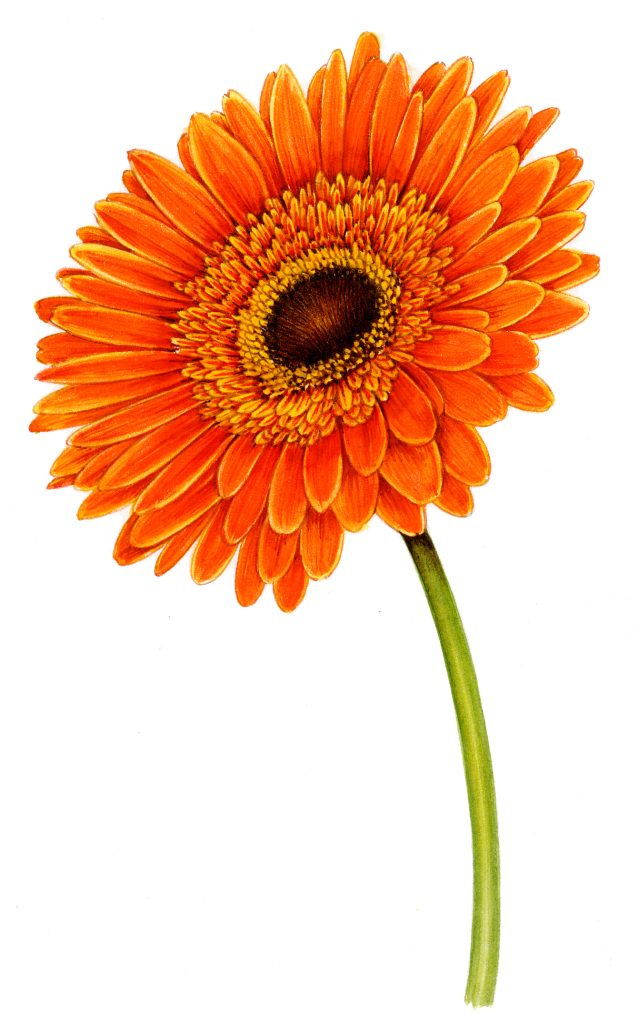
African daisy Gerbera
Asteraceae overview
Plants in this family have varied leaves which are mostly alternate. They don’t have stipules and frequently grow in basal rosettes, as well as on the stem. A stipule is like a tiny leaf that grows in pairs at the base of a leaf stalk, next to the stem. Flowers have five fused petals, and their stamens fuse to this tube. Flowers (florets) are disc or ray form. The calyx is modified to a pappas. Seeds are a dry cypsela, achenes with one seed.
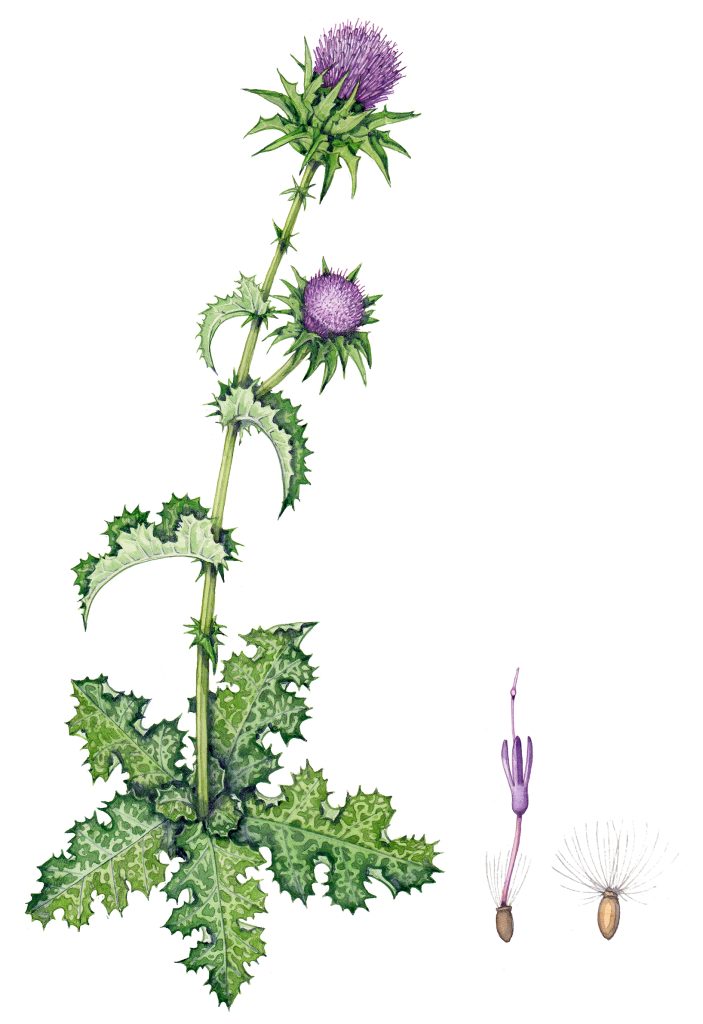
Milk thistle Silybum marianum with detail of disc floret and seed with calyx modified to a pappas
The name Asteraceae comes from the ancient Greek for star, via the Latin Aster. It refers to the star-like flowering head. This family used to be known as the Compositae, reflecting the composite nature of the flowering heads.
Asteraceae Leaves
The amount of variety in Asteraceae leaves is enormous, and they can not be reliably used to identify the family. They can be simple or pinnate (divided). Although most are alternate they can be whorled or opposite.
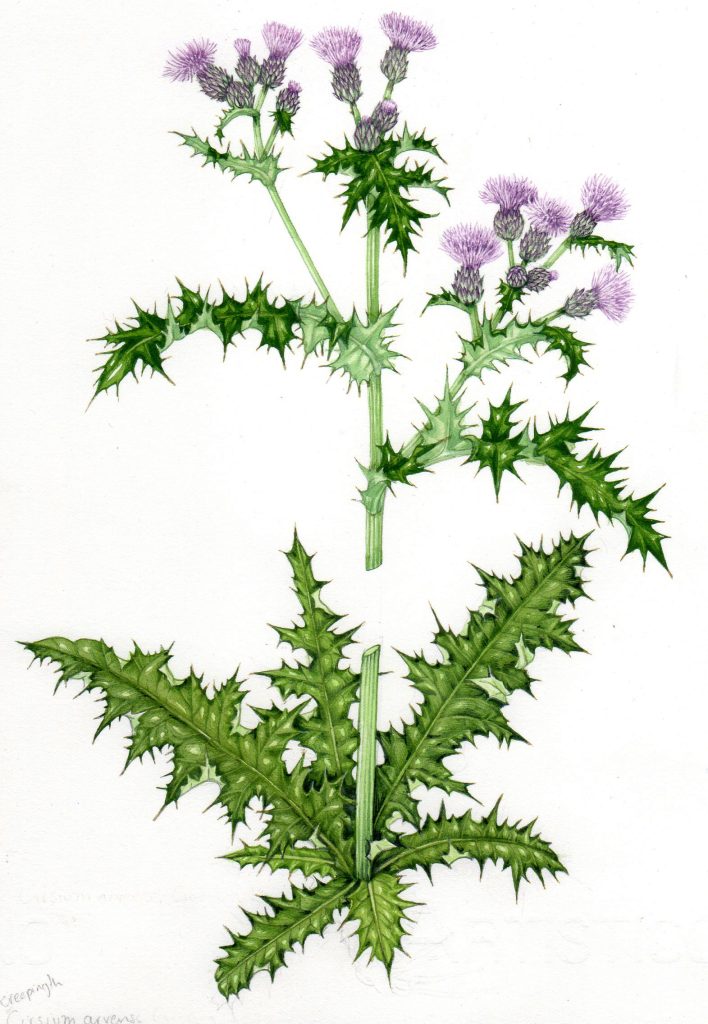
Creeping Thistle Cirsium arvense with alternate divided stem leaves and a basal rosette
However, most Asteraceae have a basal rosette, and most leaves are towards the bottom of the stem. These are often larger and much more divided than higher stem leaves. Look for a difference between base and stem leaves, this suggests a plant might be in the Daisy family. A good example is the Sow-thistle.
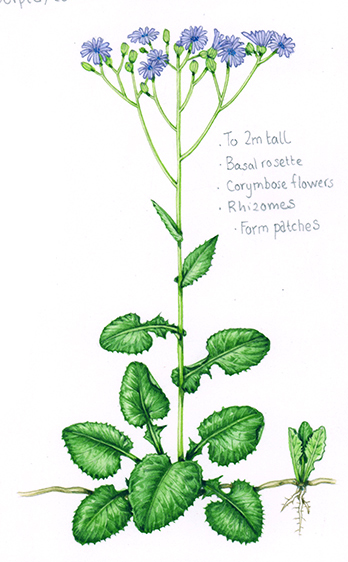
Common blue Sow-thistle Cicerbita macrophylla
However, wildflowers from other species (like the Harebell Campanula rotunidfolia from the Campanulaceae) also have different basal and upper leaves.
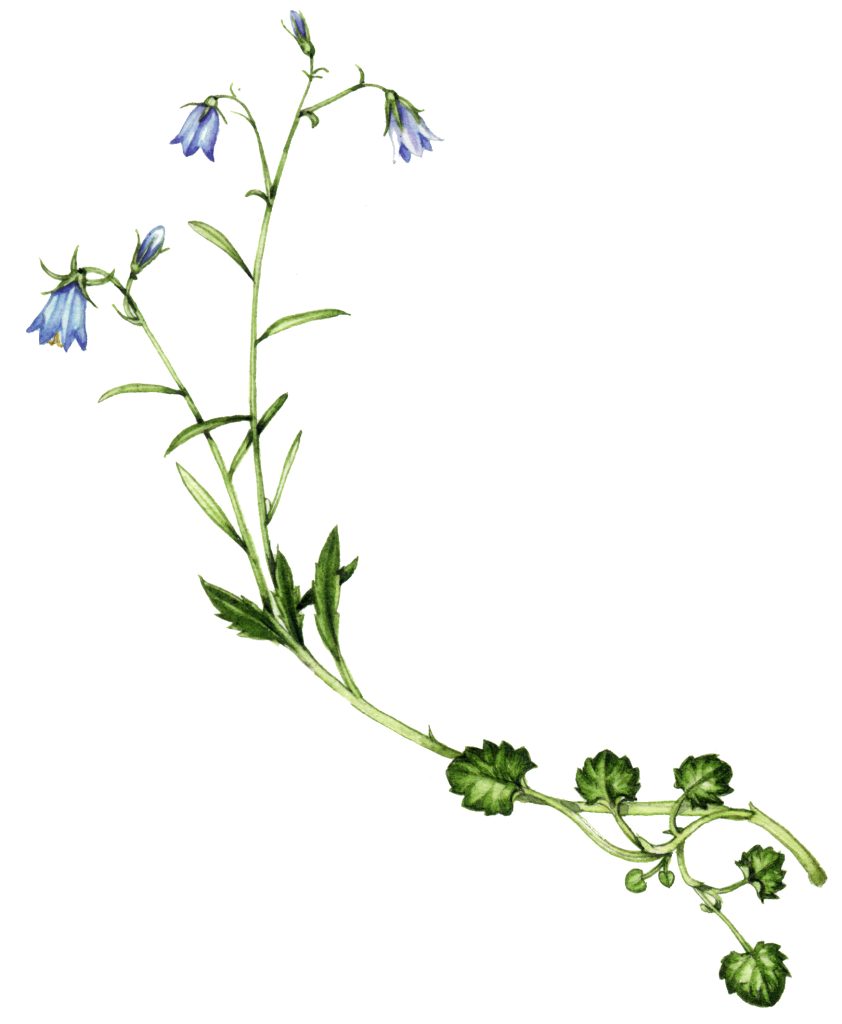
Harebell Campanula rotundifolia showing different stem and basal leaves. Harebell is NOT an Asteraceae
Asteraceae Flowers: Ray and Disc florets
All flowers are made of an assemblage of smaller florets, held in a capitulum. They come in two forms, disc and ray florets. Disc florets are tubular, made of five petals fused into a tube, and have radial symmetry. Ray florets are irregular, with one elongate petal (called a ligule) which tapers to a fused base around the flower parts. Each yellow bit of a dandelion flower is a separate ray floret. The florets attach to a receptacle, and the whole is the capitulum.
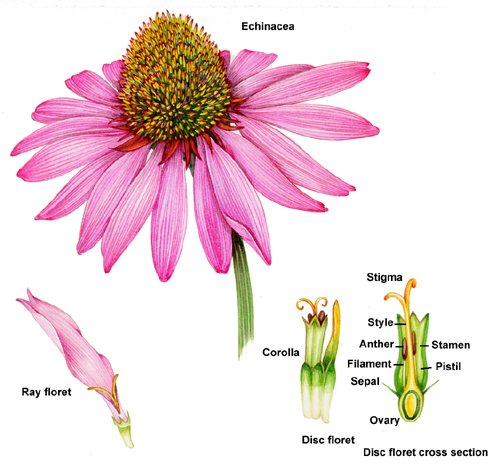
Echinacea diagram
Some species are a mix of ray and disc florets, like the Scabious, Cornflower, and the Daisy. Ray florets on the outside, disc florets within. The easiest plant to see this on is the enormous capitulum of the Sunflower, Helianthus annus,
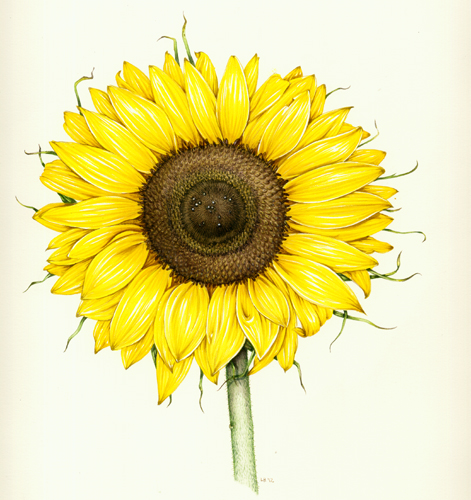
Sunflower Helianthus annuus, Yellow ray florets on the outside, brown disc florets inside
Others are only disc florets. Knapweed and Thistles fall into this category as does the Button-weed, Cotula.
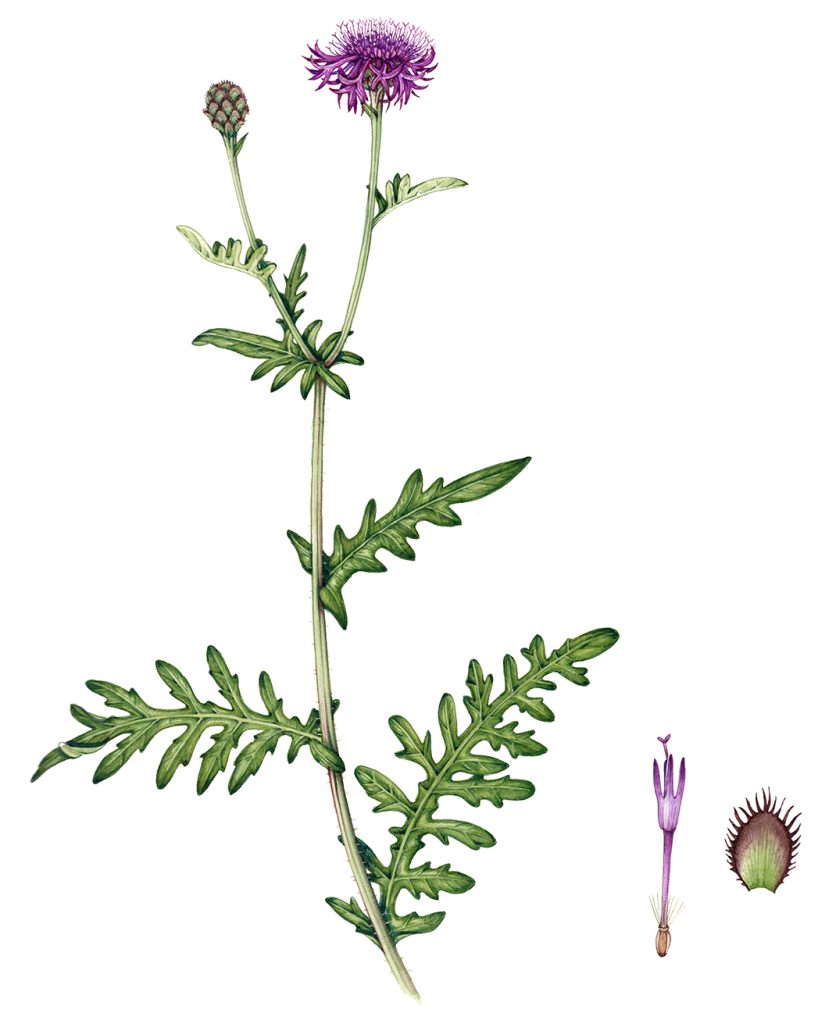
Greater knapweed Centaurea scabiosa with disc floret and bract
Asteraceae which only have ray florets include all the Dandelions (Taraxacum agg), Hawkweeds (Hieracia), and Hawk’s-beard (Crepis).
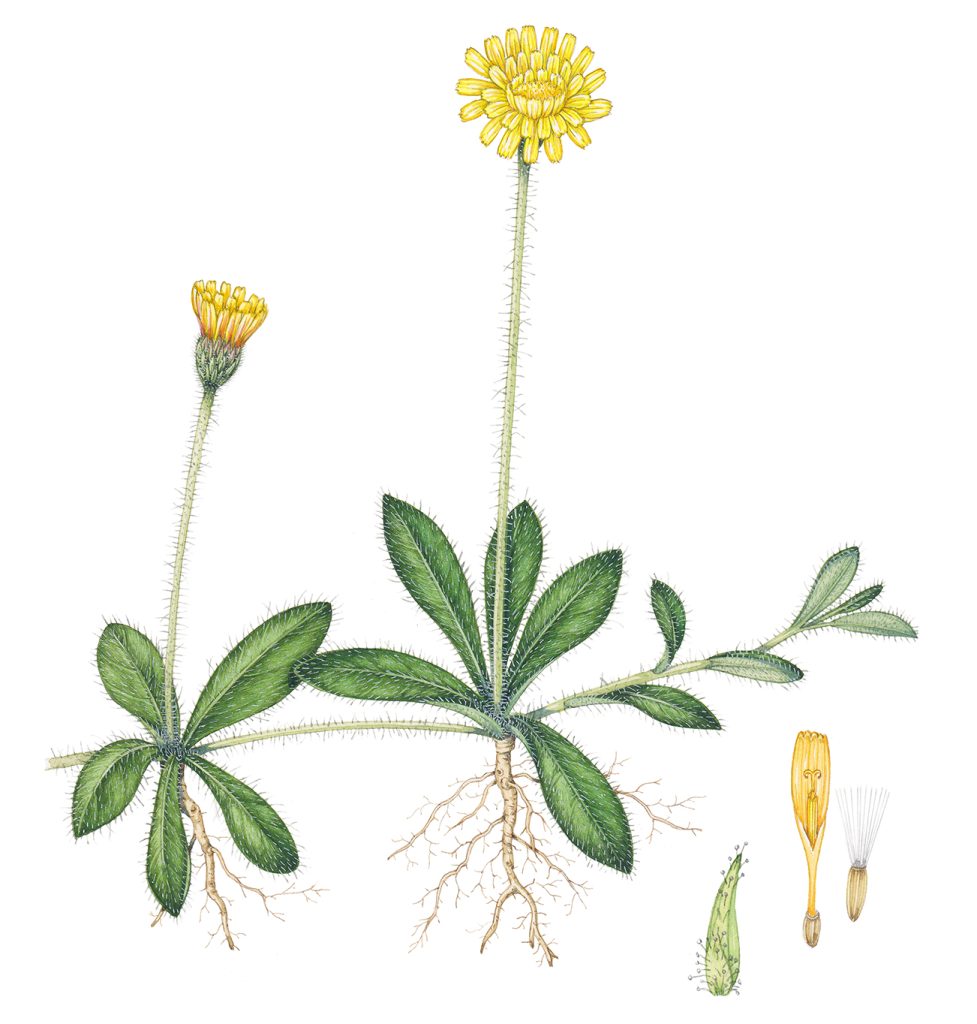
Mouse-ear Hawkweed Pilosella officinarum
Asteraceae Flowers: Pappas and Involucral bracts
The sepals and calyx are reduced to a ring of hair-like pappus which become far more prominent when the seeds mature.
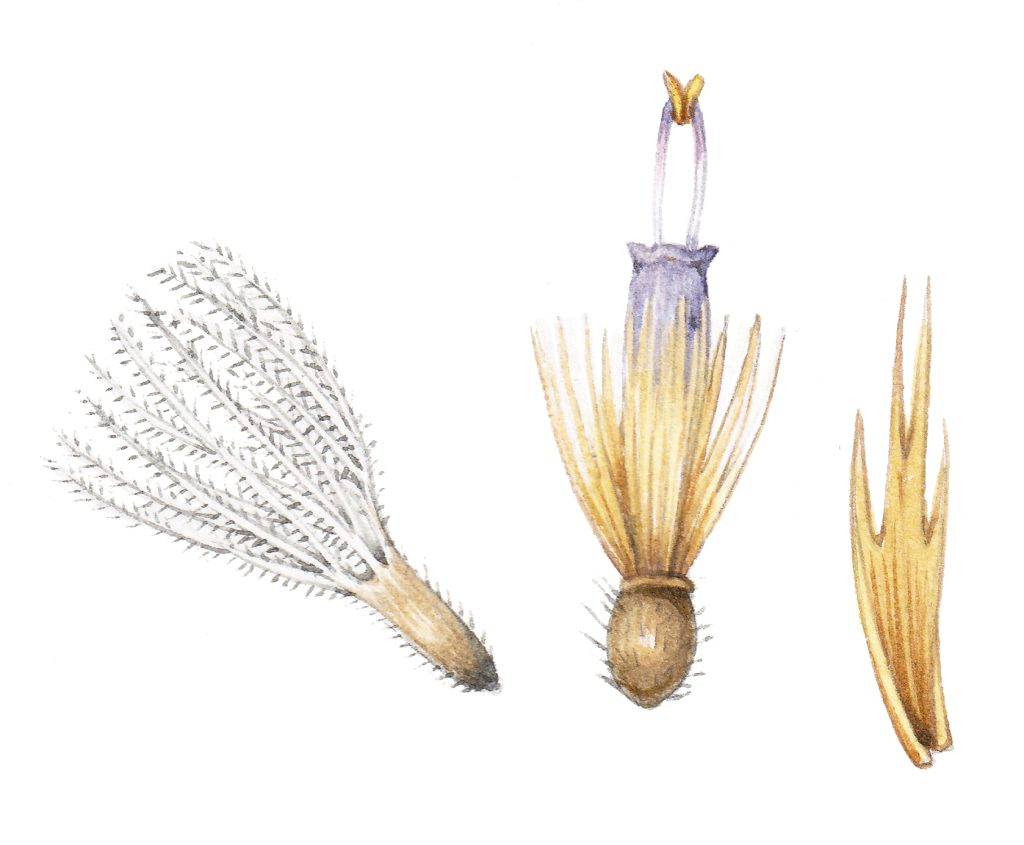
Carline Thistle Carlina vulgaris with seed, pappas around disc floret, and involucral bract detail
Often the capitulum is flanked with whorls of sepal-like leaves. These are known as involucral bracts, or phyllaries. The number of whorls can help differentiate between species, as can their colour, and whether or not they have gland-bearing hairs. This becomes really important when trying to identify the Dandelion-like species, known as Taxacarum agg, showing that there’s a whole aggregation of similar species. A really helpful resource is the BSBI guide to Dandelions by A. J. Richards, but even experts accept that sorting these out to species level is difficult.
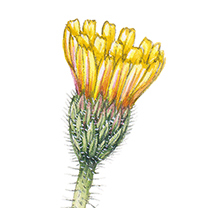
Mouse-ear Hawkweed Pilosella officinarum showing overlapping hairy involucral bracts
Capitulum may grow solitarily (like the Daisy) or in many-flowered clusters (like the Goldenrod Solidagao species)
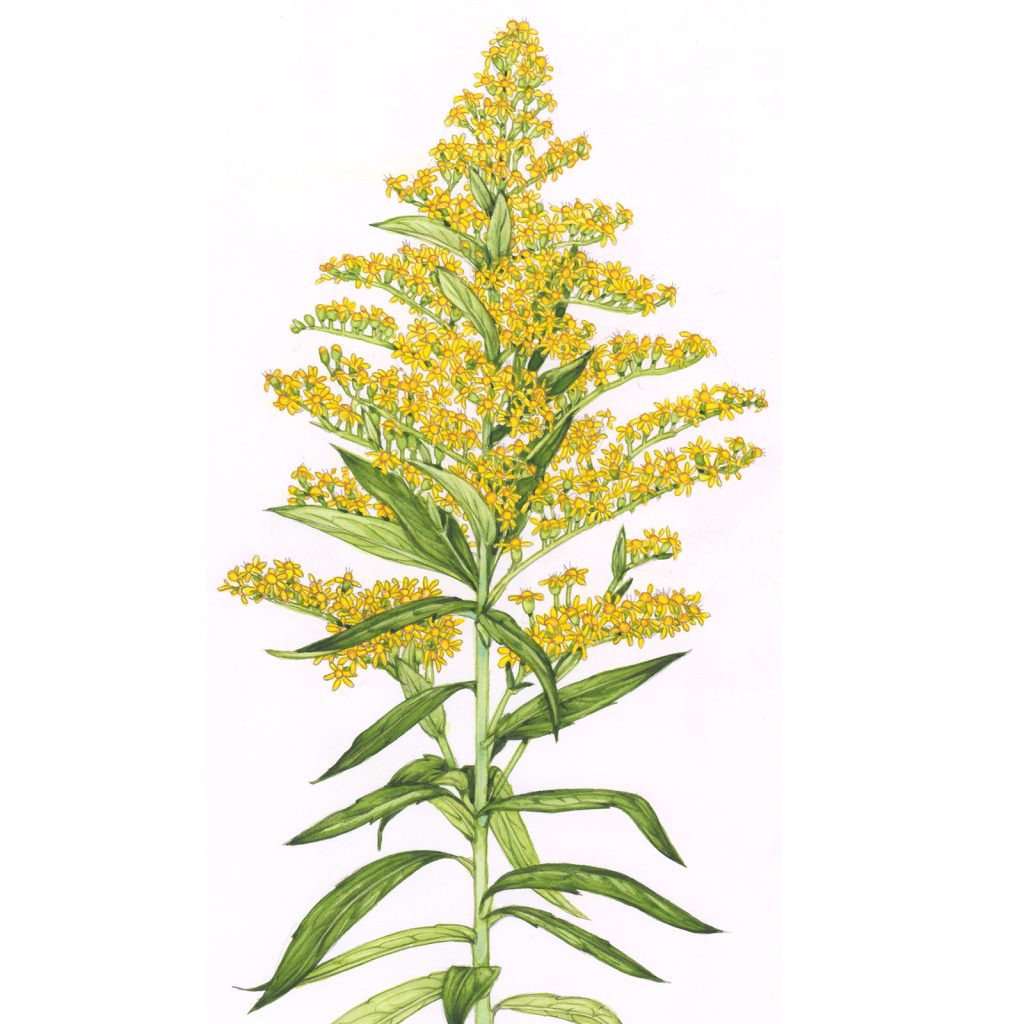
Giant or Early Goldenrod Solidago gigantea
Each flower is bisexual and has five stamens with short filaments, fused to and alternating with the lobes of the corolla. Anthers are fused to filaments, and face inwards, forming a tube around the style.
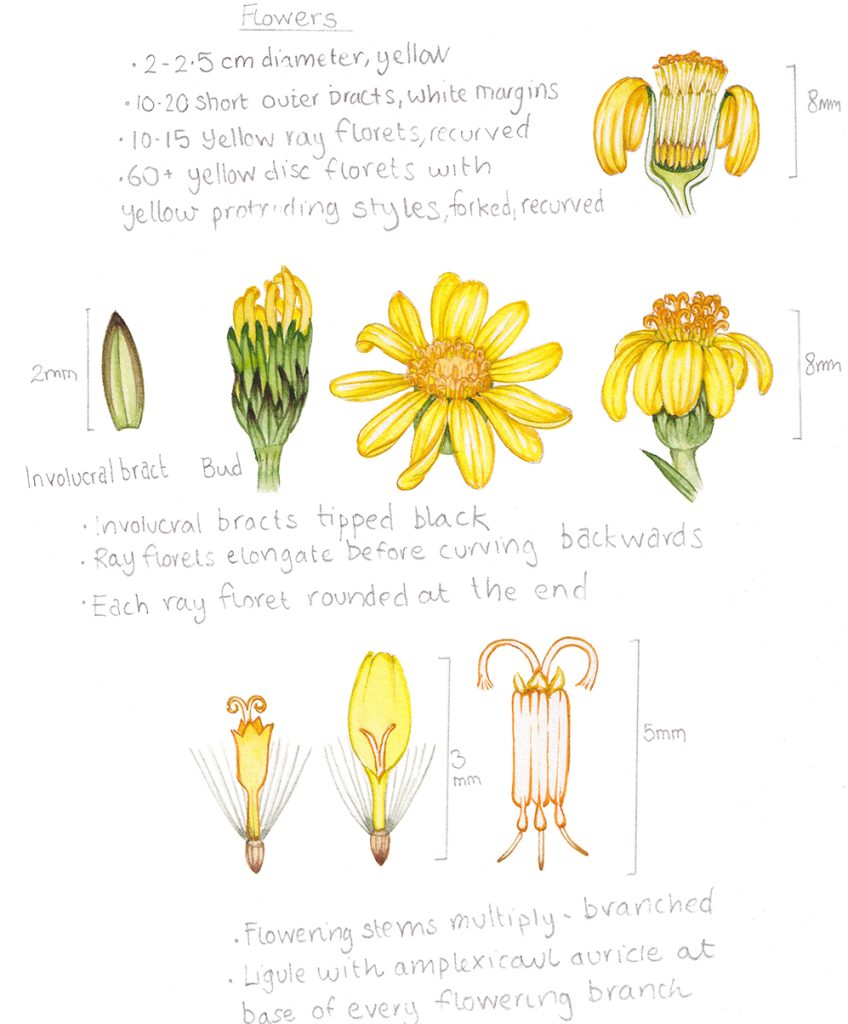
Narrow-leaved Ragwort Senecio inequidens details
There are two carpels (the female reproductive organ of a flower, consisting of a style, an ovary, and a stigma. Ovaries are inferior, growing below the flowering parts. For more on ovary positions look at my blog on the ovary. The stigma, the top of the style and part that pollen lands on, is always forked and frequently curves back on itself. The style grows within the tube made by the anthers, with the curved stigma emerging at the top.
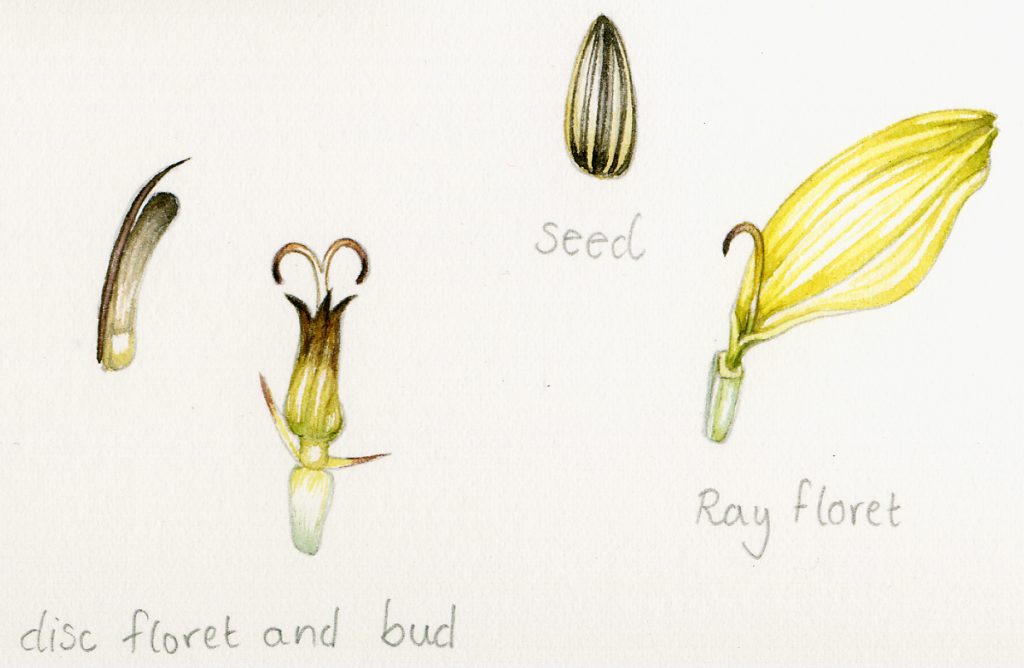
Sunflower Helianthus annus Ray and disc floret, the latter clearly showing emergent curved stigma
Asteraceae Fruit
The fruit of the Asteraceae are cypsela. Cypsela are a type of achene, a single-seeded dry fruit. Cypsela come in various shapes, and often are crowned with the pappas, hairs. Pappas frequently lengthen after fertilization to form the familiar dandelion clocks and fluffy seeds we see being disbursed by the wind.
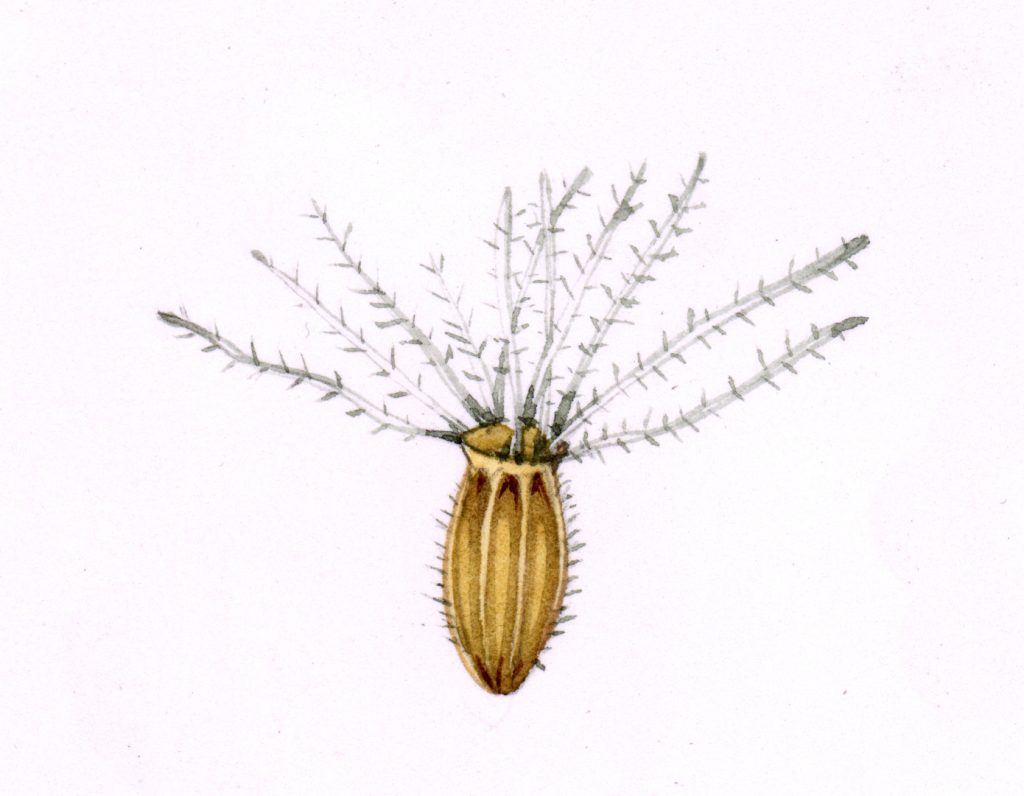
Giant or Early Goldenrod Solidago gigantea seed
There’s plenty of variation here, too. Some cypsela have beaks, a stem holding the pappas (like a Dandelion). Others simply have a ring of hairs attached to the seed. The pappas hairs can be simple or branched. Some species like the Pot marigold, Calendula officianlis have no pappas, but are an amazing curved and lumpy shape.
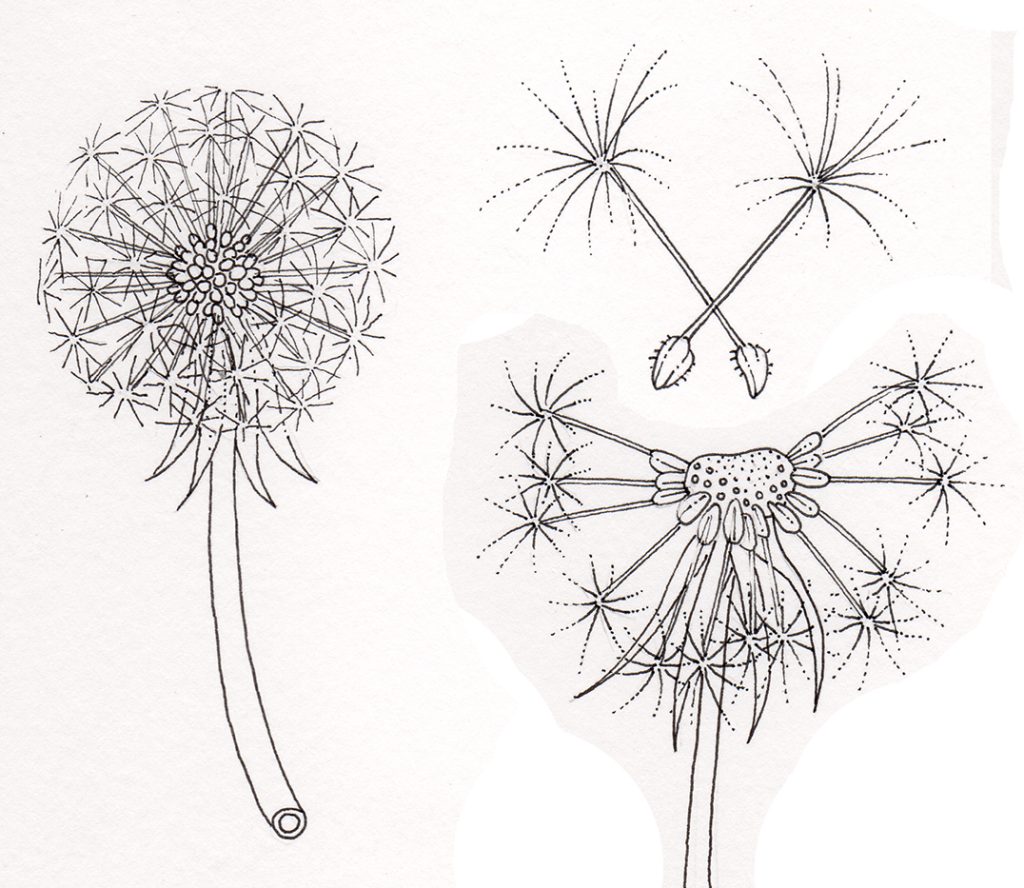
Dandelion Taxacum officinale seeds
Asteraceae: Other species
As well as the species listed, Yarrow, Tarragon, Arnica, Burdock, Groundsel, Ragwort and Ragweed, and Echinaceae are all members of the Daisy family.
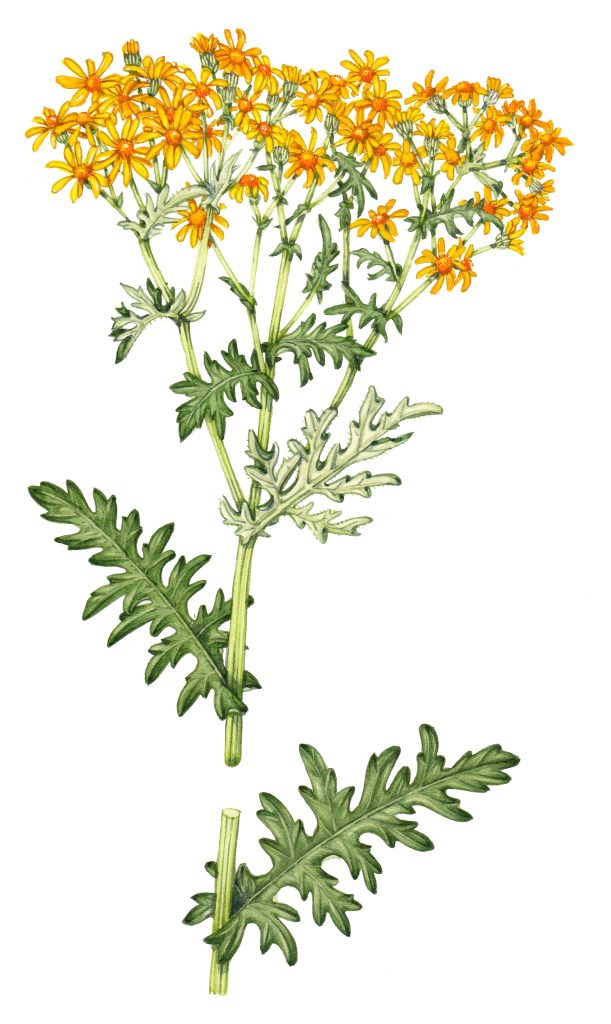
Ragwort Senecio jacobaea
Conclusion
Sorting out the Asteraceae, with its ray and disc florets and cypsela, seems daunting at first. However, it’s a magnificent family, and the tiny florets are well worth a closer look with a hand lens. I’ll be doing more of these wildflower family blogs over the coming months. References include my FSC botany course delivered by Iain Powell, the Common Families of Flowering Plants by Michael Hickey & Clive King, and the excellent Naturespot website.
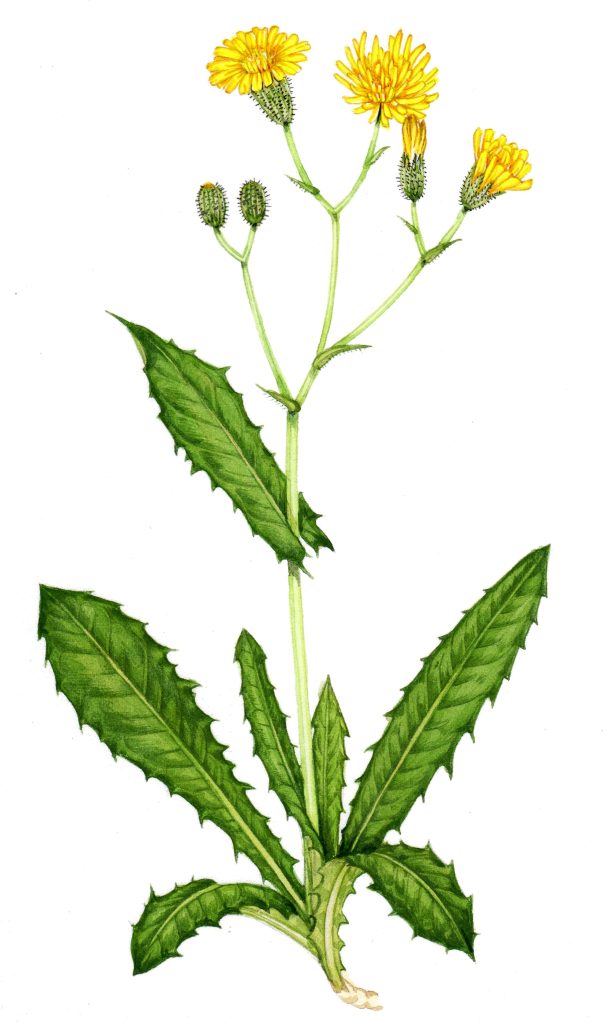
Marsh hawksbeard Crepis paludosa
