




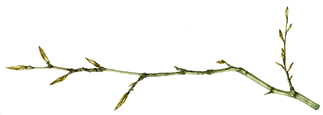
Wildflower families: Lamiaceae
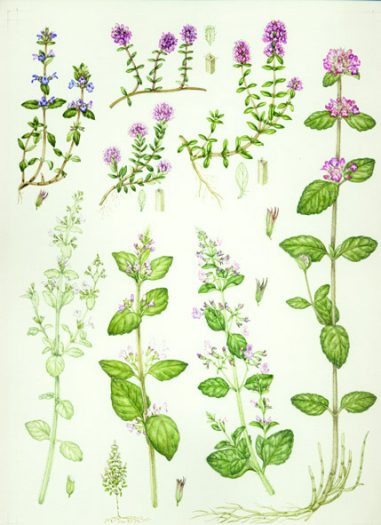
Wildflower families: Lamiaceae, the Dead-nettle family is the latest in my series of blogs on wildflower families. My online Field Studies Council course on ten common wildflower families, delivered by Iain Powell, provided information and inspiration. I draw and paint wildflowers all the time, so learning more about what separates the families and what are common features is really useful.
For definitions of botanical terms, look at my blog on the basics of botany blog, and there’s another on fruit types. What’s in a name 1 and part 2 explain Latin names and why they matter.
Other wildflower families I’ve discussed include the Plantaginaceae (Plantains), Rosaceae (Roses), Ranunulaceae (Buttercups), Caryophyllaceae (Campions), Fabaceae (Peas), Brassicaceae (Cabbages), and Apiaceae (Carrots); with Asteraceae (Daisies) and Orchidaceae (Orchids) yet to come.
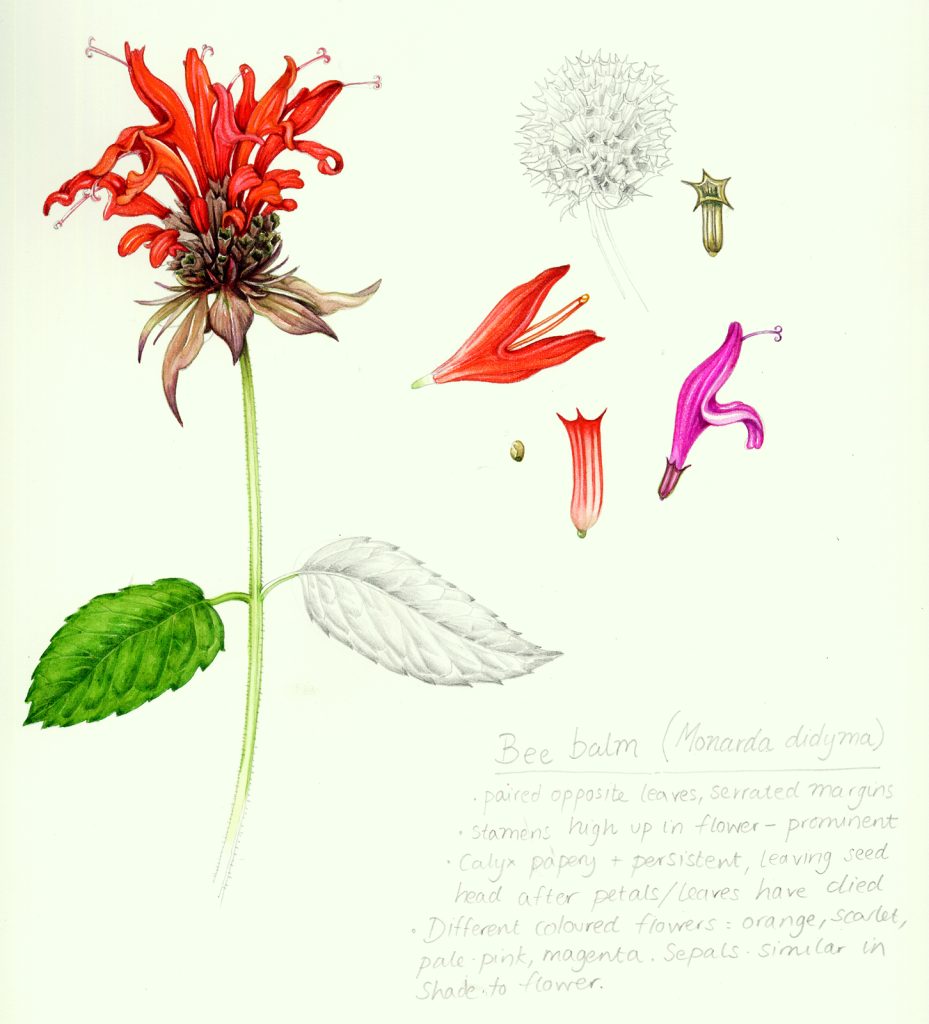
Bee balm Monarda sketchbook study
I know a bit about wildflowers from illustrating them, but I am not a trained botanist. So if you see a mistake, please let me know, thanks.
Wildflower families: Lamiaceae
The Dead-nettle family has 224 genera and over 5600 species globally. Stems are square and leaves are opposite and simple, without stipules. They are often hairy and may contain volatile oils that make the plants smell strong. Flowers have a fused corolla with a two-lipped lower petal. There are four stamen, and two fused carpels. Seeds are held in nutlets.
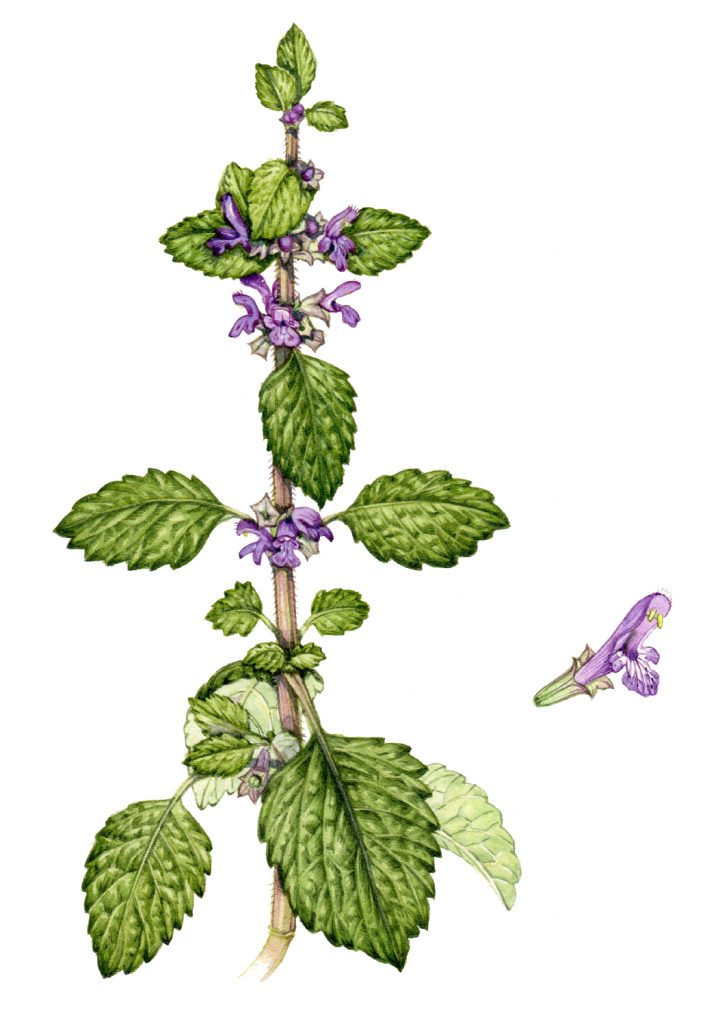
Black horehound Ballota nigra
As well as Dead-nettle, this family contains garden flowers like Salvia, Phlomis, the houseplant Coleus, and Lavender. The volatile oils mean many of these flowers are fragrant and used as herbs. These include Rosemary, Oregano, Marjoram, Sage, Thyme, Mint, Hyssop, and Bergemot. Some of these species are grown commercially in the perfume and food-crops industries. Wildflowers in this family include Yellow archangel, Woundwort, Bugle, Selfheal and Betony.
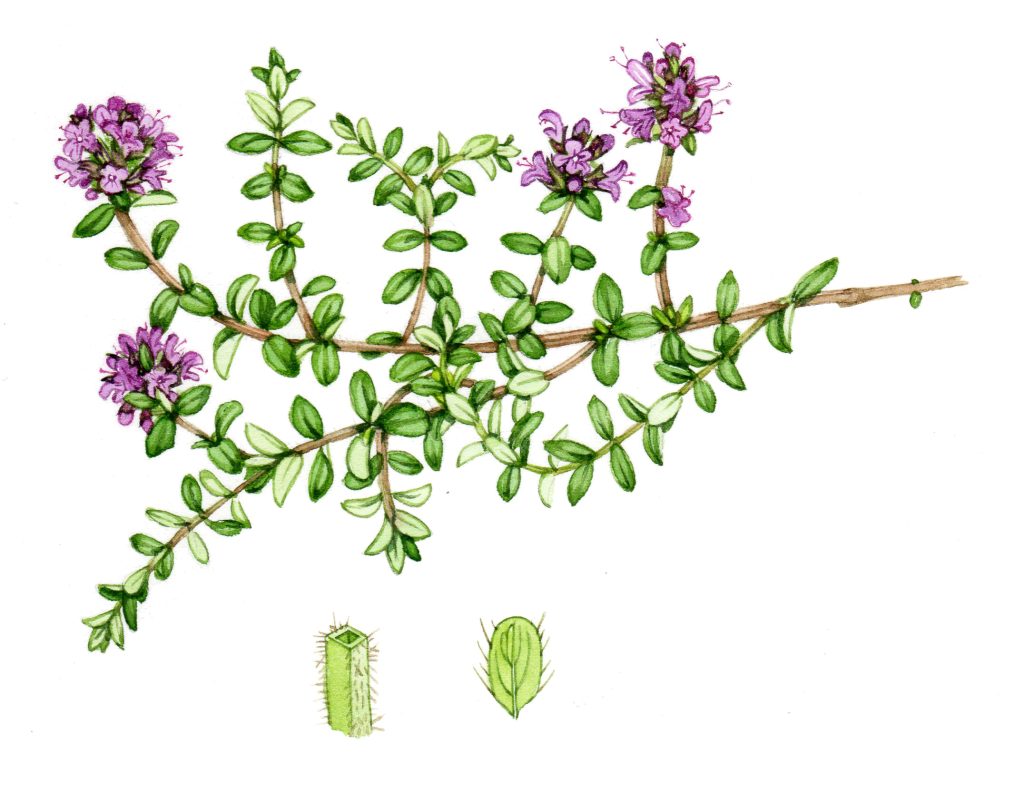
Wild thyme Thymus praecox
(The Stinging nettle Urtica dioica is not a member of the Dead-nettle family.)
Lamiaceae overview
Plants in this family have square stems, tend to be hairy, have paired simple leaves and a turret of flowers called a Verticillaster. This consists of a series of whorls of flowers. Many are aromatic and all produce four seeds in a fruit called a nutlet.
The name Lamiaceae replaces the older family name of Labiatae which comes from the ancient Greek word Iamos, meaning jaws, and seems refer to the way flowers seem to swallow small insects when they enter the corolla tube.

Harper Collins Flower Guide plate showing members of the Lamiaceae family
Some members of this family reproduce asexually, without seeds. Yellow archangel sends out runners and Mint is notorious for taking over swathes of a garden.
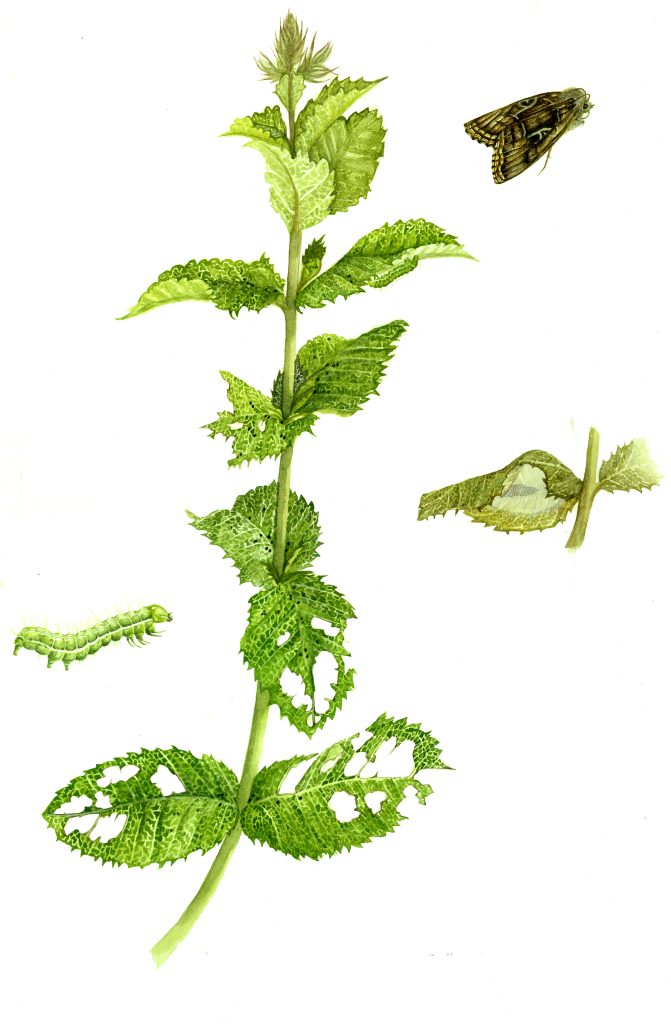
Apple mint Mentha suaveolens, a species which sends out runners, with the Silver Y moth
Lamaceae Leaves
Leaves grow from the square stems, which are often hairy and sometimes flushed purple.
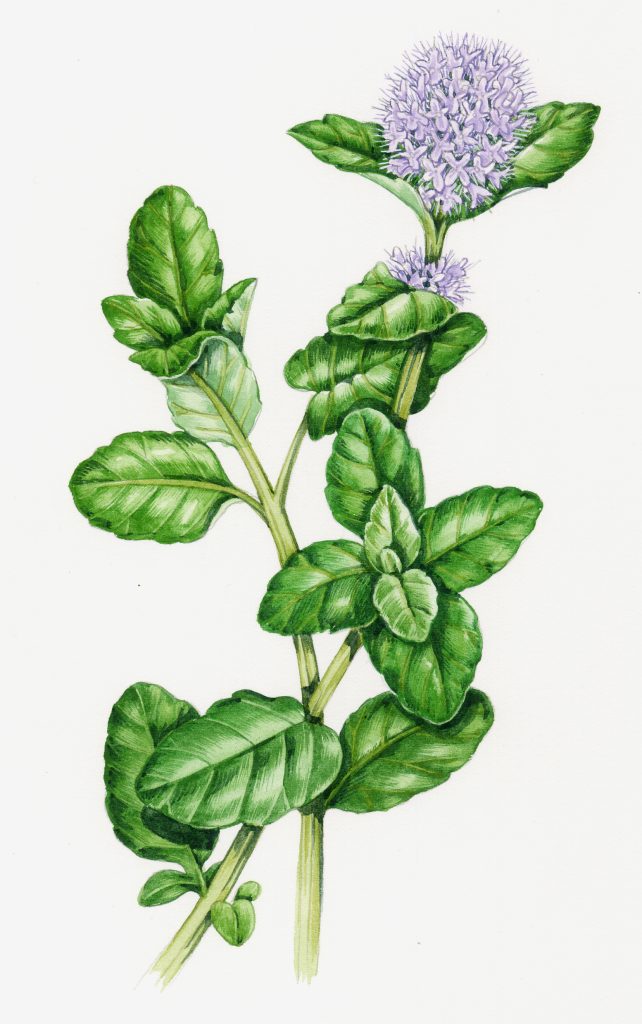
Watermint Mentha aquatica
They are opposite and never compound, and they lack stipules.
Many have toothed margins (for more on margins check out my blog). They have deep veins and are often hairy. Lots have glands in the epidermis which secrete volatile oils, making the leaves aromatic.
Lamaceae Flowers
Flowers in this family grow in a turret formation called a Verticillaster.
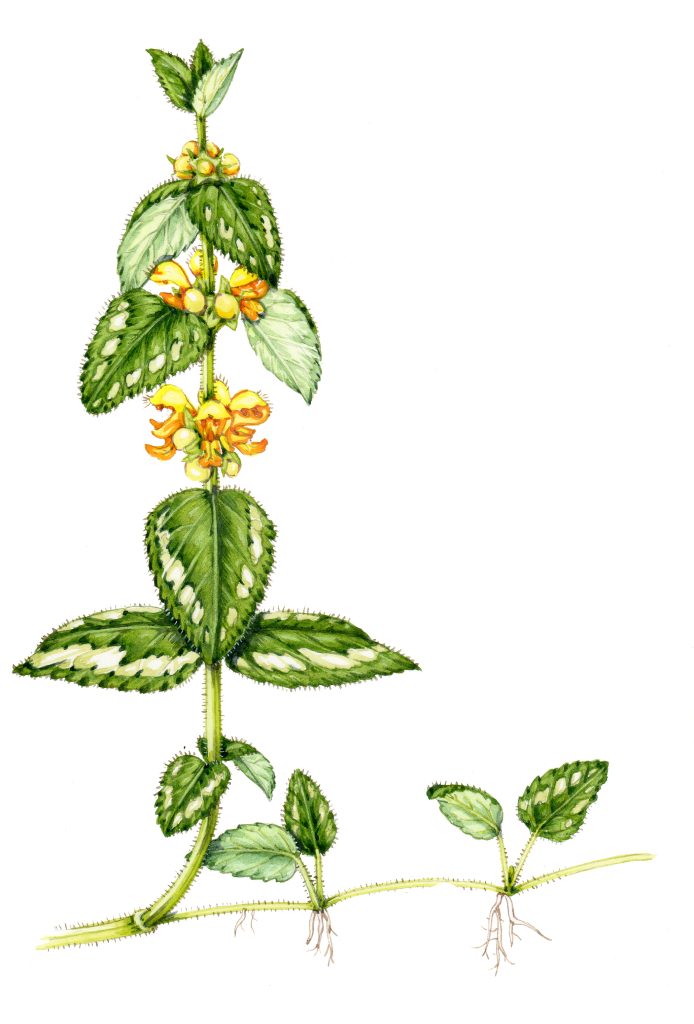
Variegated Yellow Archangel Lamiatrum galeobdolon subsp argentum
The flowers of the Dead-nettle family are mostly bisexual and irregular. They have bilateral symmetry.
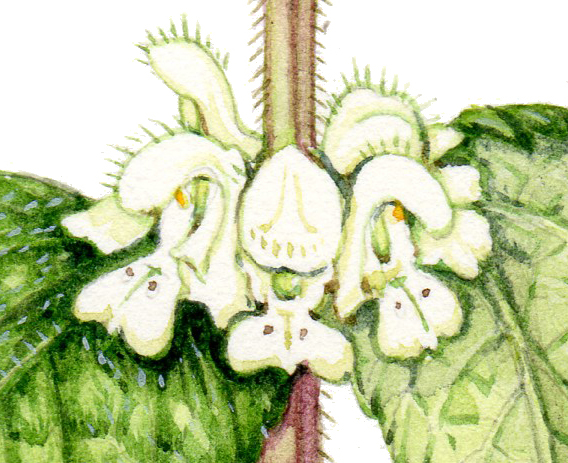
White dead nettle Lamium album flowers
The five sepals are fused into a tubular calyx with different shaped teeth, depending on species. It remains and cradles the fruit til the seeds are ripe.
Five petals are fused into a corolla tube; the upper petal is often hood-like and may be fringed with hairs. The lower corolla lip is mostly two-lipped.
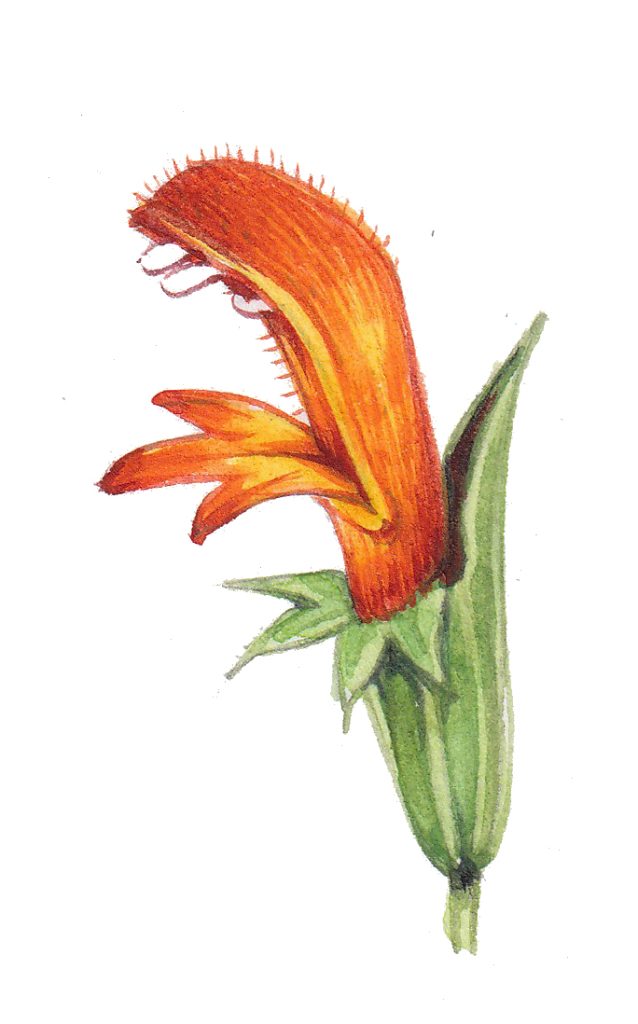
Klip dagga Leonotis nepetifolia flower
There are four free stamens Inserted under the corolla “hood”, two long and two short (except in Gypsywort Lycopus europaeus which has two). The stamen filaments are attached to the corolla tube and the anthers point inwards.
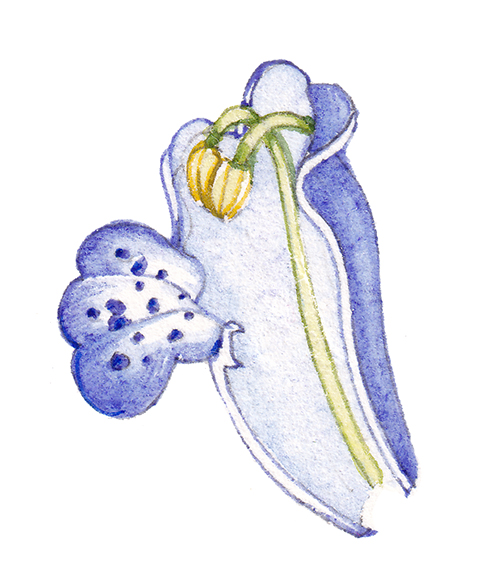
Skullcap Scutellaria galericulata cross section, the 2 lower stamens concealed
There are two fused carpels and a superior ovary (meaning it develops seeds above the flowering parts.) For more on ovary positions look at my blog on the ovary. The carpels sit on a nectar-producing disk. The stigma is two lobed and grows between the two carpels.
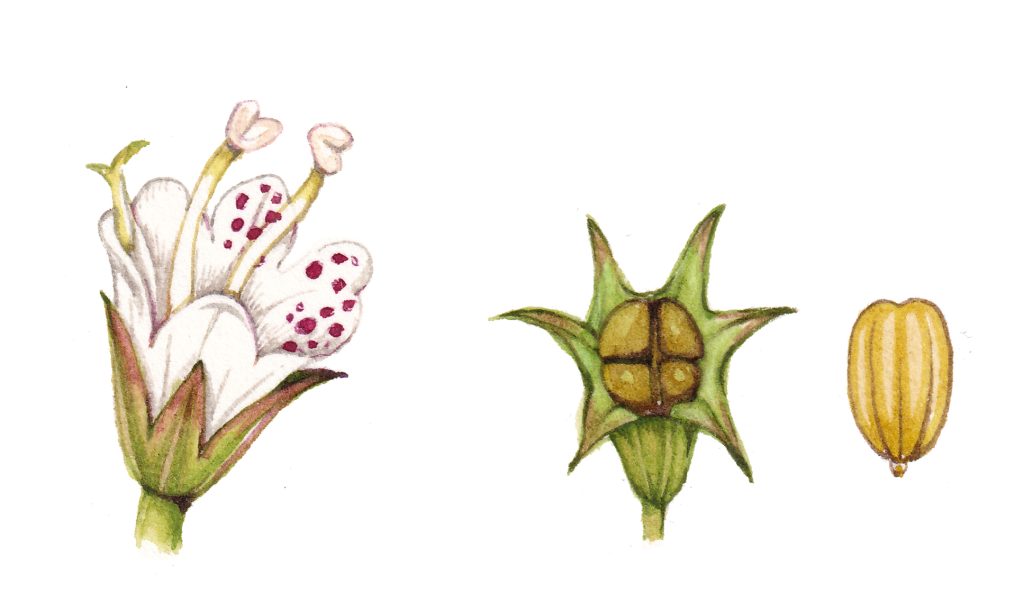
Gypsywort Lycopus europaeus detail of flower (with only 2 stamens) calyx and seed
Lamaceae Fruit
As the carpels of the Lamaceae species mature, they divide in two. This produces an individual fruit with four seeds which are dark nutlets. Each contains one seed. Then, when ripe, this quartet of seeds are shaken out of the cup-like corolla.
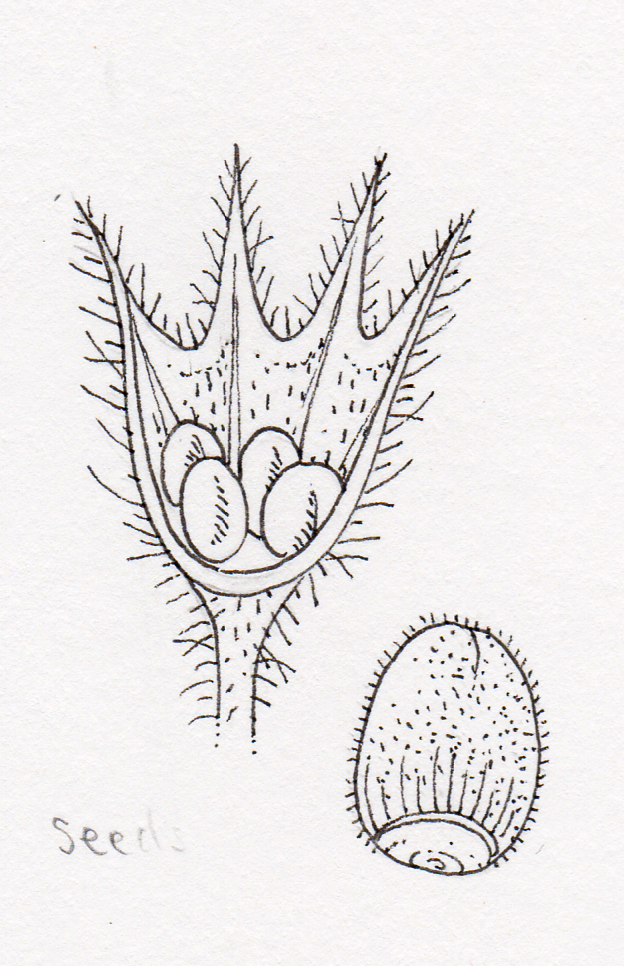
Water mint Mentha aquatica nutlet and enclosing calyx
Lamaceaee: Other species
As well as the aromatic herbs and dead nettles, this family contains Skullcap Scutellaria galericulata and the Bee-balm Monardia fistulosa. There is also Catmint Nepeta cataria, Henbit Lamium amplexicaule, and the decorative Bells-of-Ireland Molucella laevis.
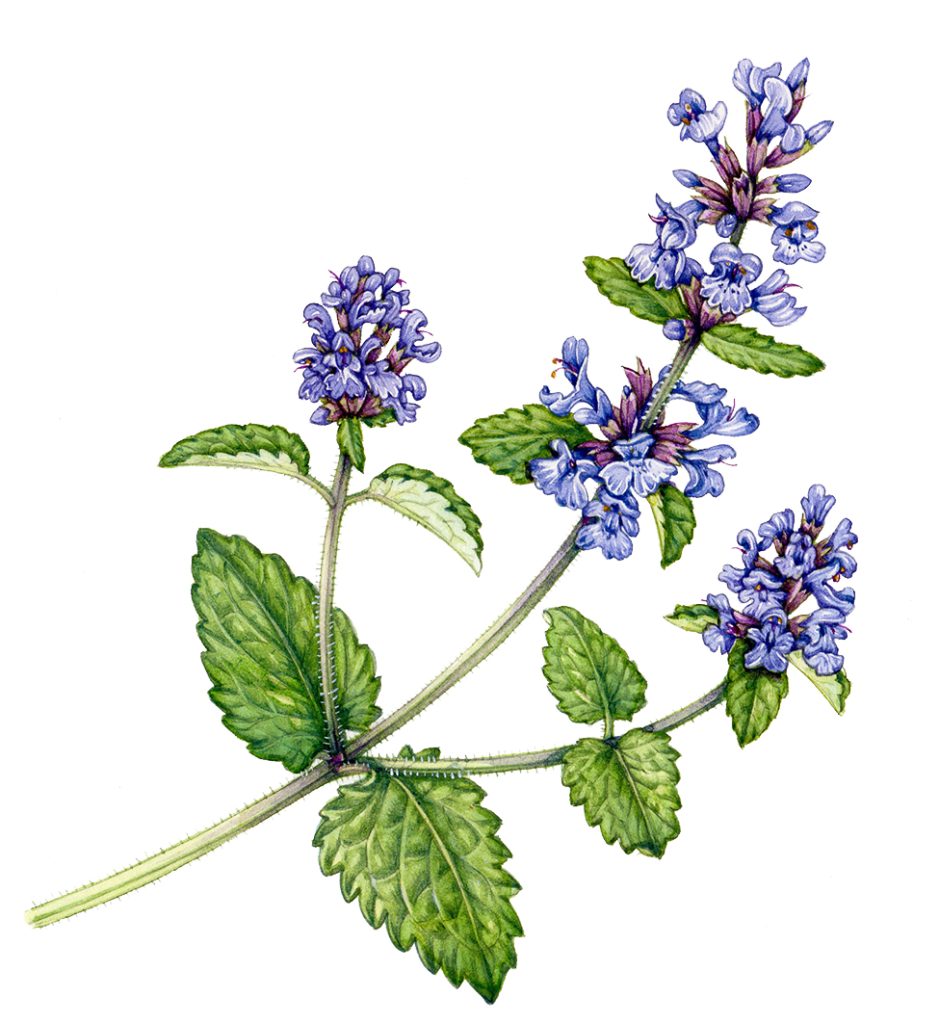
Catnip Nepeta cataria
They are very good sources of nectar for pollinators including bees and flies. Insects like Bumblebees seem to be attracted to purple and pinks, the colour of lots of Dead-nettle flowers.
Conclusion
I hope this Lamaceae wildflower family blog was useful. I’ll be doing a couple more of these blogs over the coming months. References include my FSC botany course, the Common Families of Flowering Plants by Michael Hickey & Clive King, and the excellent Naturespot website.
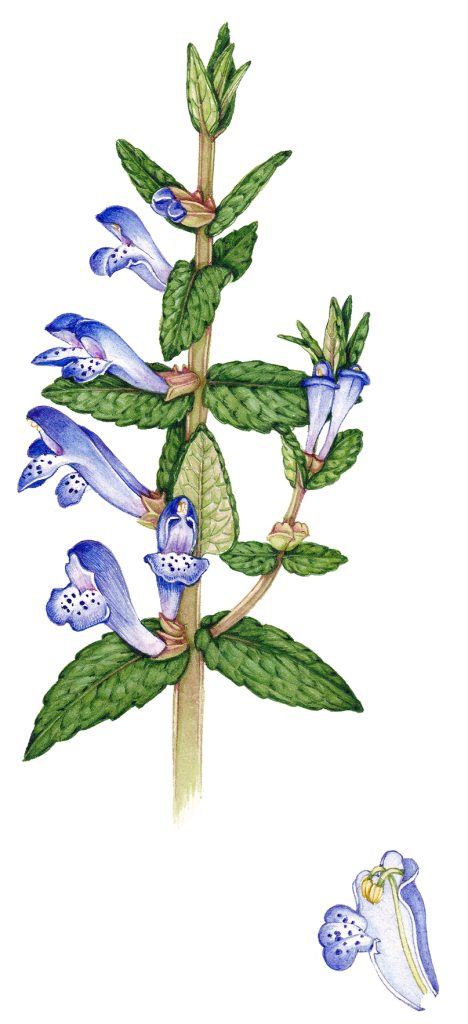
Skullcap Scutellaria galericulata

I am finishing the Advanced Course in Botanical Illustration through Denver Botanical Gardens (which I highly recommend!) It has been a great adventure. I have to say that you are so incredibly generous with your knowledge that one could almost become an illustrator following your Blog and YouTube posts. I am one of your admirers. Thank you so much for all you do! I will continue to follow and review everything!
Thank you so much Bronwyn, youve just made my day with such a generous comment. Hope the course continues to go really well for you! And thankyou