loading
Loading

    Read more Contact me me for usage or prints
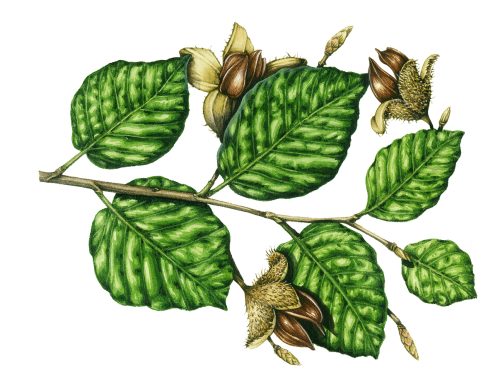
    beech twig

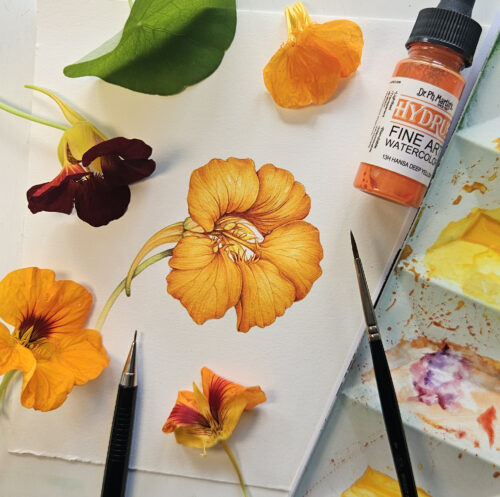
    Nasturtium

    The nasturtium, Tropaeolum majus, is one of my favourite garden flowers.  It’s a blaze of colour in the autumn, is edible, and is a great subject to draw. Family Nasturtium are members of the Tropaeolaceae.  Members are succulent with alternate leaves and flowers borne singly on stems.  They’re climbing vines, originating in South America.  Other […] Read more
    The Bad Garden

    The non eco-garden is a companion blog to my earlier one, explaining and extolling the virtues of a garden that encourages wildlife and wild flowers.  Eco or Wildlife gardens are also excellent for soil health, and have good wider ecological implications for the environment.  This blog examines the flip side; things we may unintentionally do, […] Read more

    Trees: Birch

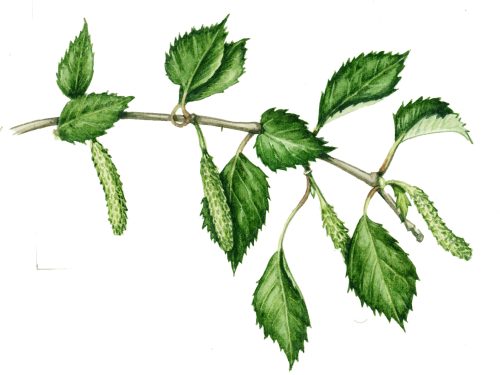
    Birch trees: The Silver and the Downy Birch   There are two main Birch trees in the UK, the Silver birch Betula pendula and the Downy birch Betula pubescens.  The Downy birch tends to grow better in wetter areas and in the north.  The Silver birch likes drier soils and is often found growing ornamentally […] Read more

    Trees: Beech

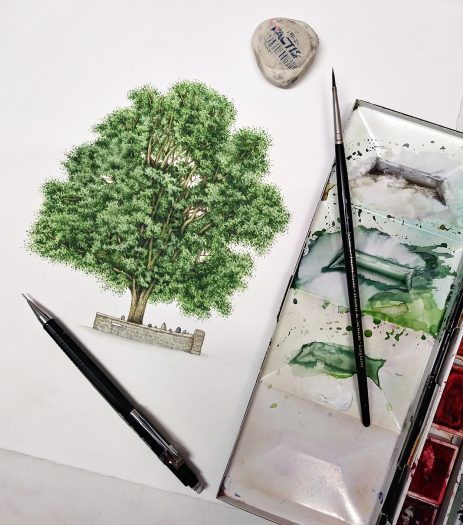
    Introduction Beech trees are common across Britain, favouring chalky soils.  The oldest Beech trees live up to 400 years.  You’ll find them in open spaces and in woodland and can tell them straight away by their smooth bark.  The trees produce beech mast which is nutritious for animals, and the canopy supports wildlife.  Beech wood […] Read more

    Trees: Elder

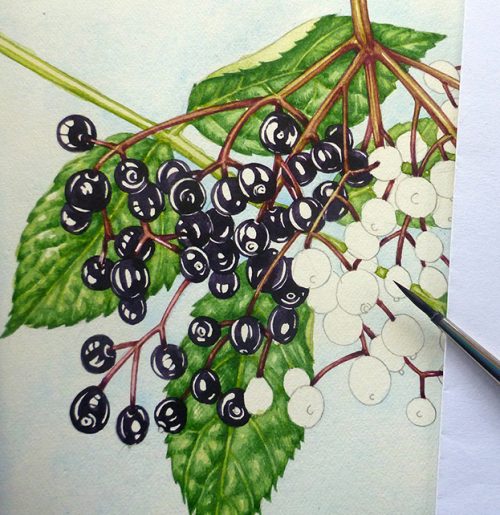
    Trees: Elder is another blog inspired by my illustrations for “The Tree Forager” by Adele Nozedar, published by Watkins.  The book has inspired me to think about some of my favourite trees.  The Elder Sambucus nigra is the sixth in this series, along side the Sycamore, Ash, Hawthorn, Rowan and the Oak. The Elder Sambucus nigra […] Read more

    Cow Parsley: All about an Umbellifer

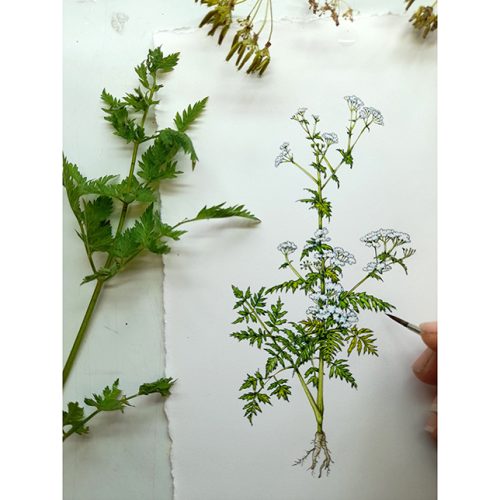
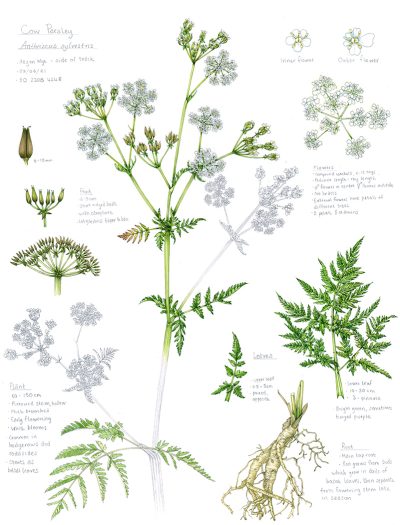
    Cow parsley Anthriscus sylvestris was on the list of plants I recently illustrated for FOR Sweden.  These plants are invasive in Scandinavia, and particularly troublesome in Iceland. Sketchbook studies All the botanical illustrations I do for FOR are in a sketchbook format.  I love working this way; it gives me the opportunity to include tons […] Read more
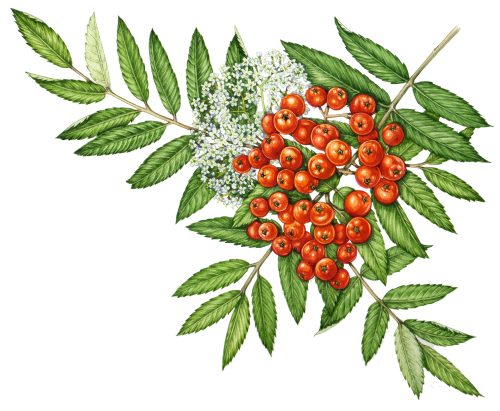
    botanical illustration of mountain ash by Lizzie harper

    Trees: Rowan

    Trees: Rowan is another blog inspired by my illustrations for “The Tree Forager” by Adele Nozedar, published by Watkins.  It’s inspired me to have a look at some of my favourite trees.  The Rowan is another in this series, along side the Sycamore, Ash, Hawthorn, and the Oak. Rowan Sorbus aucuparia is a small tree, […] Read more
    Lupin

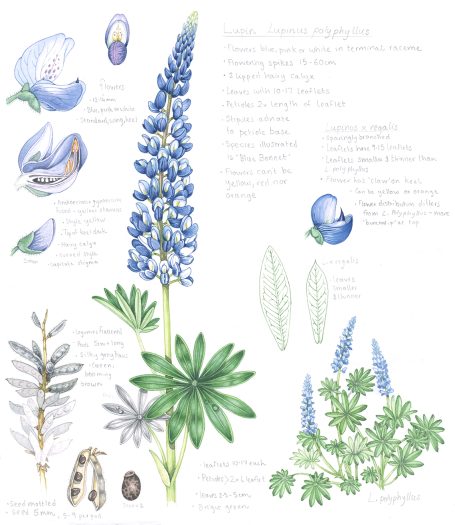
    Garden Lupin Sketchbook study

    The Garden Lupin, Lupinus polyphyllus, is one of the invasive plants I was recently asked to illustrate for FOR Sweden.  This blog talks you through the steps involved in creating a finished botanical illustration of this flower.  There seems to be an enormous amount of confusion over the English name of this plant: Blue bonnet […] Read more

    Sketchbook illustrations of Invasive Plants

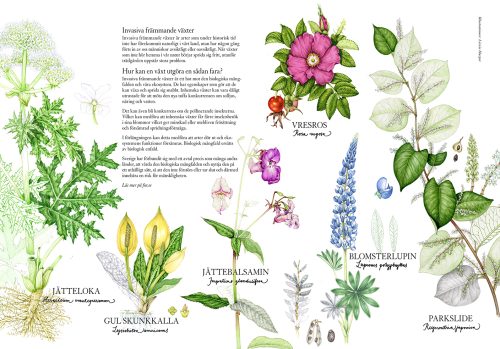
    I’ve recently completed work on a series of sketchbook illustrations of invasive plants.  The client is FOR Sweden, and the botanical illustrations will be used on a big poster at a horticulture conference. Project overview There are eleven plants in total, and each species needed certain aspects illustrating.  In all cases I need to supply […] Read more

    Invasive & Japanese Knotweeds: Telling species apart

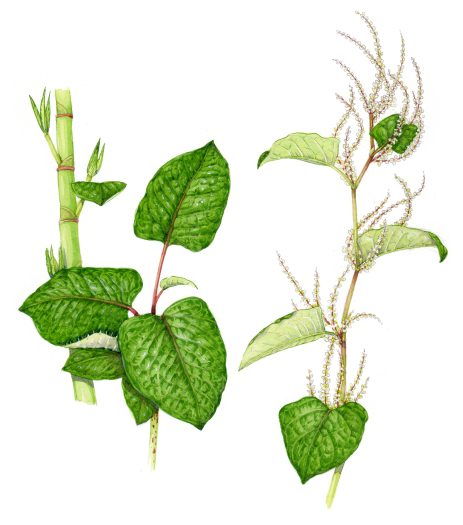
    Invasive and Japanese knotweeds are incredibly successful plants.  Originally from Japan, China and Taiwan, they escaped from ornamental gardens, and have become established across the UK.  They’re especially common in urban and brown-field habitats, and love railway embankments and the damp soils of water ways.  One of the most difficult aspects of controlling them is […] Read more

    What’s the difference between Virginia creeper and False Virginia creeper?

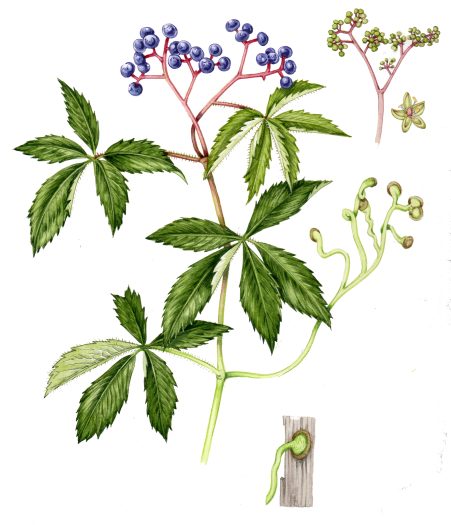
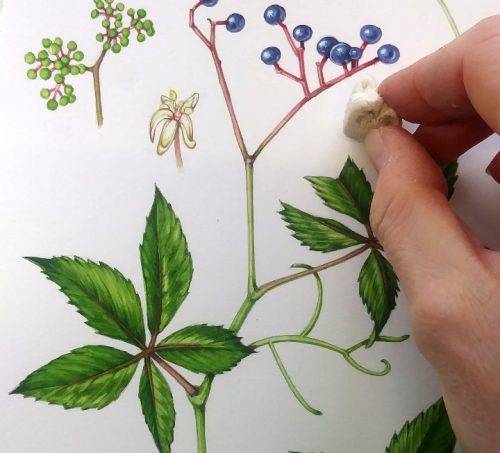
    Virginia creeper Parthenocissus quinquefolia and False Virginia creeper Parthenocissus inserta are common and decorative.  They are favourites with gardeners, who train them to grow up walls of houses and pubs where they give cover and autumn colour.  They’re vigorous climbers, deciduous, perennial, and develop woody stems. They are also classed as an invasive plant species […] Read more

    Natural History Illustration: A Week of Work

    Natural science illustration work isn’t all botanical drawings and natural history illustration.  My work load this fortnight shows what I mean. A job’s come in from Bedfordshire, Buckinghamshire & Oxon Wildlife trust.  It involves illustrating a map of their nature reserve at Hartslock.  The second part is illustrating a large landscape of the countryside, and the […] Read more

    Lizzie Harper