




Nasturtium
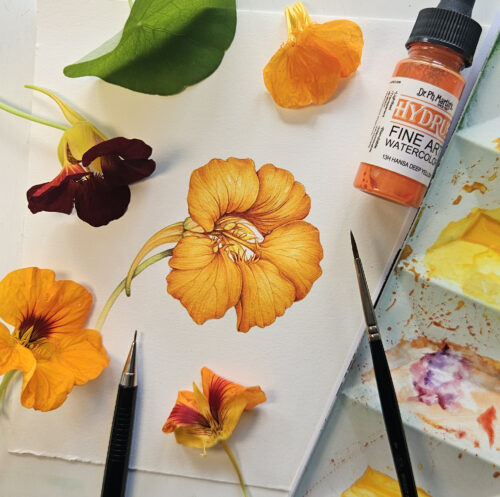
The nasturtium, Tropaeolum majus, is one of my favourite garden flowers. It’s a blaze of colour in the autumn, is edible, and is a great subject to draw.
Family
Nasturtium are members of the Tropaeolaceae. Members are succulent with alternate leaves and flowers borne singly on stems. They’re climbing vines, originating in South America. Other species seen in gardens include the clambering Flame nasturtium Tropaeolum speciosum, and the yellow flowered Canary creeper Tropaeolum peregrinum. Both have lobed leaves, unlike T. majus.
Nasturtium flowers
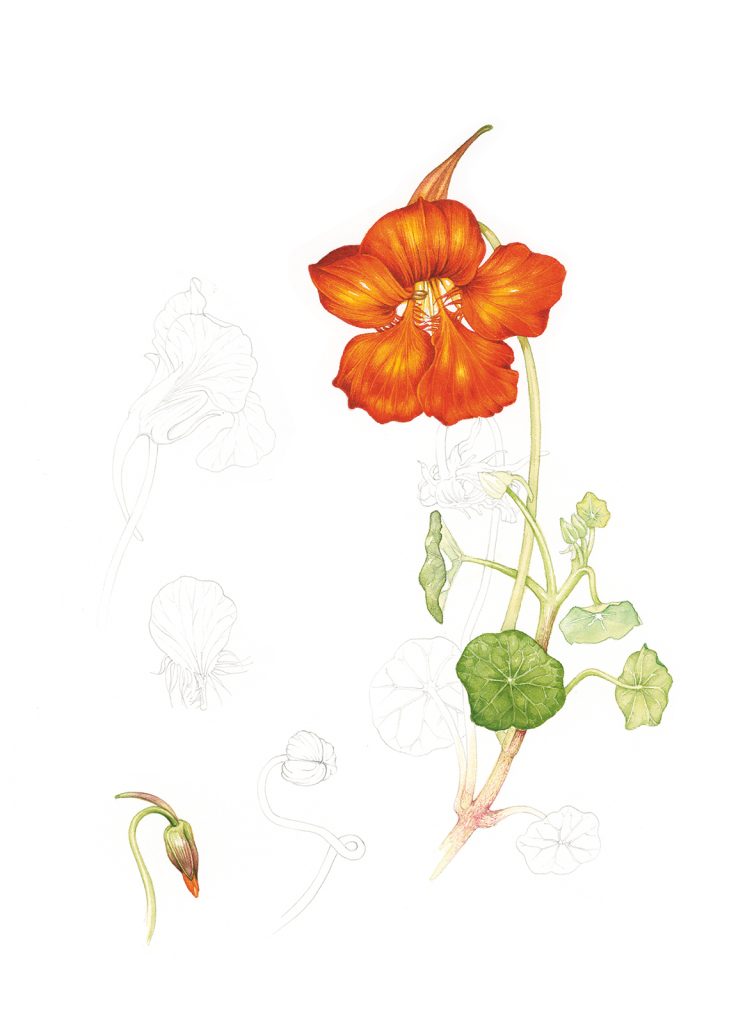
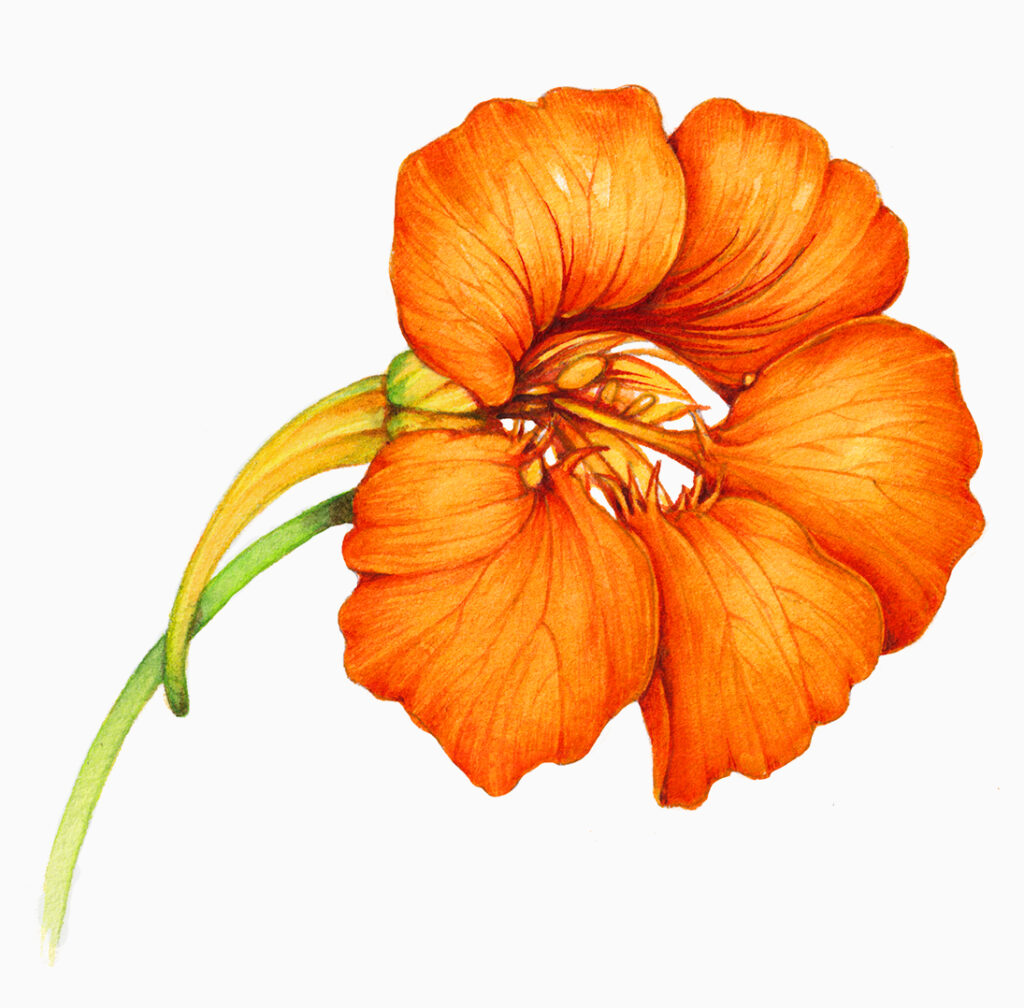
Flowers are zygomorphic (bilaterally symmetrical) and have five petals. They are between 2.5 and 6 cm across. The upper two petals are similar, and differ in shape and size from the lower three. These have distinctive fringes in the mouth of the corolla, possibly relating to pollinating and nectar guides. They tend to be orange and yellow, although some are red or a dark crimson.
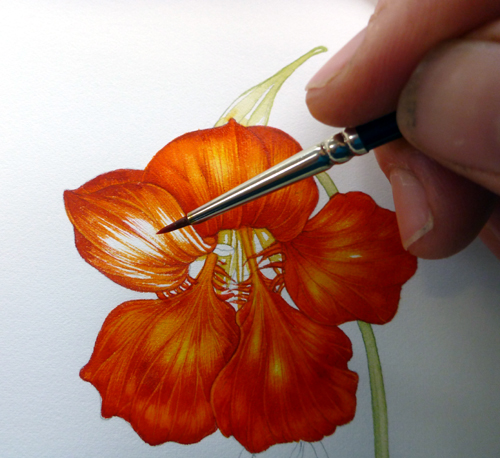
There is an immediately recognizable spur at the back of the flower which is where the nectar is stored.
Pollen is produced by 8 stamens. There is one style with three stigma, and a three-celled ovary.
The calyx is made of five sepals which vary in size and shape like the petals.
Nasturtium seeds
Seeds are a three-celled schizocarp (for more on seed anatomy take a look at my blog). These break into three succulent segments, each of which contains a seed.
Nasturtium seeds are really large, and germinate readily. This makes them ideal for planting with young kids.
Leaves of the nasturtium
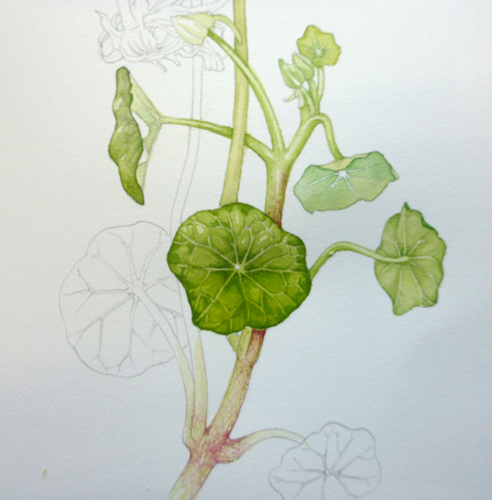
Instantly recognizable, nasturtium leaves are alternate, and round with a centrally attached stalk and radiating veins. They are thin with smooth margins, and are waterproof, shining a beautiful silver when submerged in water.
Pollination
In their native South America, nasturtium are pollinated by hummingbirds as well as by insects. This may explain the red (as well as yellow and orange) flowers, which are easier for birds to find than insects (for more on this fascinating topic, check out Miguel Rodriguez-Girones’ article in PLoS.
Here in the UK they’re pollinated by long-tongued bees such as the Common carder Bombus pascuorum and the Garden bumblebee Bombus hortensus.
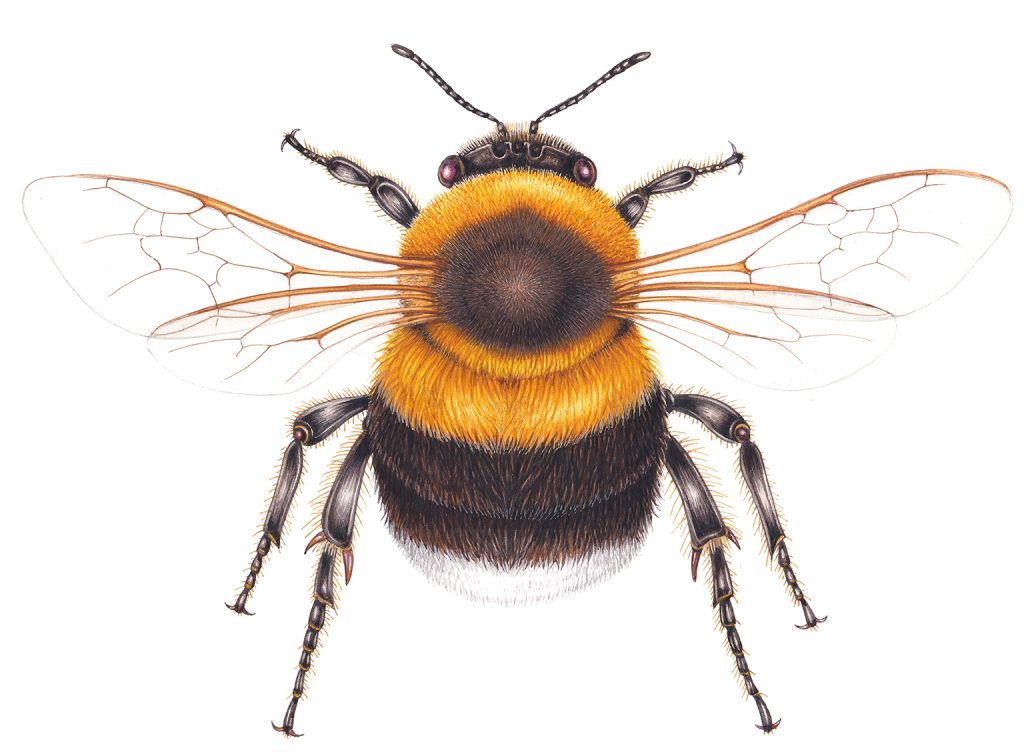
Garden Bumblebee Bombus hortorum
Etymology
The Latin name was coined by Linneaus, amazing taxonomist and naturalist, when he introduced the plant to European gardens in the 18th century.
He thought the helmet-shaped flowers and flat, shield-like leaves resembled trophies from Roman times. These were known as “Tropoeum”. After a victory, legionaries would put these shields and helmets on poles for all to see.
The English name, nasturtium, derives from the Latin “nasus tortus” or “nose twister”. The peppery flavour of the plant explains this. It’s no coincidence that the Latin name for the equally fiery watercress is Nasturtium officinale.
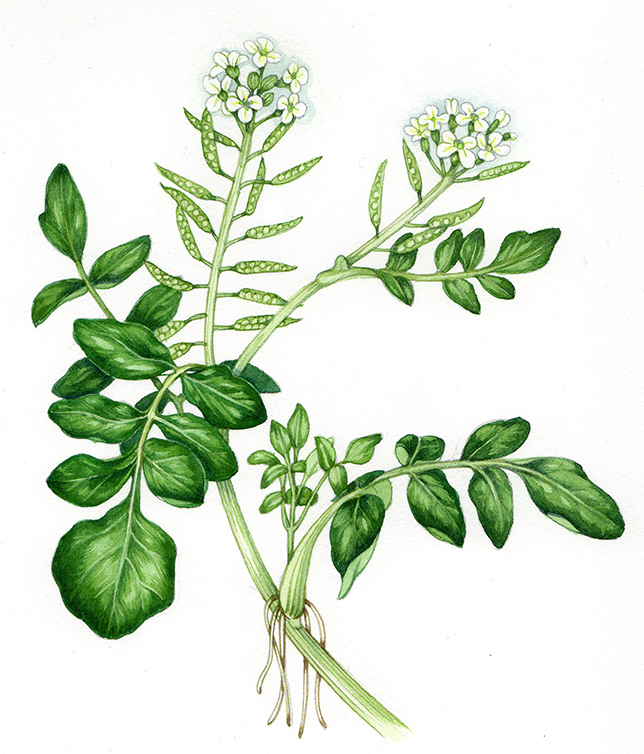
The unrelated Watercress Nasturtium officinale
Other European countries, such as Spain, Italy, Germany and France, have common names based on “cappuccio”, the Latin for hood. These relate to the flower shape.
Edibility
All parts of the plant are edible, with a fiery mustardy flavour.
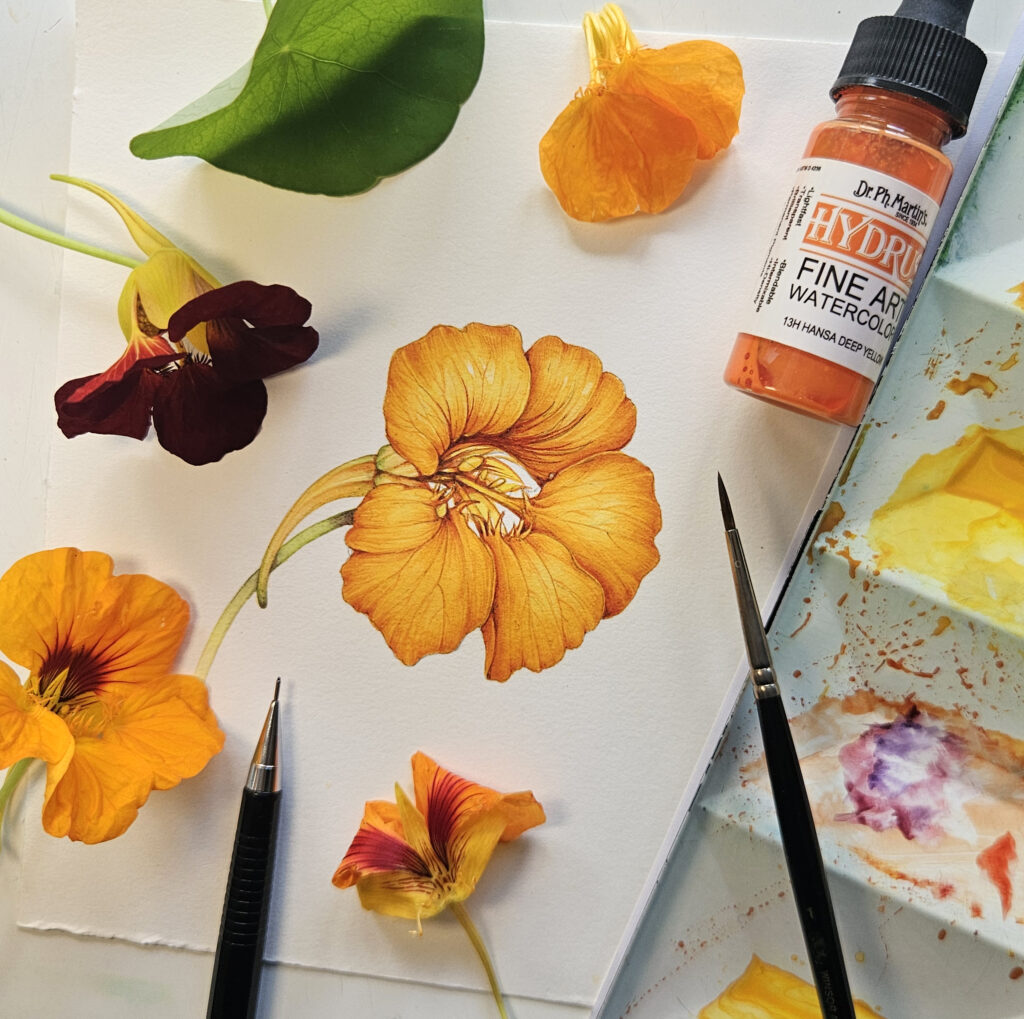
In her book The Garden Forager (which I was lucky enough to illustrate), Adele Nozedar suggests adding the flowers to salads. Or stuffing them with cream cheese and mint. Or even with vanilla ice cream! She also includes a recipe for Nasturtium-leaf soup from President Eisenhower, and tells how to pickle the seeds in white-wine vinegar.
Medicinal nasturtiums?
All of the nasturtium is rich in vitamin C, so the plant was used to prevent scurvy. It was also used to prevent hair loss, as a paste of the fiery follicles was thought to stimulate the hair follicles.
Pests
Despite being easy to grow and hardy up ’til the first frost, nasturtium are beset with pests.
Aphid congregate at the apex of stalk and leaf.
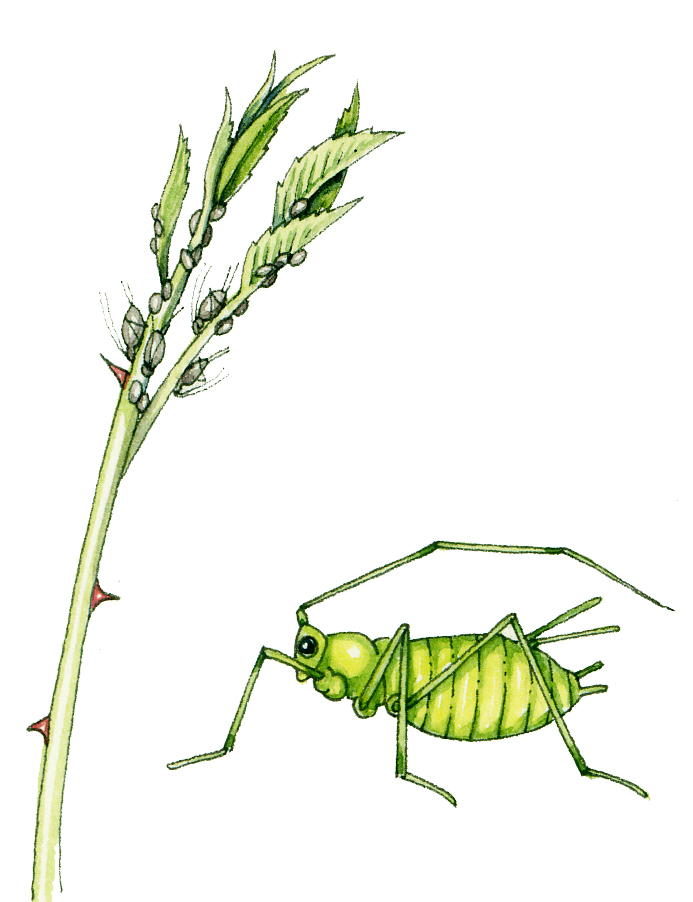
Aphid (with rose leaves)
Cabbage white butterfly caterpillars (also known as Large white Pieris brassicae) devour the leaves, leading some gardeners to suggest planting nasturtium as a “trap crop” to deter pests from vegetables like kale and cabbage (Horticulture magazine) , while others argue that companion planting may actually attract more pests (The Spruce).
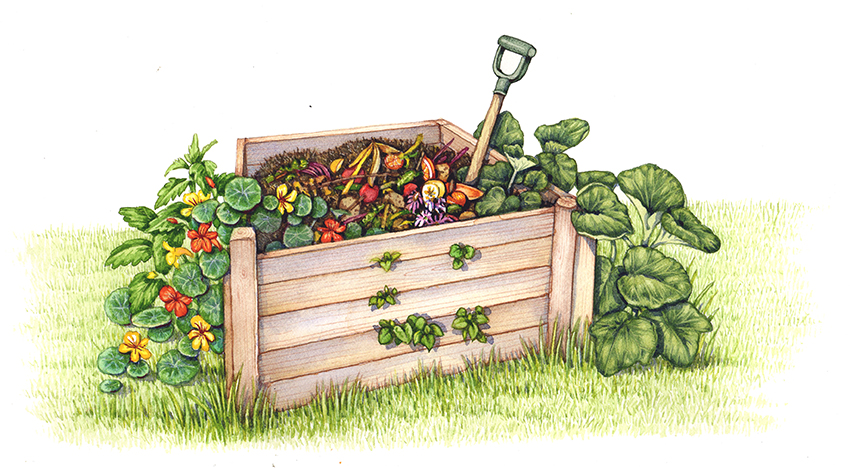
Compost bin with nasturtium growing in and over it
Conclusion
It’s common to have favourite plants and flowers, and no surprise that the nasturtium is one of mine. With its’ grow-ability, draw-abilty, and edibility…what’s not to love?
https://youtu.be/XGeSNvRmhBM
