




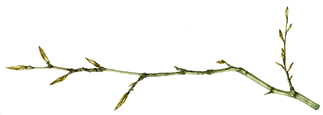
Guide to Urban Plants of Scotland illustrations
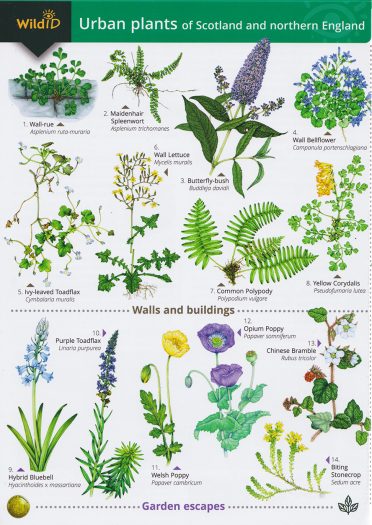
I recently illustrated the FSC’s Wild ID Guide to Urban plants of Scotland and northern England, which was a treat. Having completed lots of Field Studies Guides over the years, I class them as one of my best and favourite employers. The exacting nature of the work is enjoyable, and is coupled with relevant and essential feedback on the pencil roughs from their in-house botanists.
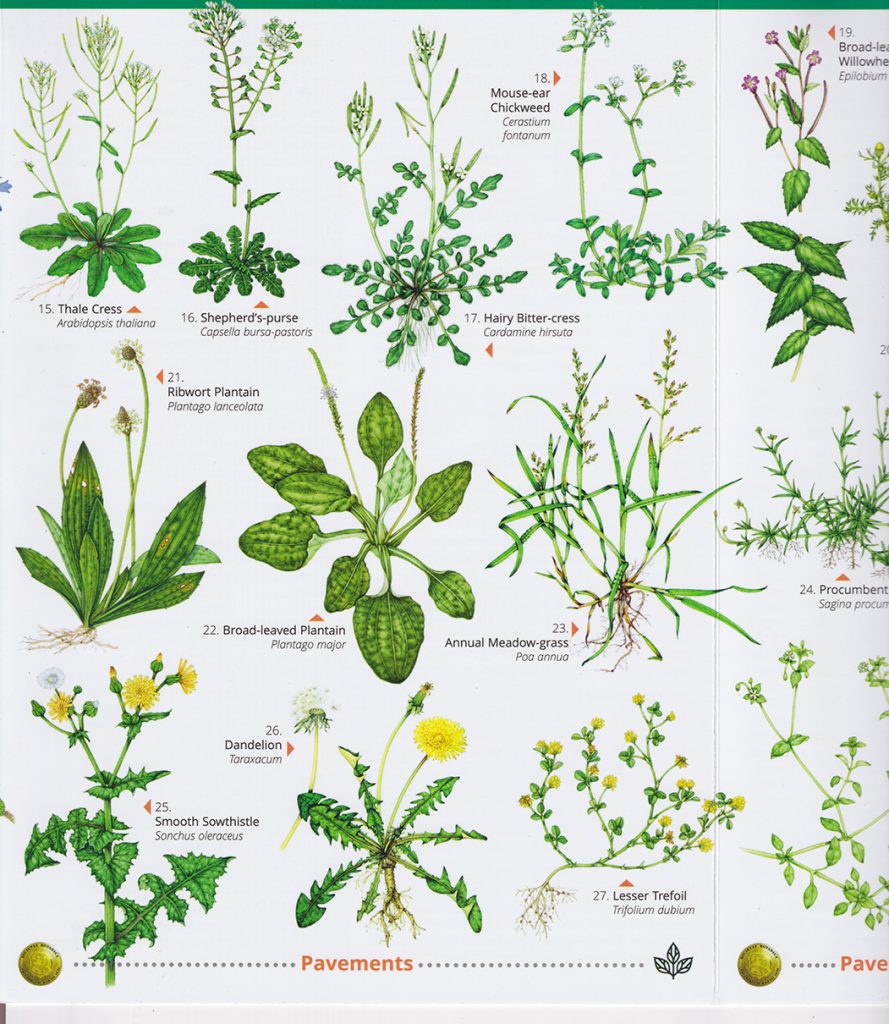
Third page of the FSC guide to Socttish Urban plants
Why a guide to urban plants?
Plants are incredibly resilient, and many species have managed to carve out a niche despite all the tarmac and concrete in our towns and cities. We often overlook these plants, or disregard them as “weeds”. But there is an enormous amount of variety in the plants of urban spaces, and they’re well worth examining closer.
As the guide points out, “Although urban plants are easy to dismiss as ‘weeds’, they have many fascinating adaptations that are worthy of a second look. Some have a fast lifecycle, tolerating limited space, not much soil, and highly fluctuating temperatures and moisture. Others spread quickly through stolons and rhizomes to form large stands. Old walls have specialist plants all of their own, especially where there is soft lime mortar.” (FSC publications 2025)
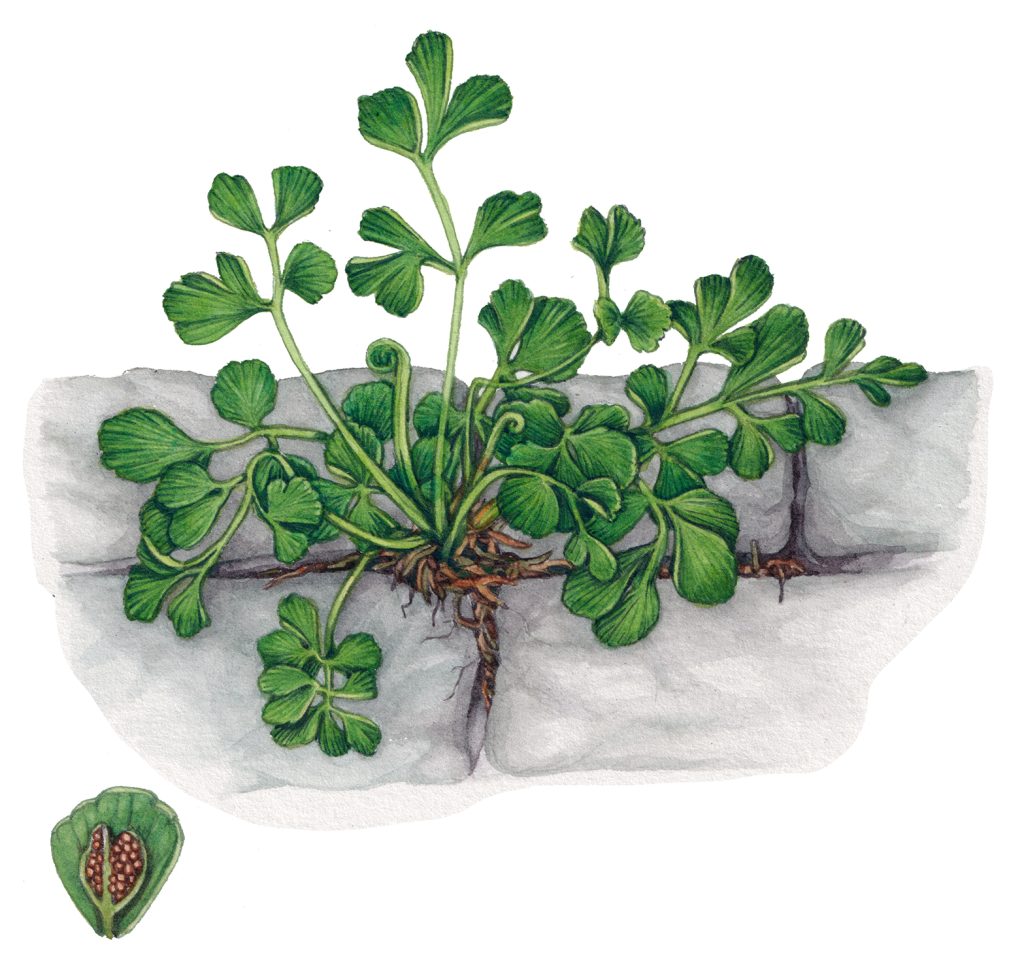
Wall rue Asplenium ruta-muraria
What makes a plant an Urban species?
As the write up on FSC’s site states, “Since 2015 the Botanical Society of Scotland has been recording urban plants in Scotland, defined as settlements with at least 1000 inhabitants. Volunteer recorders have searched streets, car parks, golf courses, cemeteries, waste ground and many other places. Anything deliberately planted was excluded, but anything that had spread by itself was included.
Currently there are nearly 80,000 records, with over 1200 vascular plant species found so far. This guide covers the most common non-woody species among these records.” (FSC publications 2025)
FSC broke the urban plants featured into categories depending on their habitat and provenance.
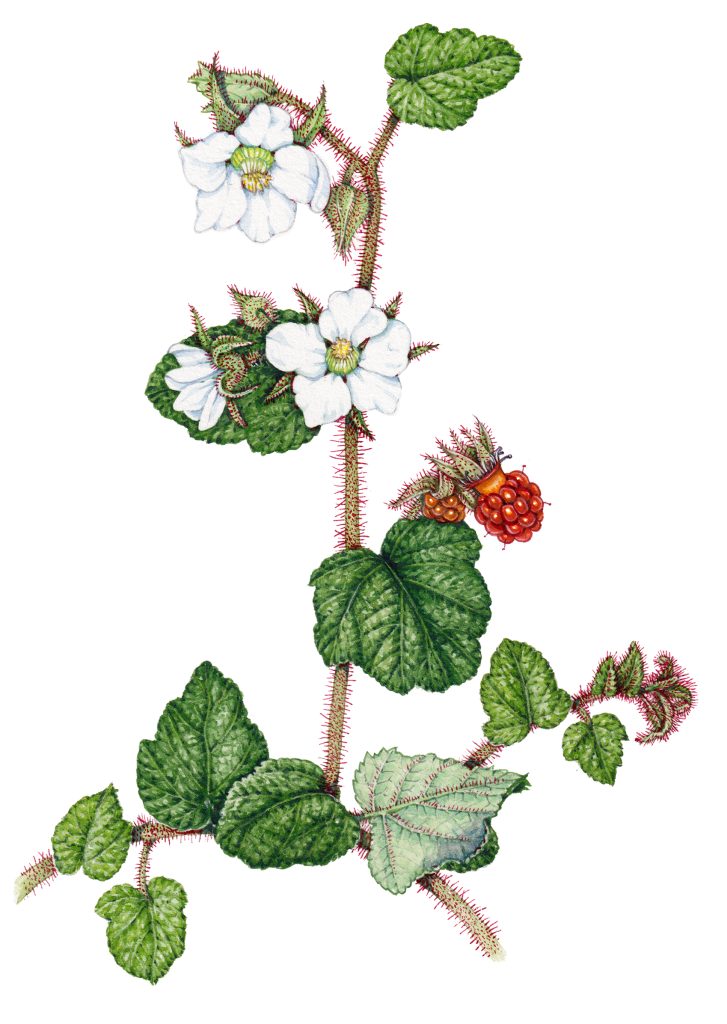
Chinese bramble Rubus tricolor
Urban plants: Walls and Buildings
Every one of the species in this section grows on the churchyard wall opposite my house. This makes life very much easier as I can get fresh material to work with both when drawing up roughs, and when adding colour. It also shows something of the geographical spread of these plants.
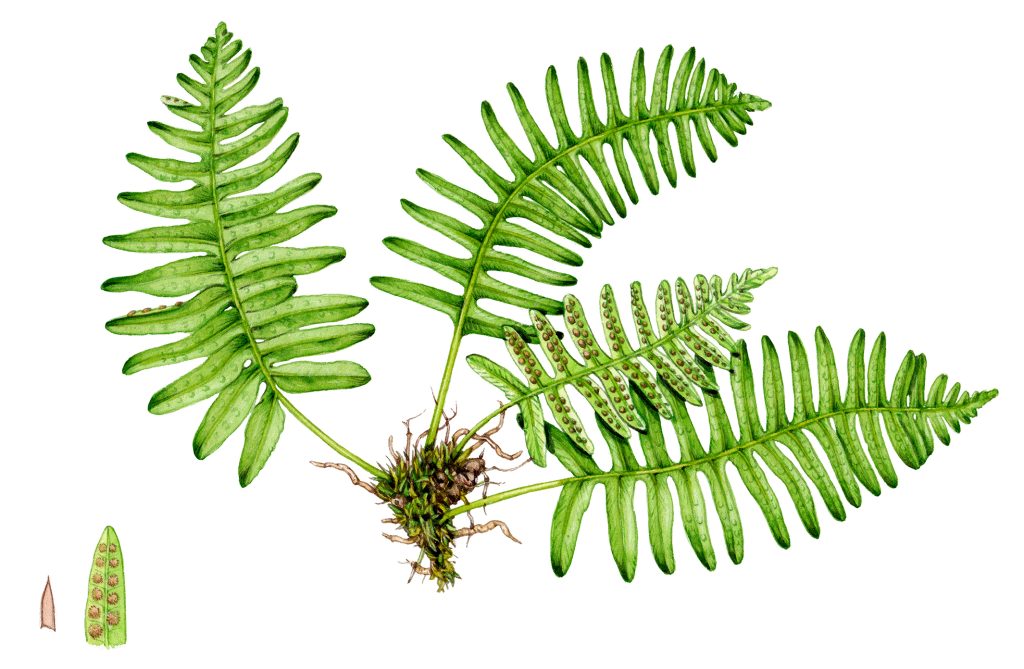
Common polypody Polypodium vulgare
There are several similar species of Polypody fern in the UK, and I struggled to be certain which one I was drawing. The BSBI produce “crib sheets”, pdfs comparing and contrasting similar species. The one on Polypody ferns proved very useful. There’s also a good video from the Botanical Society of the British Isles on these ferns if you’d like to learn more.
Wall lettuce Lactuca muralis grows at the base of the churchyard wall, and was just coming into flower. I recognized it immediately, but had never stopped to i.d. it before. One of the many things my job gives me is a reason to stop and look at plants differently and closer than before.
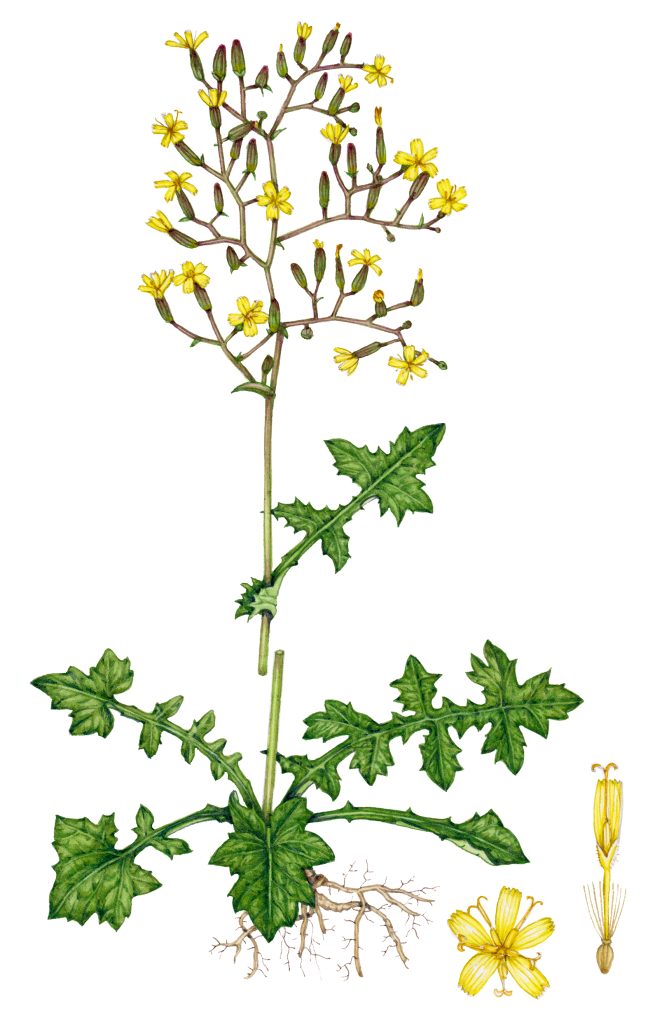
Wall lettuce Lactuca muralis
Growing on the wall in my garden is the Wall bellflower Campanula portenschlagiana. In late May, the whole of the front garden wall is blue with it. I was surprised to find there are two similar bell flower species. Again, time was needed to untangle them and ensure I was illustrating the correct species. Online resources such as the Botany in Scotland blog proved very helpful.
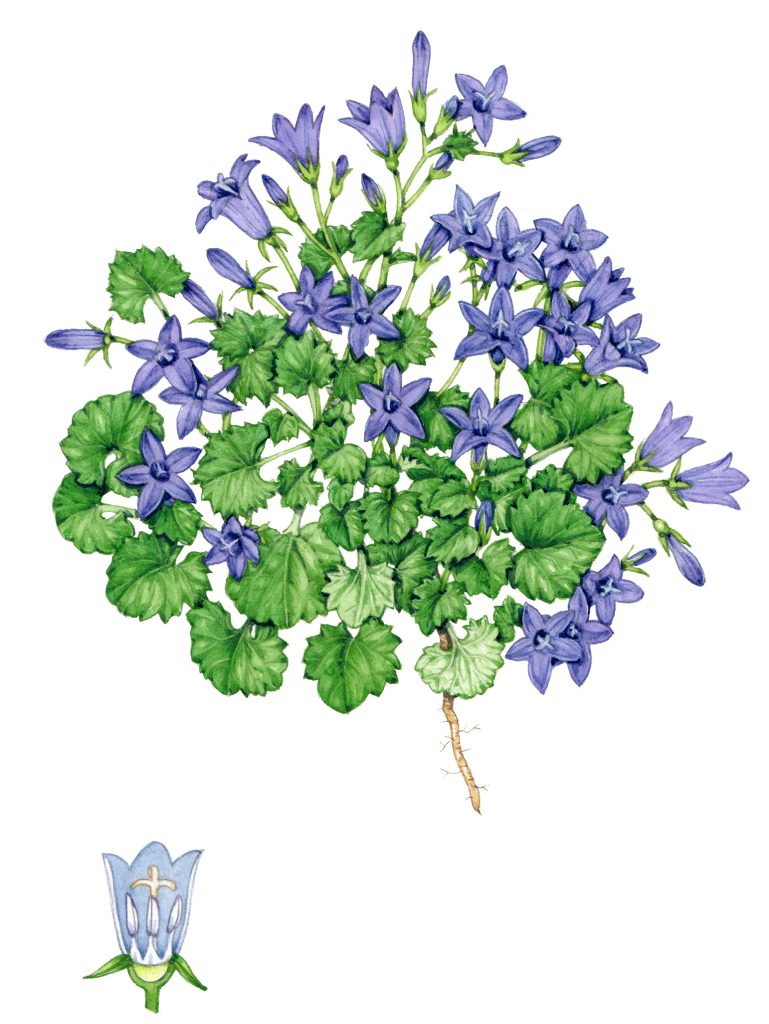
Wall or Dalmatian bellflower Campanula portenschlagiana
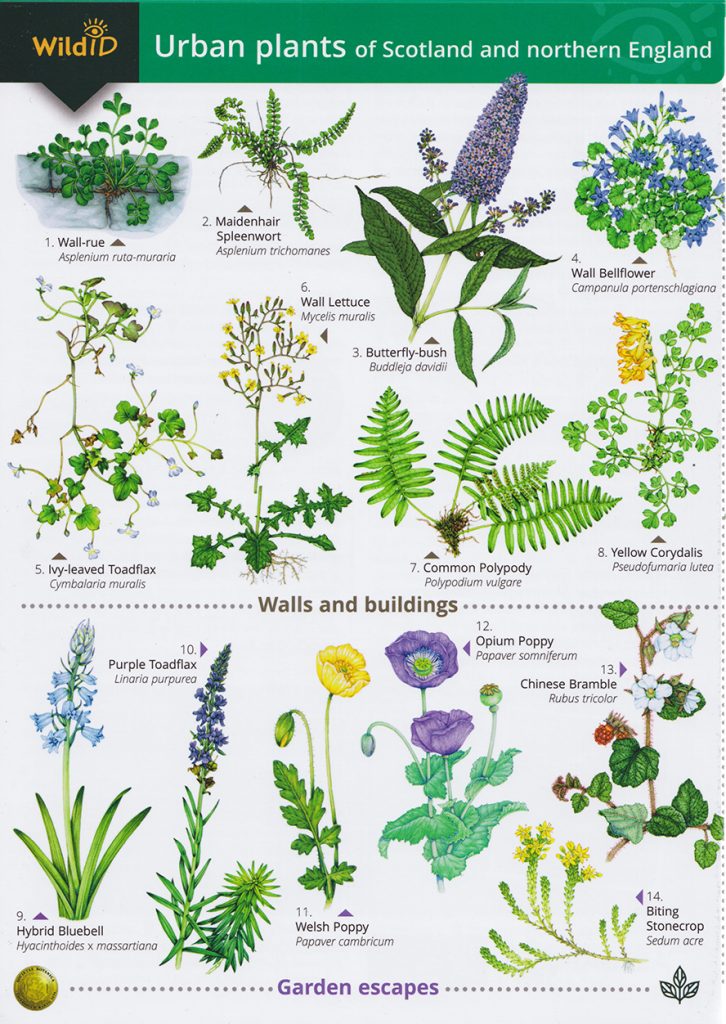
Urban plants of Scotland i.d. guide : Walls & buildings, and Garden escapes
Urban plants: Garden escapes
Many of the plants seen in urban settings are garden escapes. This isn’t surprising. However, it does mean lots of urban plants are quite blousy. One example is the Opium poppy Papaver somniferum.
This is a plant I’ve been wanting to paint for a long time, but never had the opportunity. I was surprised to find the commonest colour of the bloom is mauve, not a deep red. Like many plants, the Opium poppy has glaucous, waxy leaves. This means using lots of Cobalt Blue and even some white when it comes to colour mixing.
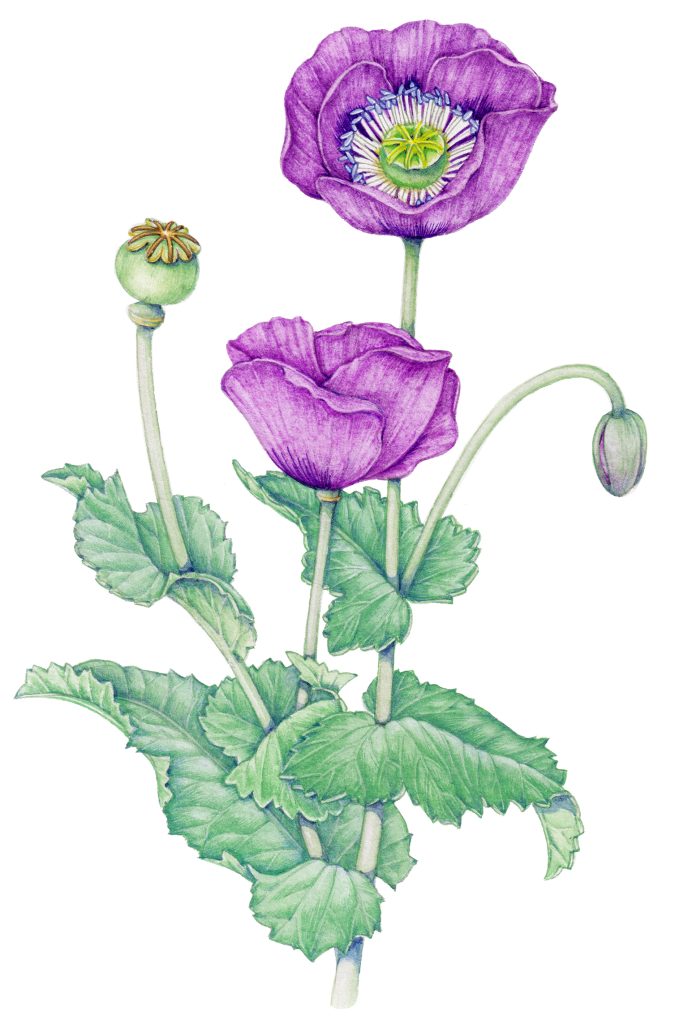
Opium poppy Papaver somniferum
Another garden escape is the Hybrid bluebell Hyacinthoides x massartiana. This is a cross between the UK’s native bluebell, and the Spanish bluebell which is often grown in gardens from bulb. Telling your Spanish bluebell from your native species, and figuring out whether or not you’re looking at a hybrid is mighty confusing. I did a blog a few years back, trying to untangle them.
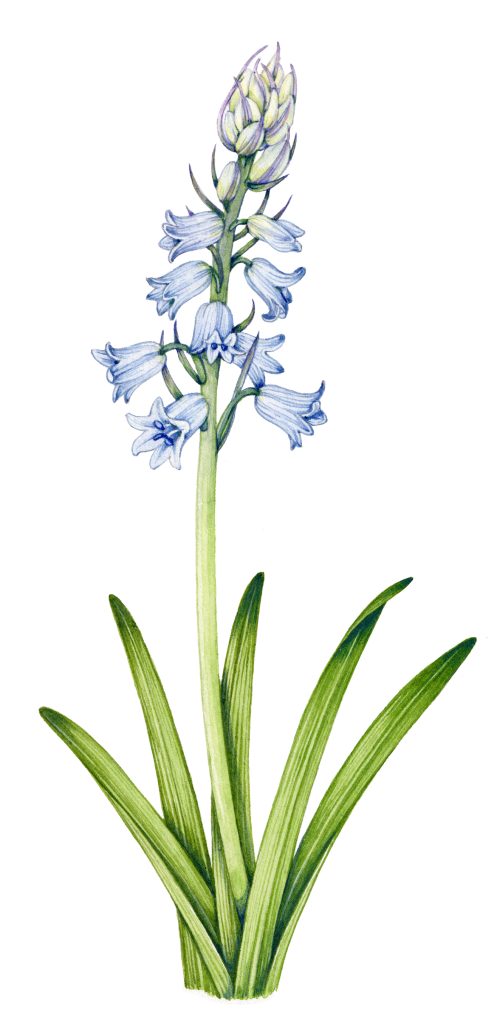
Hybrid bluebell Hyacinthoides x massartiana
It was interesting to see that the Welsh poppy Meconopsis cambrica appears in this section. Where I live, on the border between England and Wales, the Welsh poppy is a wild flower, not a garden escape.
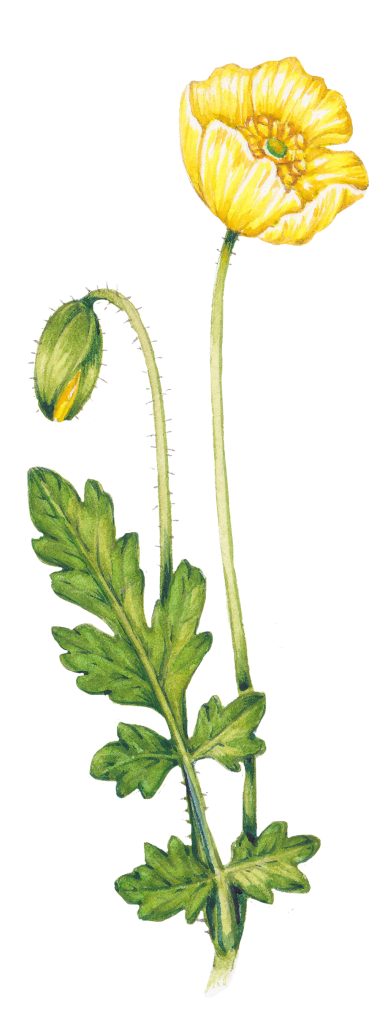
Welsh poppy Meconopsis cambrica
Urban plants: Pavements
The species in this habitat were also a bit tough to untangle as superficially Thale cress, Hairy bitter-cress, and Shepherd’s purse look alike. It doesn’t take long with a botany bible like Stace’s New Flora of the British Isles and the gorgeous line drawings of Stella Ross-craig to be able to tell them apart with no trouble. Two of them grow, by chance, in pots in my garden. Thale cress I had to look for a little harder. It’s an important plant as it’s used as a model in genetics research. The genome of Thale cress was the first plant genome to be sequenced. A small weed with a big impact.
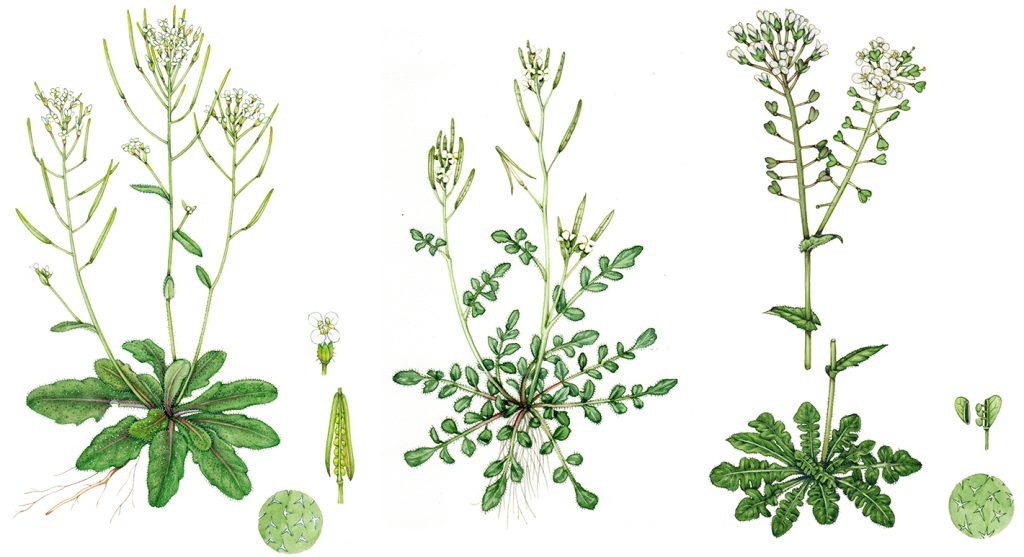
Thale cress Arabidopsis thaliana Hairy bittercress Cardamine hirsuta and Sherherds purse Capsella bursa-pastoris
Annual meadow grass was one of only 4 grass species on the whole list. I can’t believe I’ve not illustrated it before, it’s very common and very pretty! I started on these illustrations in the depth of winter, and as Annual meadow grass is the only UK grass species to flower year round, it made identification super-easy. The crinkled leaf blade is another useful diagnostic.
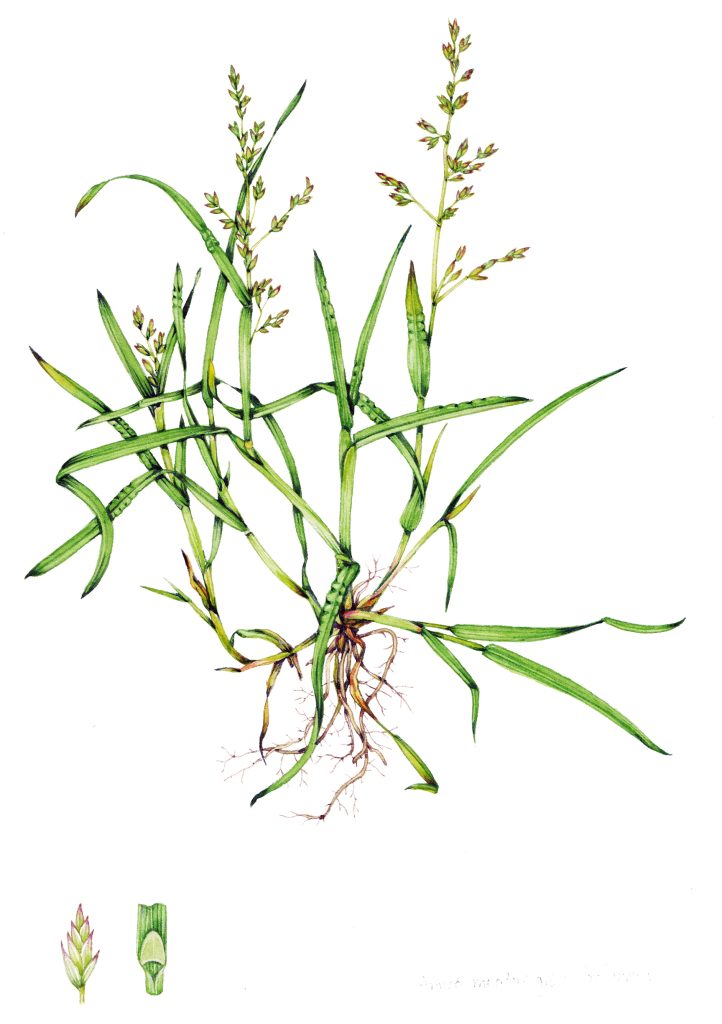
Annual meadow grass Poa annua
Urban plants of Scotland i.d. guide : Pavements
Some of the pavement species are ones I’ve illustrated before. This includes the Pineapple weed Matricaria discoidea, Broad-leaf Willow-herb Epilobium montanum, and Chickweed Stellaria media. I know I always go on about it, but an illustrator gets paid for each illustration used, whether or not it already exists. Hang onto your copyright, illustrators! Re-use fees make the notoriously low-paid job of an illustrator (almost) a viable career.
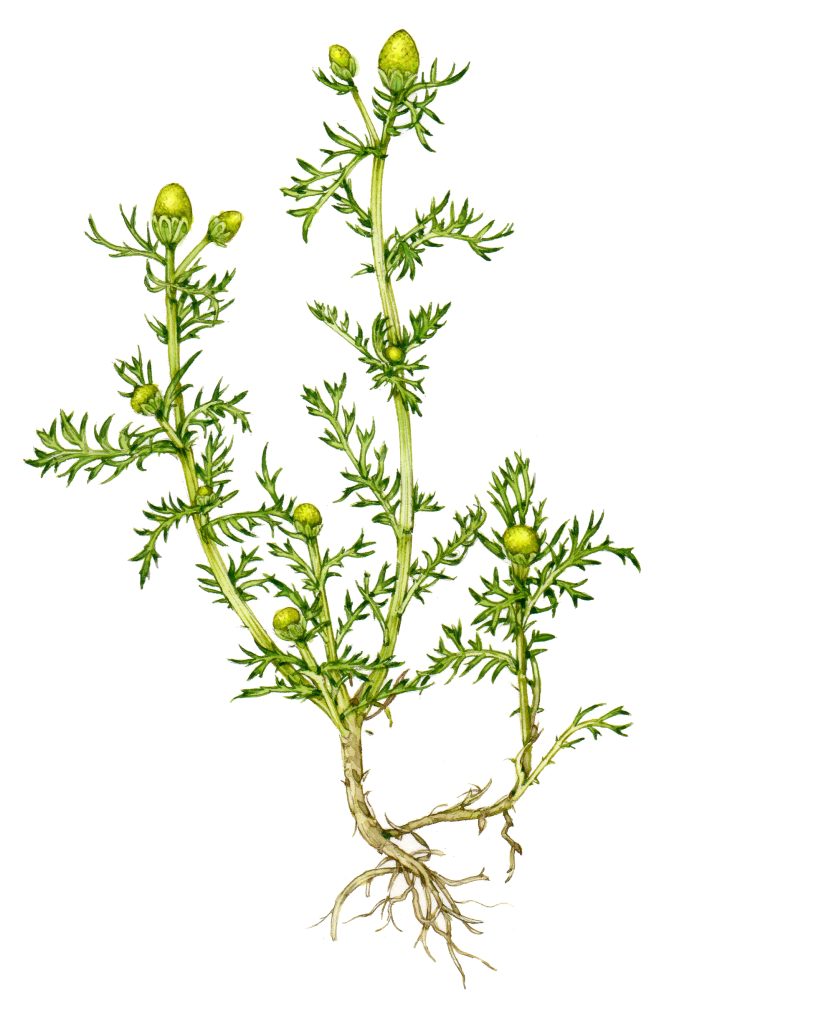
Pineapple mayweed Matricaria discoidea
Urban plants: Grassy places & parkland
Some of the prettiest species featured in the guide grow in this ecological niche. I’d completed all but one of the plants featured in this section for other jobs; it was a pleasure to re-assess them and make sure they still pass muster. One of my favourite wildflowers, Fox and Cubs Pilosella aurantiaca, makes an appearance. After years of cajoling, I finally have a flourishing population of these flowers in my garden.
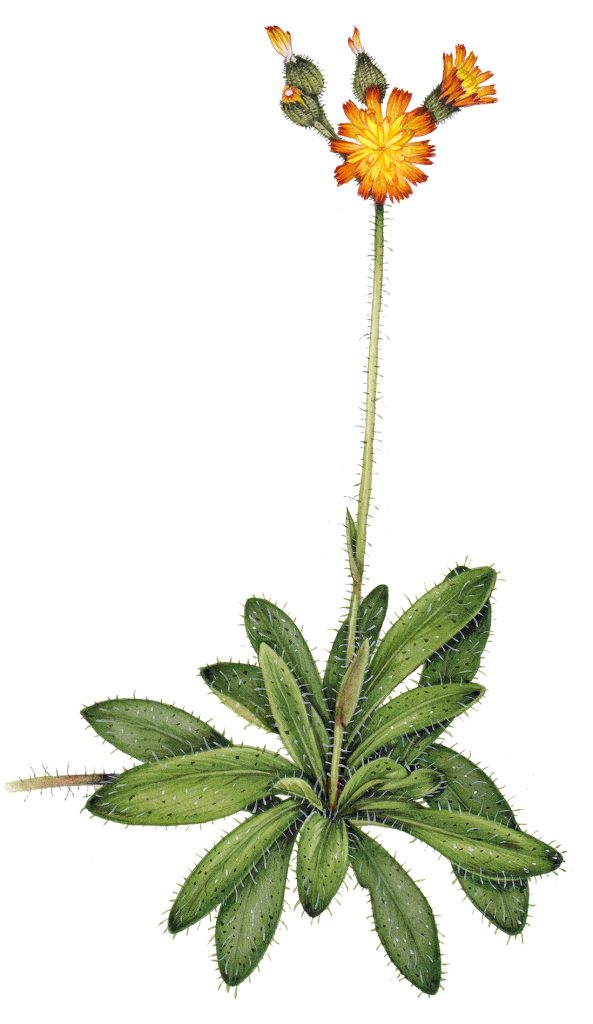
Orange hawkbit Fox and Cubs Pilosella aurantiaca
Likewise, with some careful neglect, I now have a healthy amount of Self heal Prunella vulgaris and White clover Trifolium repens growing in my lawn. It makes me happy, helps protect the grass from drought, and is good for the pollinators.
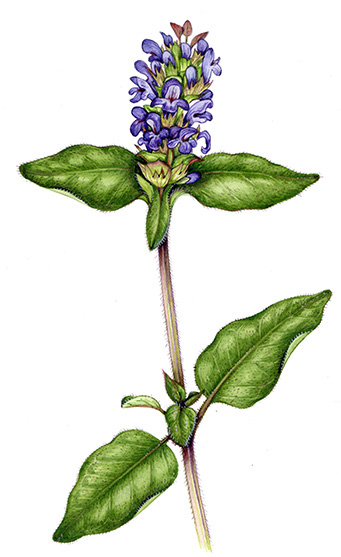
Self heal Prunella vulgaris
The species in this section that I’d not yet painted is the common Daisy, Bellis perennis. It’s odd, with the species I get asked to illustrate, sometimes the most ubiquitous plants fall through the cracks. I’ve been illustrating plants for 25 years, and this is the first time I’ve been asked to illustrate a daisy. It was a real joy to find the perfect specimen on the lawn and rectify the situation. The illustration takes the basal rosette of one plant and the flowering heads of another. The benefits of illustrations instead of photography (for more about my feelings on this, check out my FAQ section, but be prepared for a balanced view. Both are vital tools.).
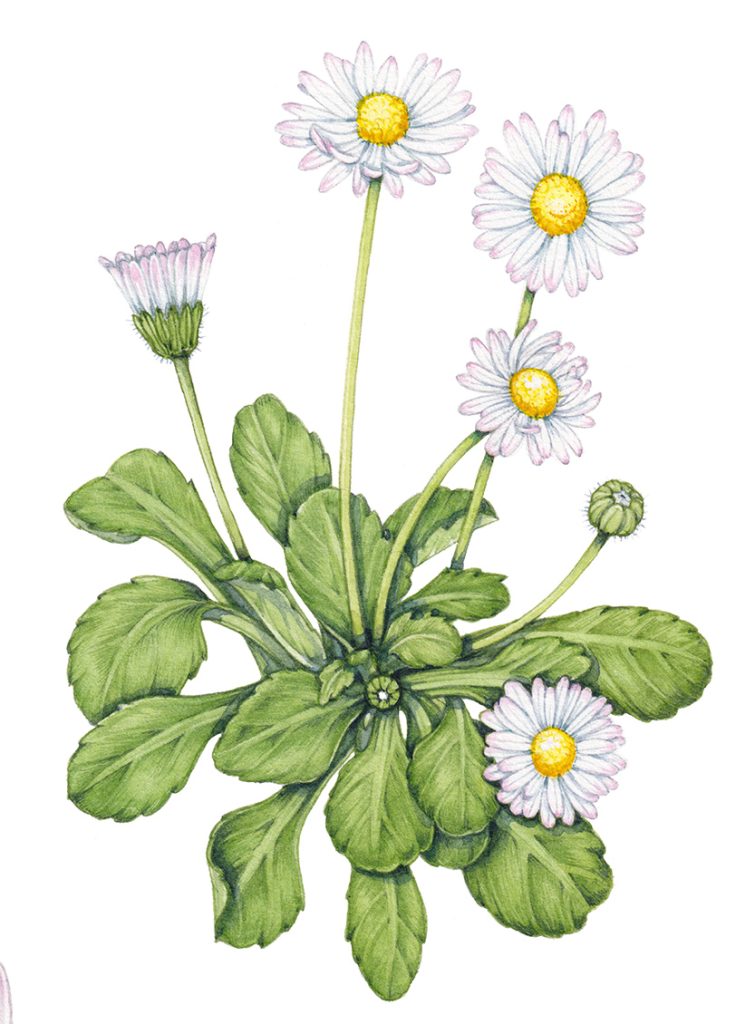
Daisy Bellis perennis
Urban plants of Grassland and parks: In defence of Ragwort
I wish I’d been able to add the caterpillar of the Cinnibar moth Tyria javobaeae when I illustrated Common ragwort Jacobeae vulgaris.
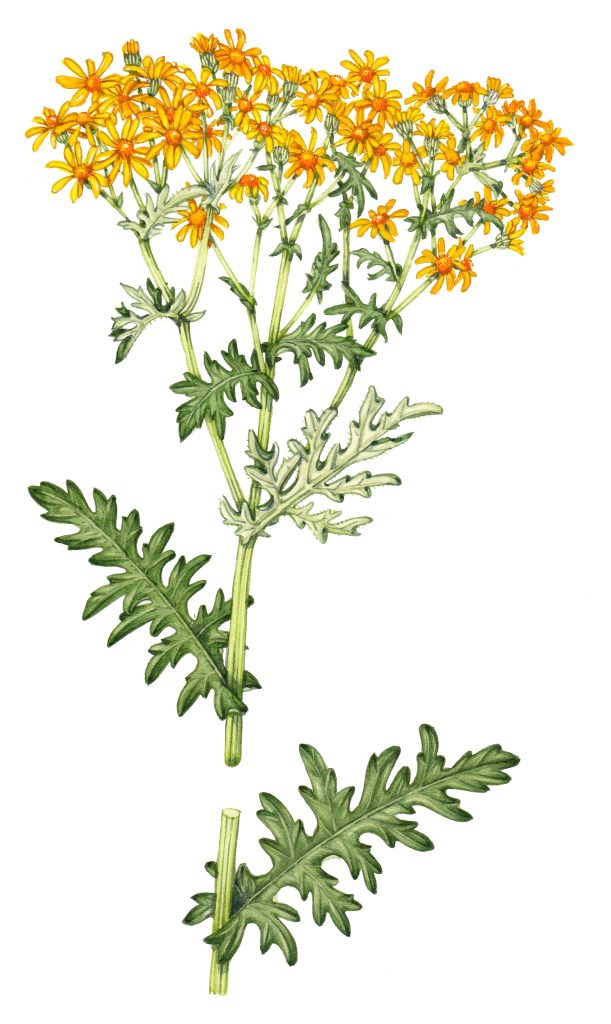
Ragwort Jacobeae vulgaris or Senecio jacobaea
They’re black and yellow striped, and are really common on the plant. I know there is a lot of anger towards Ragwort, as the plants can be toxic to livestock. Sadly, this has been massively over-emphasized, and the mass clearance of this plant has had dreadful effects on the beautiful black and red Cinnibar moth.
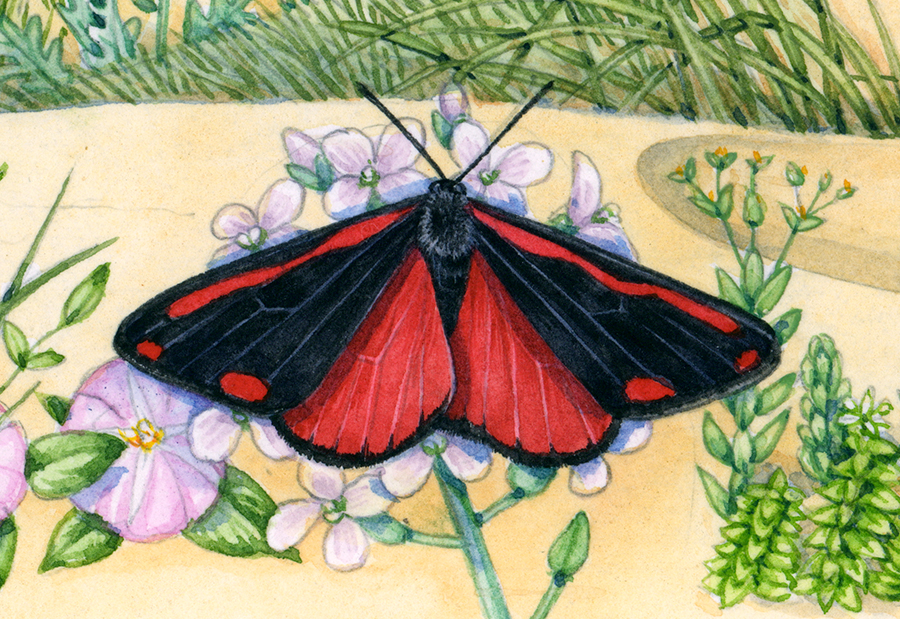
Cinnibar moth Tyria jacobaeae
As the Botanic Gardens of Wales say, “Butterfly Conservation’s 2006 report on the state of Britain’s larger moths showed that the cinnabar had declined by 83%, classing it as ‘Vulnerable’. While this dramatic change is likely due to many reasons, there is little doubt that misconception surrounding the toxicity of ragwort to livestock is a contributing factor to its decline. Farmers and landowners have been encouraged to eradicate the plant to minimise the risks of poisoning. However, ragwort poses little threat to livestock or humans unless considerable amounts are consumed daily, and the only real risk is posed when dried in hay, where it loses its acrid taste. As cinnabar caterpillars feed exclusively on ragwort and groundsel their slow eradication from our countryside poses a major threat to the survival of this species.”
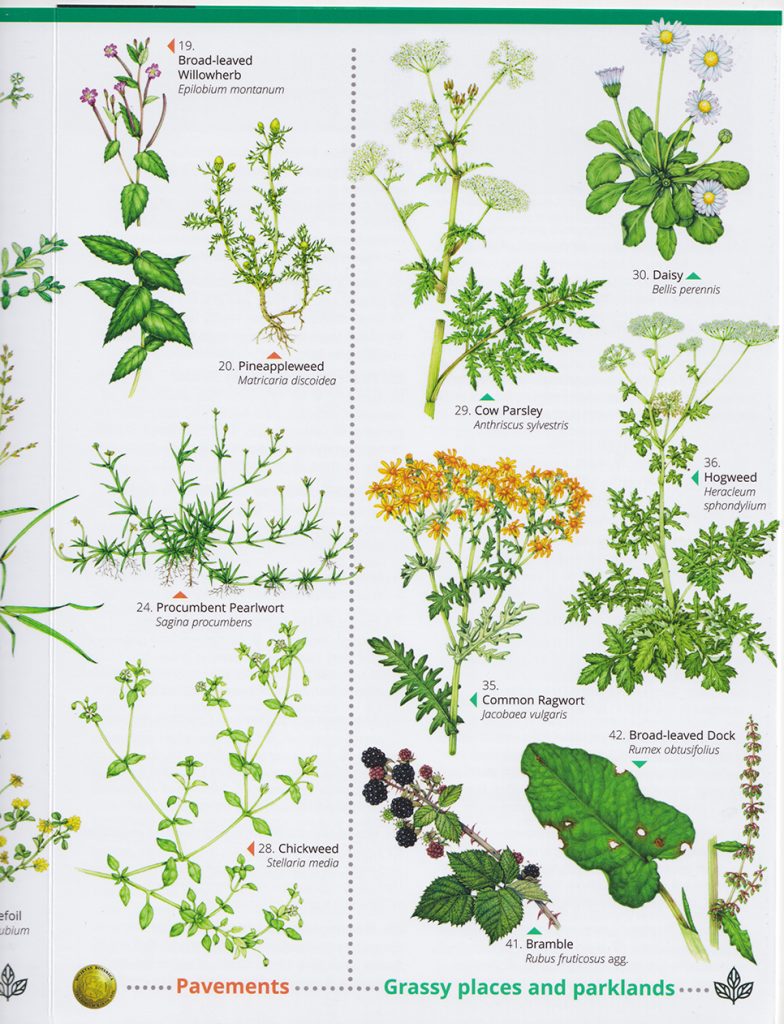
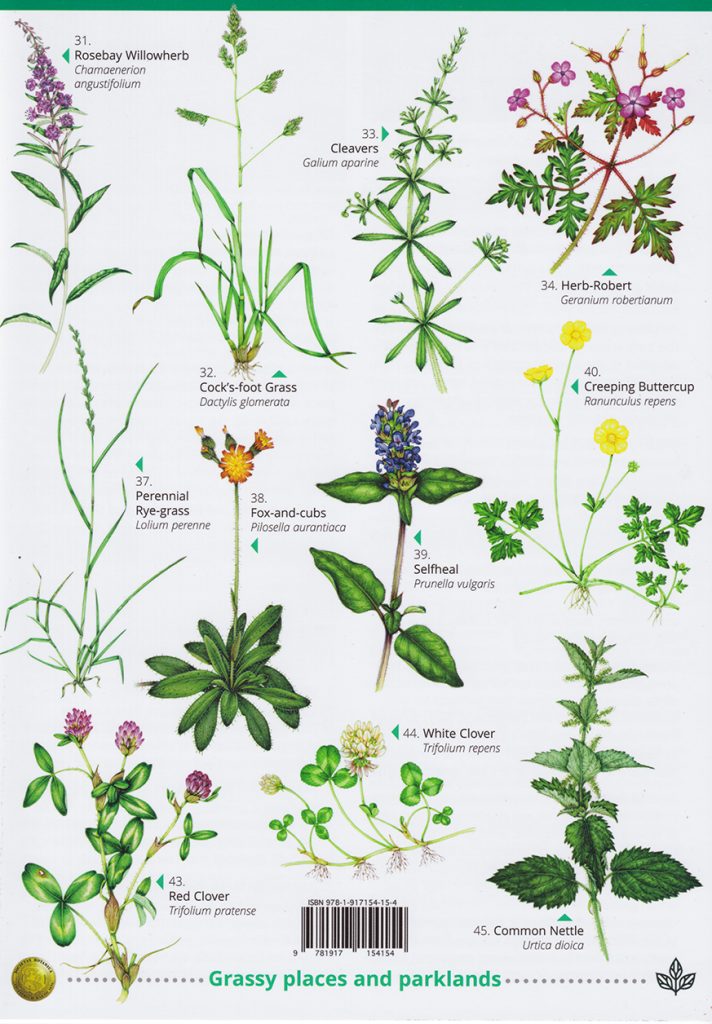
Urban plants of Scotland i.d. guide : Grassy places and parklands pages
Conclusion
What surprised me as I worked on this guide, was just how many of the Urban plants noted in Scotland were equally common here in mid Wales, and down in London. It’s a testament to the incredible adaptability of some of our plants. They are filling niches that didn’t exist 150 years ago, and thriving. Many more species can not make the transition, however, and become rarer and rarer as the urban sprawl continues to eat into the countryside. Even more reason to care for the wild flower species we do still have, and to celebrate those that we get to see in our cities as well as in the countryside. And to stop labelling them all as weeds, and trying to eradicate them from our pavements, walls, brownfield sites, and parkland.
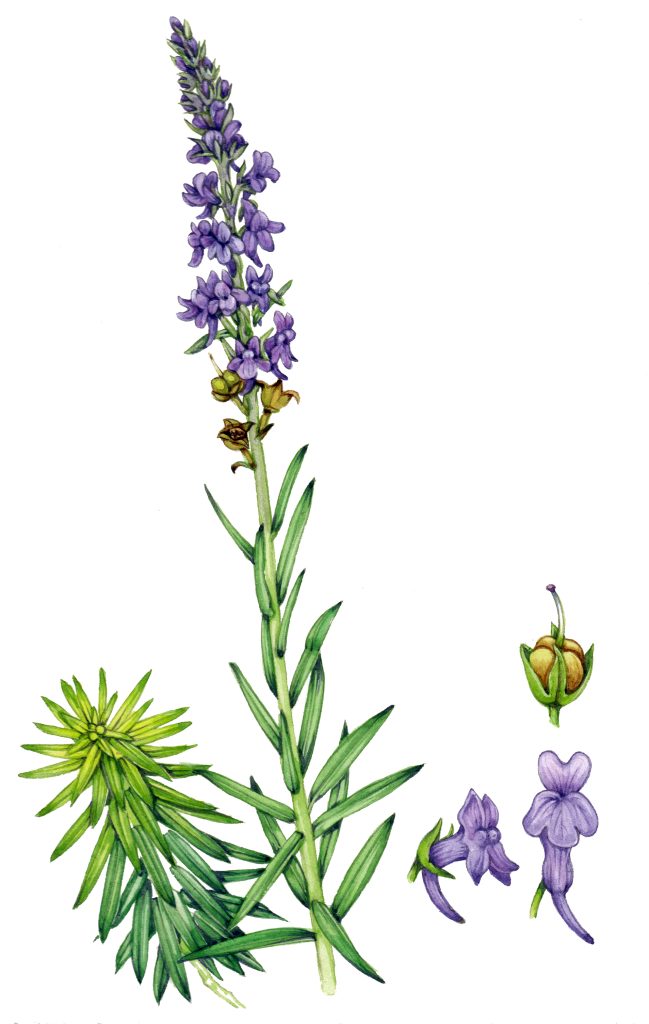
Purple toadflax Linaria purpurea
