




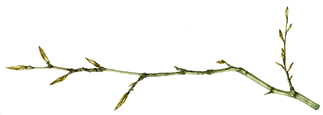
Pribby: A Montserrat endemic
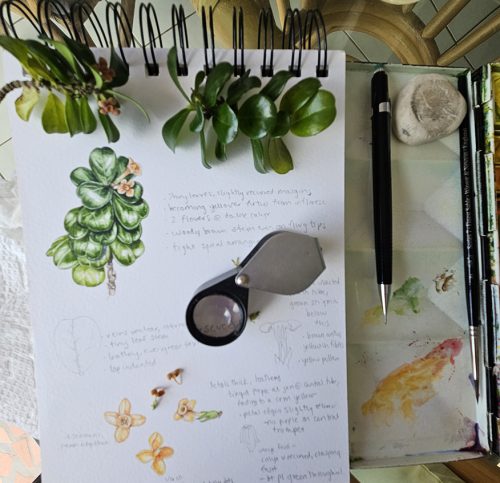
Pribby Rondeletia buxifolia (sometimes called Pribbery) is a member of the coffee family. It grows wild only on the Caribbean island of Montserrat. This is one of the plant species I most wanted to see when visiting for work in February 2025.
What does Pribby look like?
Pribby is a shrub, sometimes used for hedging, with shiny oval evergreen leaves. In sunlit areas these are small and round. In gloomier areas such as tropical forests the leaves are larger, less shiny, and longer.
The photo below shows the plant growing on a sunny bank. The one below shows it growing in a forested area.
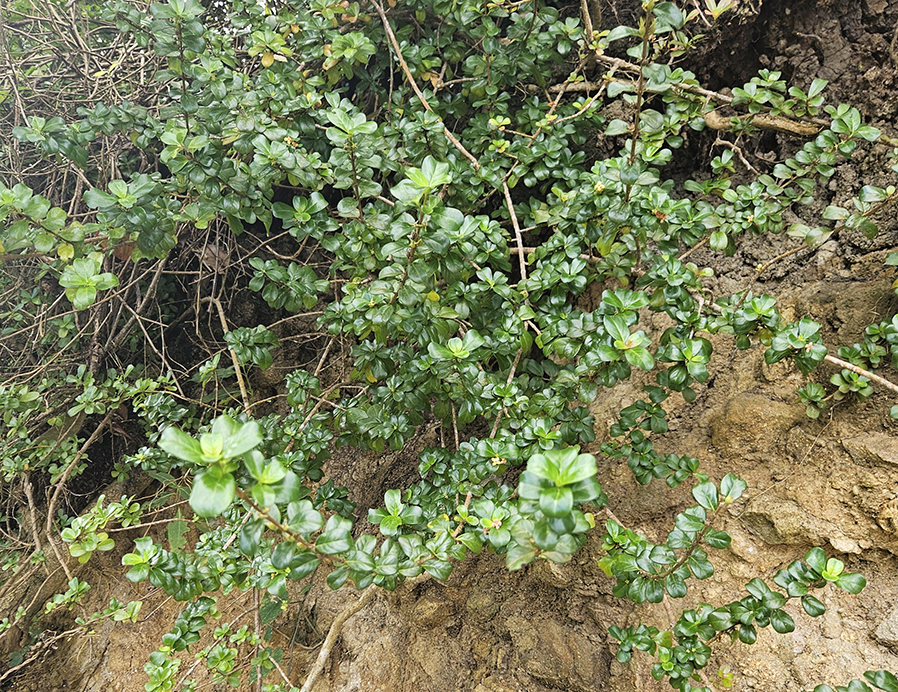
A pribby shrub on the margins of someone’s backyard
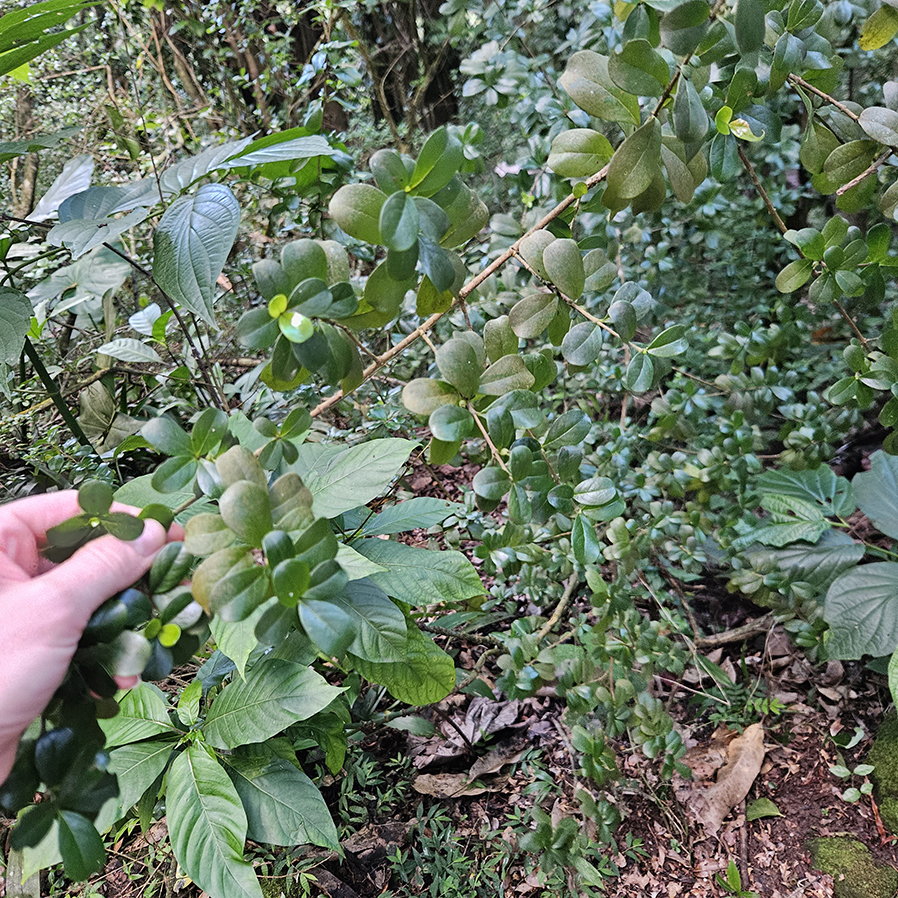
Pribby growing in shaded forest on the Dry Waterfall Trail
Pribby flowers
The flowers are unusual. They are four-petalled and very small. They look leathery and have a thick corolla. This is variable in colour and can be pale orange through pink. On closer examination, the pink flush seems to come from areas of magenta pigmentation on the underside of the petals. The pigment seems to stop abruptly and consists of tiny discrete spots of colour. This is pronounced at the junction of the petal and the long corolla tube.
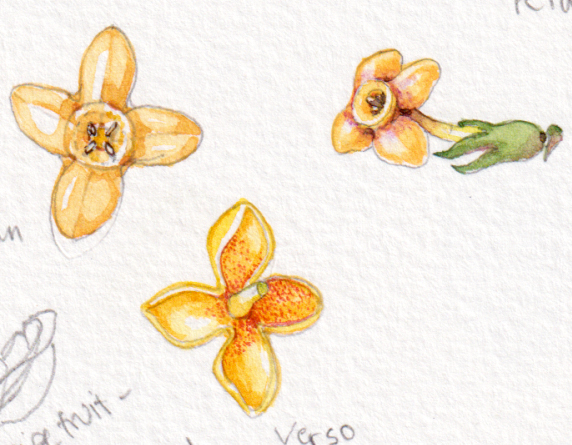
Sketch of one Pribby flower from different angles
There are four cream stamens within the corolla tube which become darker brown with age. The calyx stands slightly proud of the base of the corolla tube and has four lanceolate teeth.
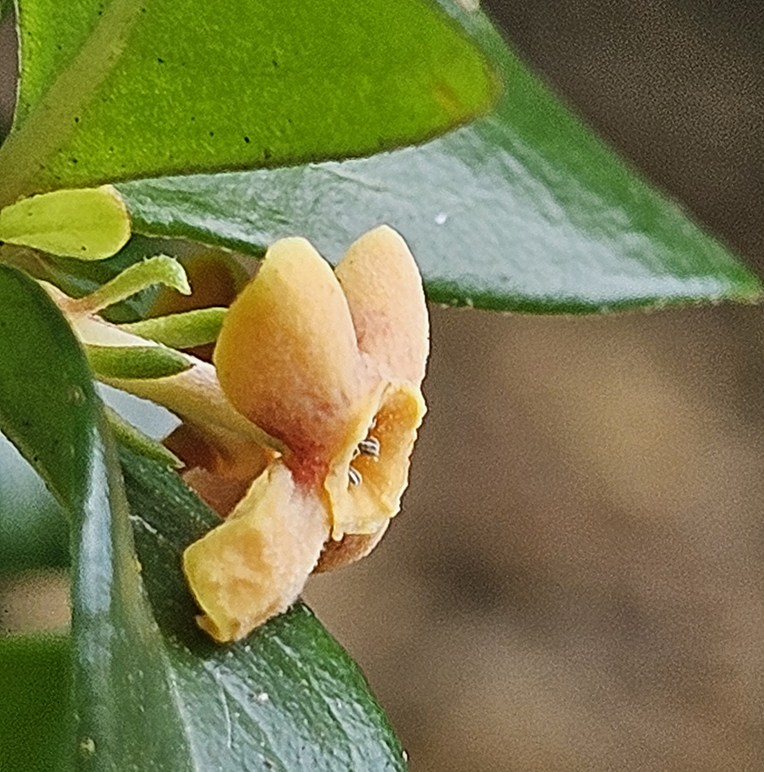
It flowers throughout the year.
Pribby leaves
Leaves are green and very shiny. They grow in a tight whorl of four around the central stem. In the specimen I examined they were clustered together and overlapping one another.
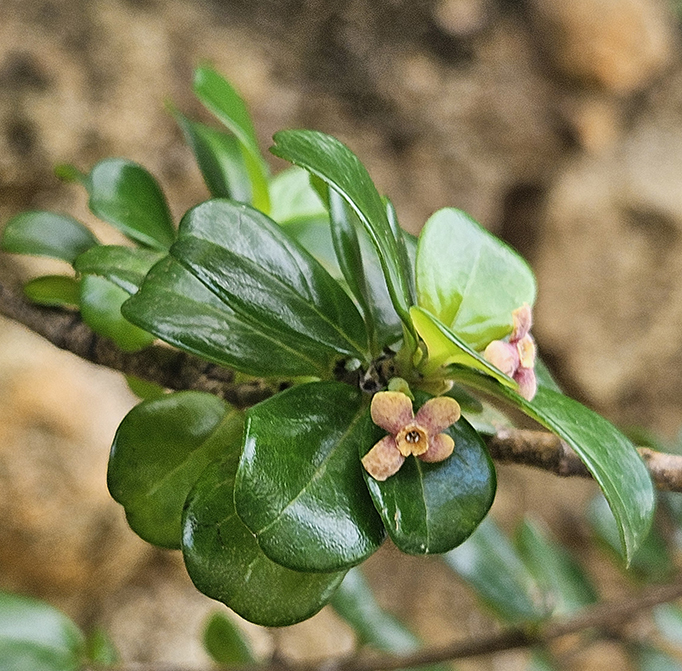
Photo of Pribby growing near Elvis Gerald’s garden
Leaves have very short stalks, and the shine and thickness of the leaves make it hard to see the network of veins clearly. The tips of shoots have brighter green leaves. Those lower down are a darker shade.
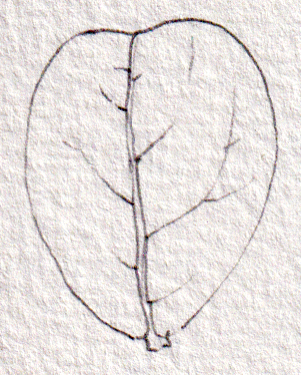
Veins on one leaf
Why is Pribby special?
The first mention of Pribby in European records occurs in 1798, in Eclogae americanae, by Martin Vahl. It didn’t create much of a stir until after the eruption of the Souffriere hills in 1995 – 20i0. The amount of habitat lost to ash fall and pyroclastic flows suddenly mean this unassuming plant had been lost to science. No-one knew where it grew anymore, or even if it grew anymore.
Then in 2006 Kew botanists, funded by UKOTCF visited Montserrat’s Centre Hills area and the abandoned Forestry department and unearthed herbarium specimens thought to be destroyed in the volcano. Amongst these was one of Pribby, and this included location information. Following this discovery, the botanists were helped by local forestry experts, found Pribby still growing on the same site, and soon discovered several other places where it grows.
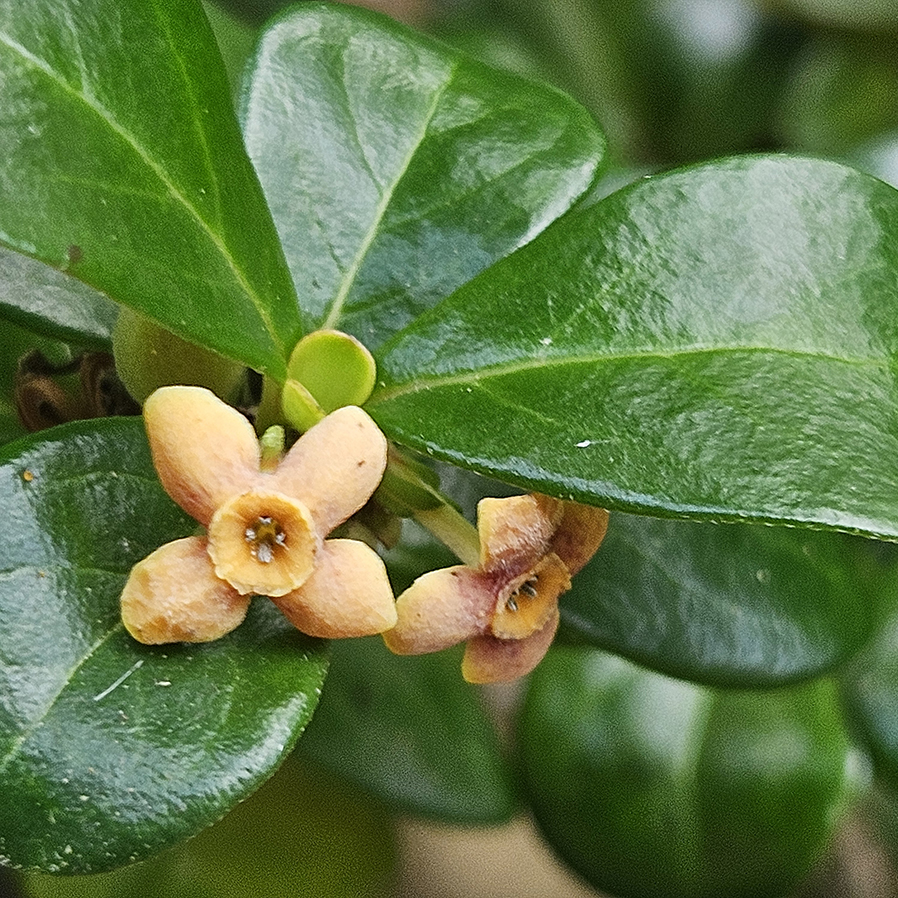
Photo showing variation between flower colours
Seeds have been collected, and the plant is grown at Kew Gardens. Its seeds are stored in Kew’s Millenium Seed Bank, and the Montserrat National Trust propagate plants and educate the public about its’ importance.
What are the uses of Pribby?
Pribby grows thickly in sunny areas, and can be used as hedging. At Montserrat’s botanic gardens, a Pribby demonstration hedge is being trialled to keep out populations of feral goats and domestic animals, and to see how it fares as a native hedging plant. It’s also great for pollinating insects as it flowers year round.

My sketchbook study
What are the threats to Pribby?
Despite it’s re-discovery, Pribby is still considered critically endangered and is on the ICUN’s red list.
Threats include habitat loss to possible further volcanic activity, invasive weeds such as the Blackberry and Australian Pine Casuarina equisetifolia, and grazing by feral goats and sheep. Most of the populations are outside of the protected Centre hills reserve.
Conclusion
I saw several populations of Pribby during my stay on Montserrat. I have become a little besotted by its’ charming combination of endangered status and unassuming growth habit. I’m keen to revisit the Pribby and illustrate the fruit. Perhaps I can work up a more detailed and polished illustration?
Until then, if you’re as fascinated by Pribby as I am, why not donate to the Conservation efforts on Montserrat being run by UKOTCF and the Montserrat National Trust? It’s not every day you can help save a critically endangered hedging plant with tiny orange flowers and pretty shiny leaves, now is it?
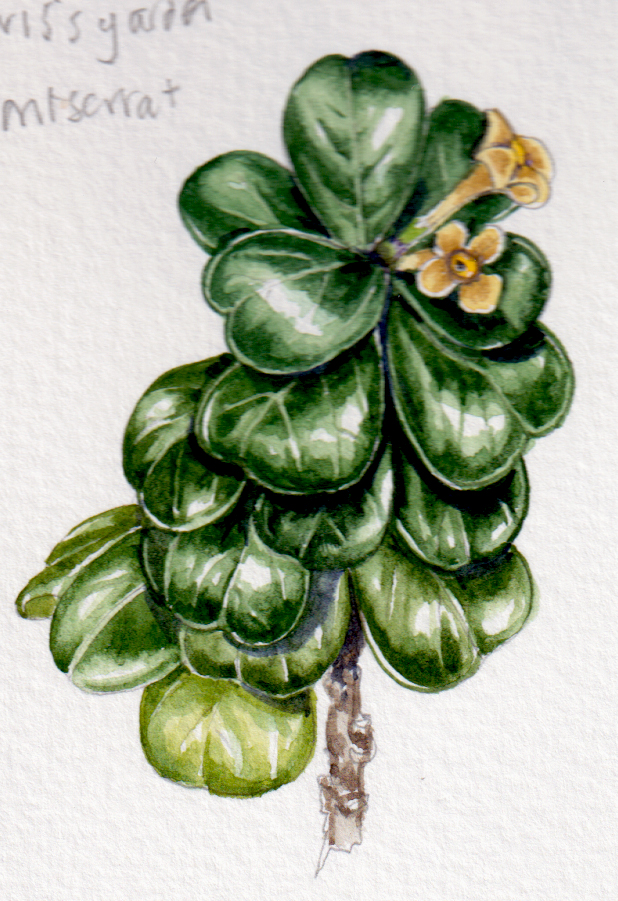
Sketch from my botanical notebook

I love those little leaves!
What a lovely place!