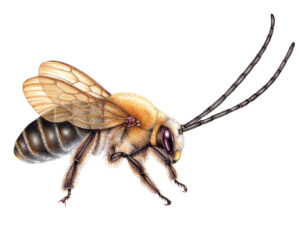
Long-horned bee Eucera longicornis
Long-horned bee Eucera longicornis illustrated for South Devon National landscape

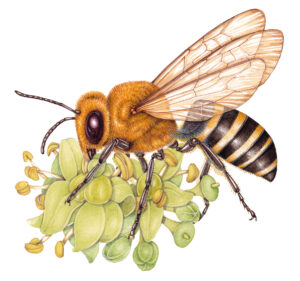
Ivy bee Colletes hederae
Ivy bee Colletes hederae illustrated for South Devon National landscape

Brown-banded carder bee Bombus humilus
Brown-banded carder bee Bombus humilus illustrated for South Devon Living landscape

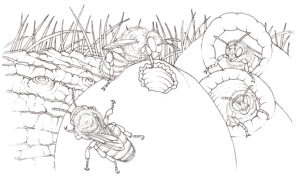
Bottle bee Melipona lautipes with nests
From the series of Animals of Montserrat colouring-in illustrations commissioned by UKOTCF

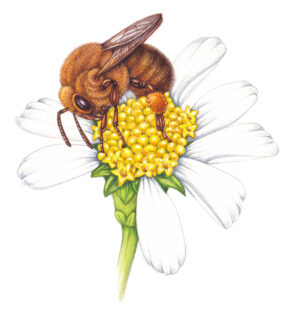
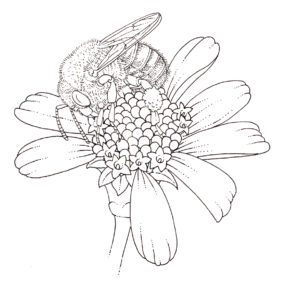
Bottle bee Melipona lautipes on Tridax daisy
From the series of Animals of Montserrat colouring-in illustrations commissioned by UKOTCF

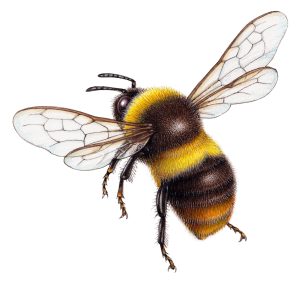
Broken-belted bumble bee Bombus soroeensis 2
Broken-belted bumble bee Bombus soroeensis, showing the bumble bee in flight, male bee

Broken-belted Bumblebee Bombus soroeensis
Broken-belted male bumblebee in flight. Illustration for Swedish packaging company

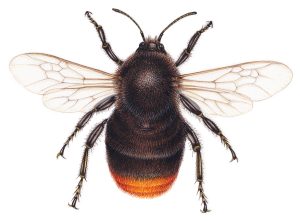
Red-tailed bumblebee Bombus lapidarius
Red-tailed bumblebee Bombus lapidarius worker showing orange abdominal segments

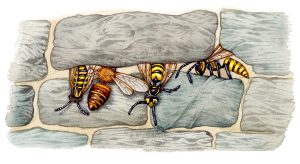
Wasps and bees hibernating in cracks in an old wall
Wasps and bees hibernating in cracks in an old wall, showing common UK bee and social wasp species in the mortar of a church wall

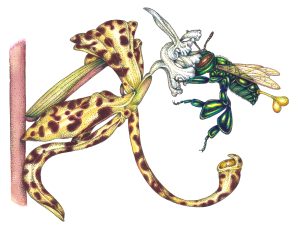
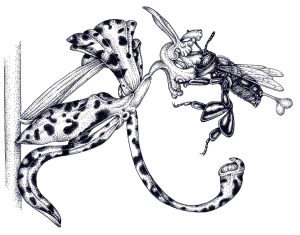
Orchid bee Euglossa cybelia
Orchid bee Euglossa cybelia with Cycnoches guttulatum orchid. Illustration from “The Hidden Universe” by Alexandre Antonelli

Cycnoches guttulatum orchid with Euglossa cybelia orchid bee
Cycnoches guttulatum orchid with species specific pollinator Euglossa cybelia orchid bee. Illustration from The Hidden Universe: Adventures in Biodiversity by Alexandre Antonelli

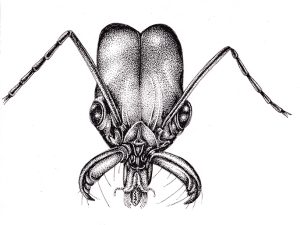
Trapdoor jaw ant Odontomachus bauri head
Trapdoor jaw ant Odontomachus bauri head showing mandibles with trigger hairs From “30 Animsl that made us Smarter” by Patrick Aryee (BBC Books)

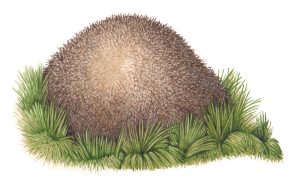
Wood ant nest
Wood ant nest. This nest belongs to the Southern red wood ant, Formica rufa. Wood ant nests do differ between species, although it can be hard to tell them apart.

Nest and budded smaller nest of wood ant
Nest and budded smaller nest of wood ant. This budding often happens with wood ant species.

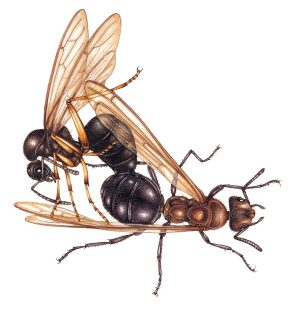
Mating Formica rufa Southern Red wood ant queen and male
Mating during nuptial flight Formica rufa Southern Red wood ant queen and male

Narrow headed ant Formica exsecta
Worker caste of the Narrow headed ant Formica exsecta. This species have curved backs to their heads.

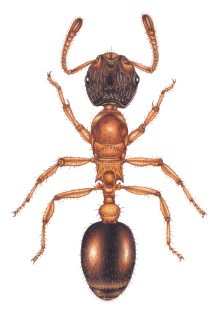
Slender ant Leptothorax acervorum
Slender ant Leptothorax acervorum worker. This ant is only 3mm, and although similar to the Shining Guest ant, has a darker and less smooth head.

Scottish wood ant Formica aquilonia
Scottish wood ant Formica aquilonia worker. These ants are only modestly hairy.

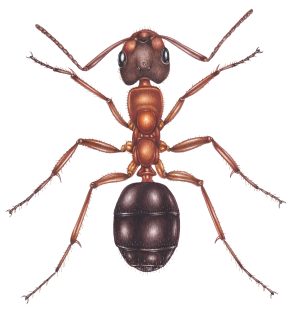
Southern Red wood ant Formica rufa
Southern Red wood ant Formica rufa. One of the most common species of European wood ant.

Shining Guest ant Formicoxenus nitidulus
Shining Guest ant Formicoxenus nitidulus worker. This tiny species is extremely shiny, and only 2.75mm long.

Hairy wood ant Formica lugubris
Hairy wood ant Formica lugubris, showing species-specific long hairs. These reach up to and beyond the eyes.

Slave making or Blood red wood ant Formica sanguinea
Slave making or Blood red wood ant Formica sanguinea. These wood ants are far redder than the other wood ant species.

Thorax and hairs detail of Hairy wood ant Formica lugubris
Thorax and hairs detail of Hairy wood ant Formica lugubris. Hairs are longer and more numerous than other wood ant species, and extend beyond the eyes.

Social parasitism Queen and worker ants
Social parasitism in ants. The queen of the Slave maker ant, Formica sanguinea, being tended to by workers of Dusky ant Formica fusca.